The Nicene Creed: Part 8
I believe in one, holy, catholic, and apostolic Church.
I believe in one, holy, catholic, and apostolic Church.
Deacon Robert Long serves Our Lady of the Valley Catholic Parish in Birmingham. He was ordained to the permanent diaconate on Dec. 7, 2013, by Bishop Emeritus Robert Baker at the Cathedral of St. Paul. Excerpts from Deacon Long’s series on the Nicene Creed will be published in issues of the One Voice through the end of 2026. The following comprises the last installment of his eight-part series.
Deacon Robert Long serves Our Lady of the Valley Catholic Parish in Birmingham. He was ordained to the permanent diaconate on Dec. 7, 2013, by Bishop Emeritus Robert Baker at the Cathedral of St. Paul. Excerpts from Deacon Long’s series on the Nicene Creed will be published in issues of the One Voice through the end of 2026. The following comprises the last installment of his eight-part series.
I believe in one, holy, catholic, and apostolic Church.
This opening statement of the last paragraph of the Creed encompasses what is known as the “Four Marks of the Church.” They are also described as the four attributes or characteristics.
A brief description of how each of the Marks applies to the Church:[i]
ONE
How is the Church one? “The Church acknowledges one God in Whom she professes one faith. As Catholics, we adhere to the same teachings regarding the creed, sacraments, and morals. We recognize the authority of the pope as supreme pastor of the Universal Church.”
HOLY
The Founder, Jesus Christ, is holy. The means to salvation is holy. The aim of the Church’s teaching and sacraments is the holiness of its members. “All members of the Church, including her ministers, must acknowledge that they are sinners. In everyone, the weeds of sin will still be mixed with the good wheat of the Gospel until the end of time. Hence the Church gathers sinners already caught up in Christ’s salvation but still on the way to holiness. By canonizing some of the faithful, the Church recognizes the power of the Spirit of holiness within her and sustains the hope of believers by proposing the saints to them as models and intercessors.”[ii]
CATHOLIC
What does “catholic” mean? Notice that “catholic” is not capitalized in the Creed.
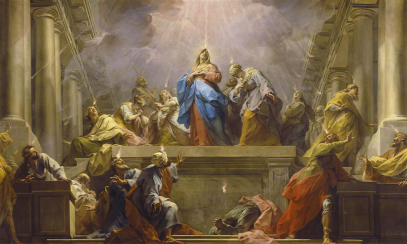
The word “catholic” means universal. The Church is catholic in a double sense. First, because Christ is present in her. St. Ignatius of Antioch said, “Where there is Christ Jesus, there is the Catholic Church.” The Church was catholic on the day of Pentecost and will always be so until the day of the Parousia, the second coming of Christ.
Secondly, the Church is catholic because she has been sent out by Christ on a mission to the whole of the human race. “Go therefore, and make disciples of all nations…”[iii]
APOSTOLIC
As the Catechism of the Catholic Church tells us, the Church is apostolic because she is founded on the apostles, in three ways:
- She was and remains built on the foundation of the Apostles; the witnesses chosen and sent on mission by Christ Himself.
- With the help of the Spirit dwelling in her, the Church keeps and hands on the teaching, the “good deposit,” the salutary words she has heard from the Apostles. Salutary words are words designed to effect an improvement in the lives of those who hear and heed them.
- She continues to be taught, sanctified, and guided by the Apostles until Christ’s return, through their successors in pastoral office — the college of bishops — assisted by priests, in union with the successor of Peter, the Church’s supreme pastor.
It would be a good exercise (Homework!) for each of us to take the time to study, in more depth what these four marks of the Church signify and how they relate to other Christian churches.
I confess one Baptism for the forgiveness of sins …
We are all aware of what Baptism is, but let’s take a few minutes to review what the Church teaches about this sacrament. In Matthew’s Gospel, we see that Jesus receives the Baptism of John, so it is closely related to His life on this earth. Jesus spoke extensively of Baptism as being “born from above, born of the Spirit.” He also told His disciples to go into the whole world and baptize all nations.
Baptism brings us into a supernatural life of grace. Because of this we are incorporated into the life of the Church and we become spiritual persons. At Baptism, either as an infant or an adult, we are washed clean from all sins — original and all personal sins we may have committed up until that point in our lives. It is because of this that we say in the Creed, “I confess one Baptism for the forgiveness of sins.” When we are baptized, our souls are imprinted with a permanent mark called the “baptismal character.” It is because of this that Baptism cannot be repeated.[iv] That is why we do not require someone from another Christian faith to be “re-baptized” when they decide to join the Catholic Church, as long as the Baptism they received was of proper Trinitarian form.
… and I look forward to the resurrection of the dead …
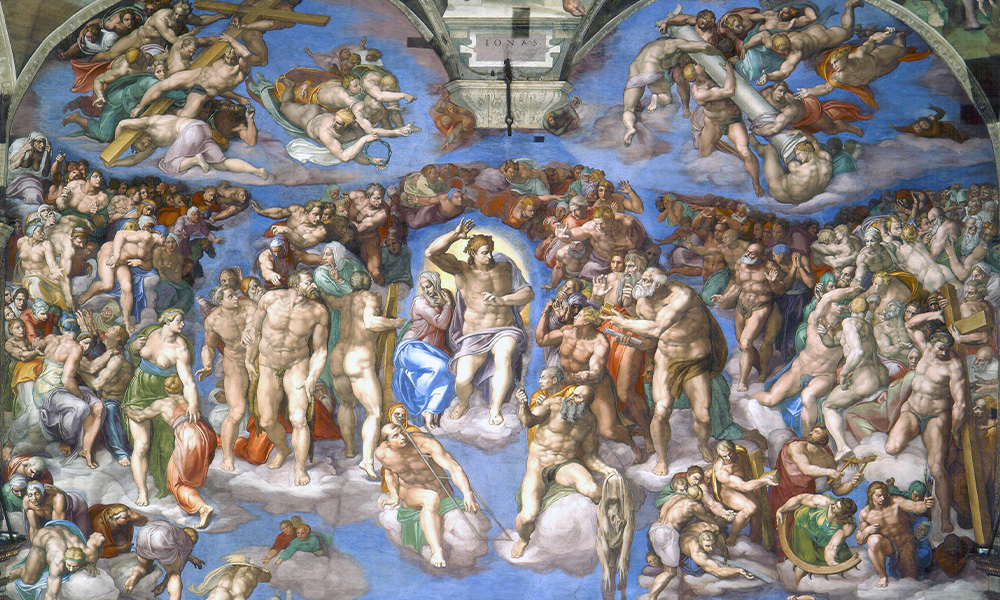
The end of the world will result in the resurrection of the dead, “both those who have done good, to the resurrection of life, and those who have done evil, to the resurrection of judgment.”[v] This event, which only the Father knows when it will be, will be known as the “Parousia.” We touched on this earlier when we spoke of the general judgment at the second coming of Christ.
The Fourth Lateran Council, which was held in Rome at the Lateran Palace in 1215, defined that at the second coming our soul would be reunited in our bodies that we had while on earth, but these bodies will be like Christ’s — a glorious body, a spiritual body. This illustrates the Catholic teaching concerning the dignity of the human person — body and soul. Our bodies must be shown the proper dignity.
… and the life of the world to come. Amen
In this new world, we will experience everlasting life with God the Father. Jesus, by His own suffering, death, and resurrection has defeated the bonds of sin and death and opened for those who believe in Him the gates to eternal life. God intended for us to share His abundant life in Heaven. However, in order to attain the perfect life He has in store for us, He demands that we freely love Him in return. That is how we ultimately receive the gift of eternal life — by loving God with all our hearts, souls, and strength.[vi]
Final thoughts
Why is it so important that we understand this Creed that we say each week and not just recite it from rote memorization or read it from a written text? Because these truths that we profess are what bind us together as one, holy, catholic, and apostolic Church. If we ignore these truths and stray from them in our daily lives, we not only destroy our eternal lives, but we contribute to the disunity of the Church as a whole. If we read the Creed with deeper insight, as illustrated in this series, it will also have a direct effect on our spiritual lives and the way we approach our mission to serve God in this world.
May this be a constant reminder that if we are faithful to God and love Him above all things, we will enjoy the eternal life He has prepared for us in Heaven. Jesus himself tells us, “In my Father’s house there are many dwelling places. If there were not, would I have told you that I am going to prepare a place for you? And if I go and prepare a place for you, I will come back again and take you to myself, so that where I am you also may be. (Jn 14:2-3)
May God bless each and every one of you. Glory be to the Father, and to the Son, and to the Holy Spirit.
[i] Rassas, p.39
[ii] Catechism of the Catholic Church, 827, 828
[iii] Matthew 28:19
[iv] Catechism of the Catholic Church, 1280
[v] John 5:28-29
[vi] Ernst, Part III