From homeland to home
One woman’s story of family, faith, and devotion to Our Lady
One woman’s story of family, faith, and devotion to Our Lady
“I’ll be there in a jiffy!”
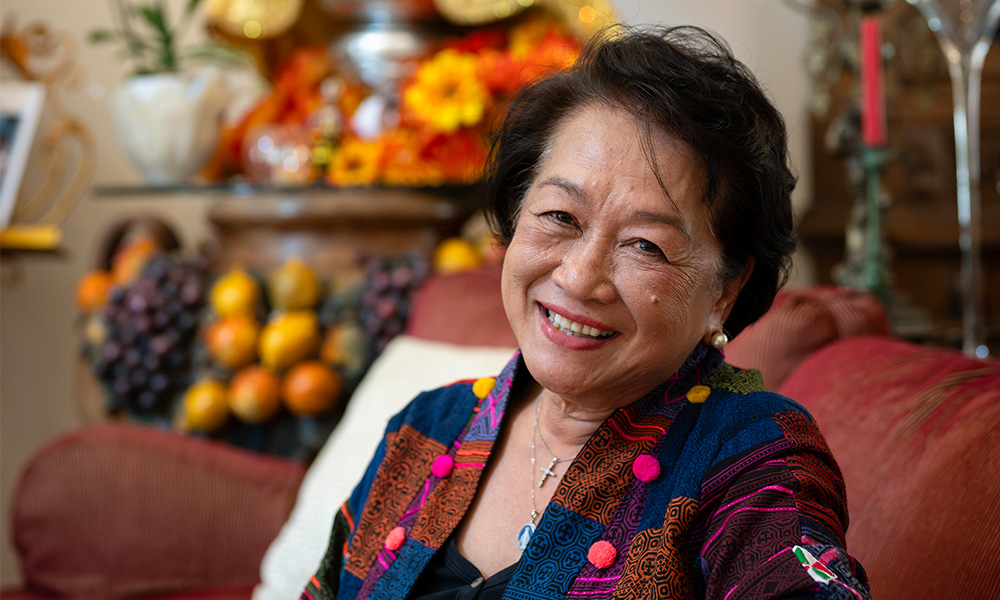
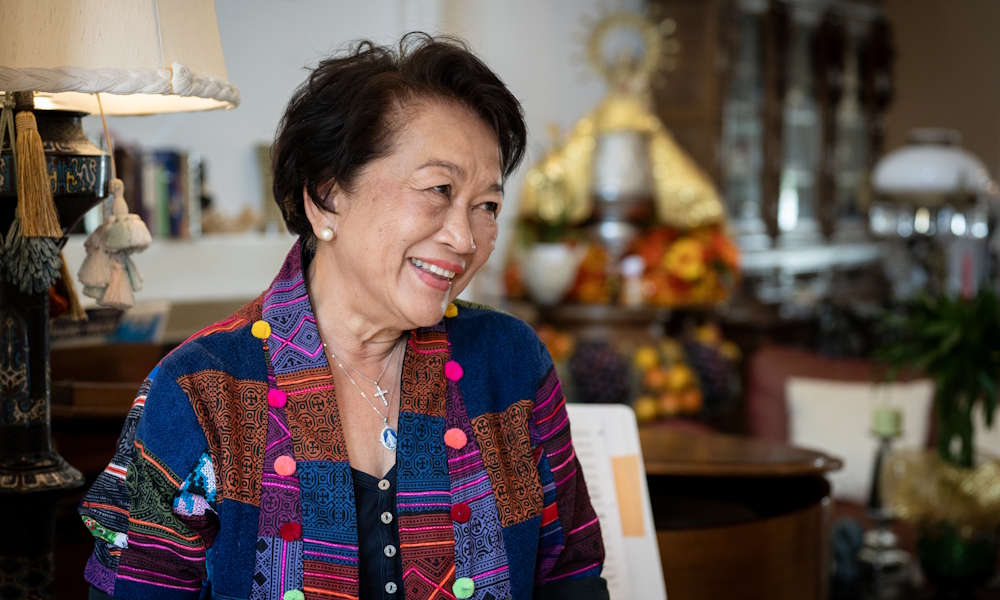
When Milagros “Mila” Veluz first heard that familiar Southern expression, she had absolutely no idea what it meant. She had been taught English by Canadian religious sisters, Jesuit priests, and Dominican sisters in her homeland of the Philippines, but her extensive studies did not fully prepare her for the American South.
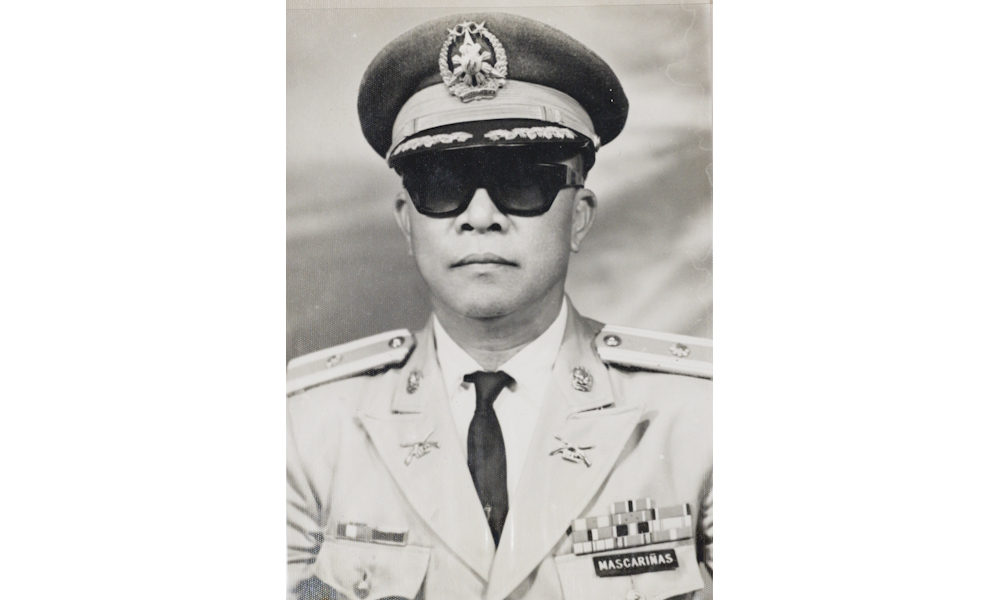
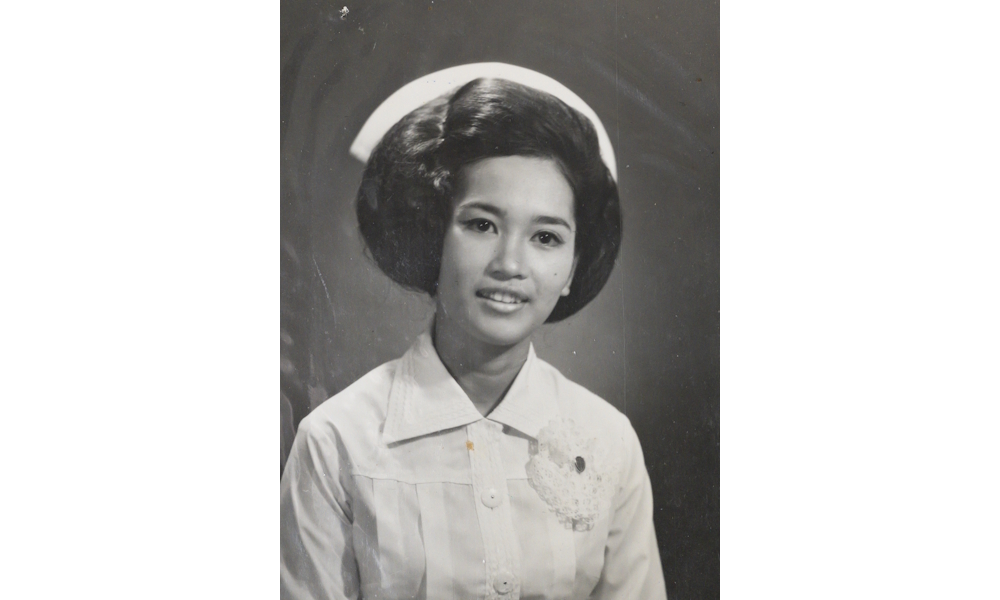
She grew up in a large family with a father who served in the Filipino military, a loving mother, and 11 brothers and sisters. “We were together, we were happy,” she shares, “and that's all we cared about.” She studied nursing, graduated in the Philippines, and worked for two and a half years in labor and delivery.
In the early 1970s, the Philippines experienced political and social unrest, which resulted in the president declaring martial law. As a member of the military, Veluz’s father feared for his children’s safety. He instructed her to seek a way out of the country. "Since you have the opportunity to go somewhere, take that opportunity," she remembers her father telling her.
She reached out to a nursing service that specialized in helping nurses obtain international contracts. In December of 1973, she and another Filipino nurse found themselves halfway across the world in Birmingham, working at Baptist Montclair Hospital.
The culture shock was real. In those days, the Philippines was close to 95 percent Catholic; whereas, the Diocese of Birmingham barely could claim three percent of the population as Catholic. With so few fellow Filipino natives in the area, she was immensely homesick.
The Lord did not abandon her, though. At Baptist Montclair, Veluz was blessed to have Elmer Evers as a supervisor. Evers was not only Catholic, but a woman with a generous heart. Realizing that Veluz and her companion were so far from anything remotely familiar, she knew what to do. She invited them to her parish, St. Francis Xavier Catholic Church, not too far from the hospital. Evers offered transportation to Mass, looked out after the two young women, and helped them acclimate to their new home.
Veluz was also introduced to several Filipino nurses working at St. Vincent’s Hospital, and they knew of a man by the name of Rodolfo, “Rudy” for short, who had immigrated five years prior and was working at Princeton Baptist Hospital in the West End neighborhood of Birmingham.
At the time, Rudy was a medical tech. Veluz saw something in Rudy and knew in her heart God had placed him in her life. A short six months later, the two were married at the Cathedral of St. Paul. Before they could get settled, he was accepted into medical school at the University of Alabama at Birmingham.
Ultimately, Rudy would practice emergency room medicine for 30 years. “It was a stressful kind of life,” admits Veluz. With stints in Lanett and Alexander City, life could be lonely for a couple whose roots were planted in the rich Filipino soil of community. The heartache of not being able to conceive compounded her loneliness, but her prayer life did not waiver.
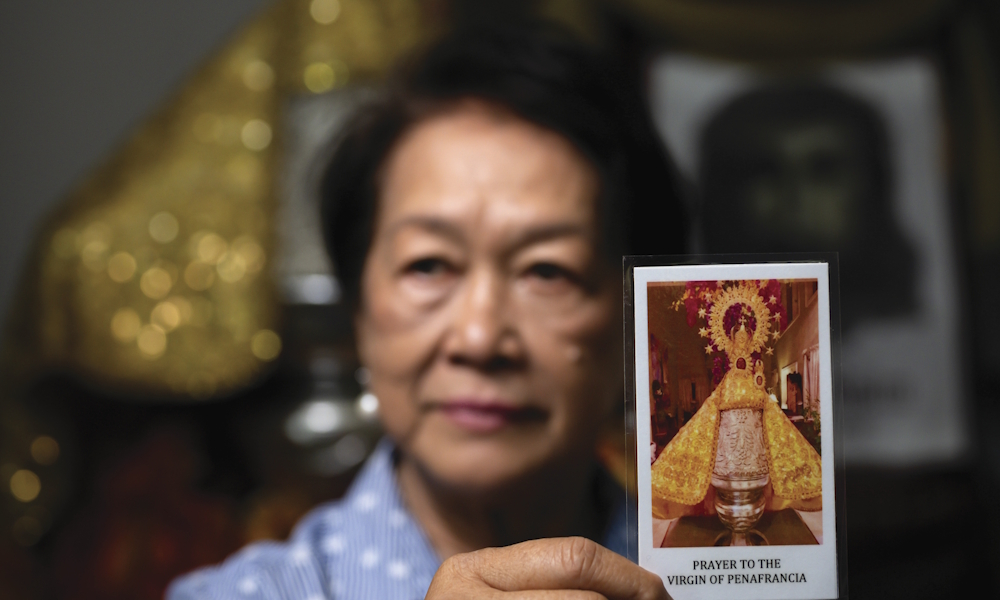
“I always kept my faith intact,” remarks Veluz. Her prayers were answered after over 14 years of marriage, when she and her husband welcomed their first child, Desi, and again five years later with the arrival of Caitlin. As she looks back, she can see that the Lord’s timing was perfect, even though she admits to struggling. “Of course, sometimes faith dwindles,” she says, “but I have always had belief.” She was not alone. As a native of the Bicol region of the Philippines, her husband had a strong devotion to Our Lady of Peñafrancia.
The devotion originated in Paris, France. After giving all his riches to the poor and devoting his life to Christ, a nobleman by the name of Simon Vela sat in prayer, contemplating the Blessed Virgin Mary. It is said that Vela heard the voice of a woman telling him to “go to Peña de Francia and search for my image.”
He searched for five years before finding the Peña de Francia mountain south of the city of Salamanca in Spain. Once there, Mother Mary appeared to him, holding the infant Jesus in her arms. He was instructed to dig beneath him, where he would find a holy image. On May 19, 1434, Vela and his companions unearthed the wooden statue. It is said that in that instant, they were all cured of their ailments.
The devotion took hold in Spain, spanning generations. In 1712, Miguel Robles de Covarrubias, the son of a Spanish government official residing in the Philippines, fell ill. In his possession was a holy card with the image of the statue found by Vela. After placing the card on sources of great pain in his body, he was given relief. He was ordained a priest in the city of Naga in the Bicol region of Luzon, Philippines, along the Bicol River. When he was assigned to the cathedral, he commissioned a replica of the original statue. Numerous miracles in the region were attributed to the devotion, forever cementing Our Lady of Peñafrancia into Filipino culture.
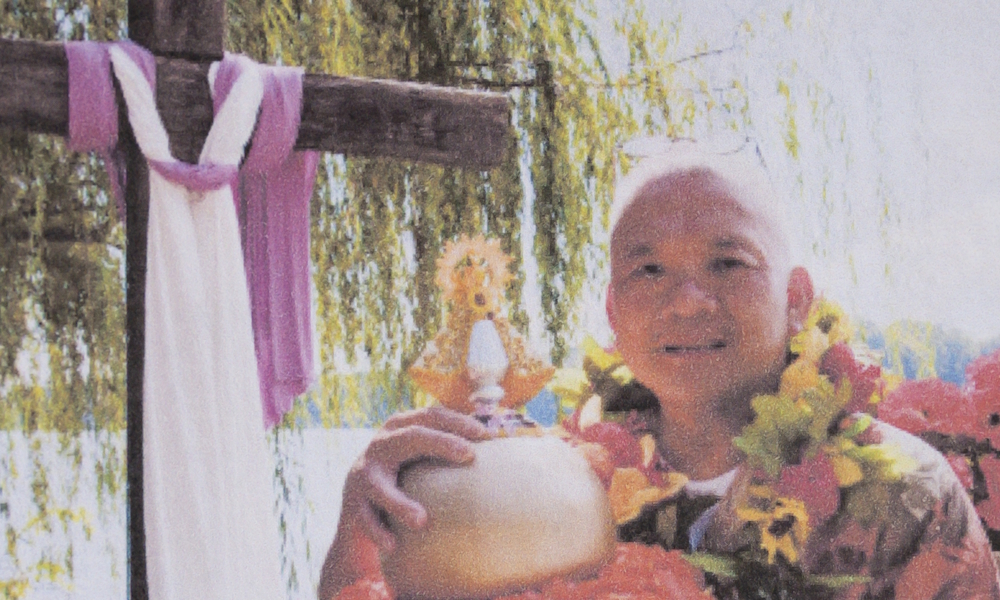
As an integral part of Veluz’s husband’s spiritual life, seeking the intercession of Our Lady of Peñafrancia was simply a quiet part of his life. When he emigrated, he brought a miniature replica with him, which he held dear. “I knew he had the devotion,” she remembers with tears in her eyes, “but I just didn’t know the depth.”
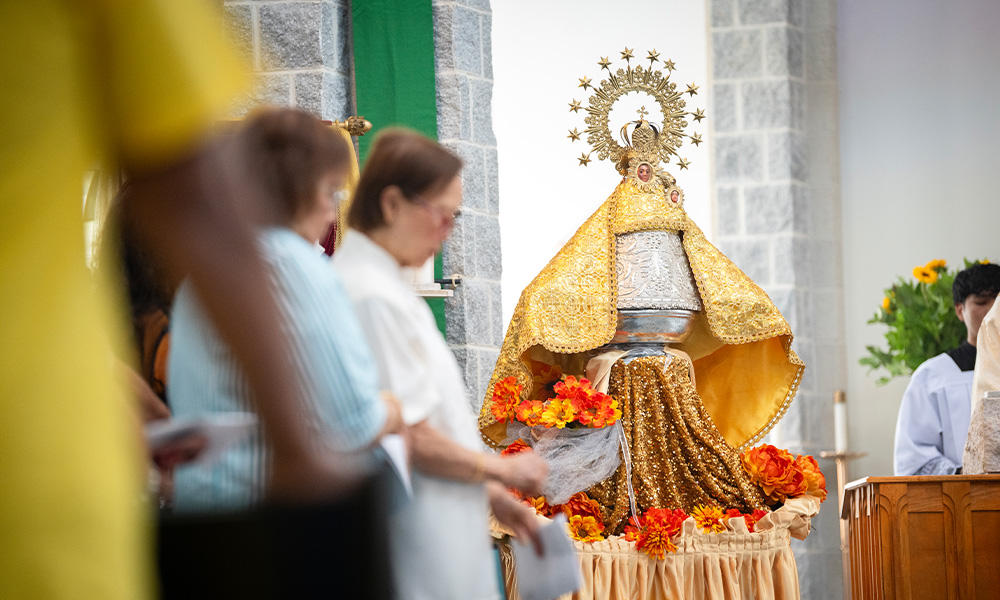
In 2000, Rudy reached out to his brother in the Philippines. He wanted to display in his home a large-scale replica of Our Lady of Peñafrancia. Sadly, the statue arrived badly damaged, but repairs were made, and Ina, as she is commonly referred to, was placed beside the family’s fireplace. “He would go to her all the time,” she recollects. Some years later, a cousin approached Rudy about the first ever Marian Rosary Congress and Pilgrimage being planned by the Basilica of the National Shrine of the Immaculate Conception in Washington, D.C., to be held in September of 2017.
He agreed, but sadly Rudy passed away before the event took place. Wanting to honor her husband’s devotion to “Mother Ina,” Veluz scheduled his inurnment for the third Saturday in September, the day when Our Lady of Peñafrancia is honored in the Philippines. With friends in town for the inurnment, she sought their help in preparing the figure for the upcoming Rosary Congress.
Years of tarnish had dulled the statue’s appearance. Veluz couldn’t find the appropriate supplies, so they decided to wait until the next day when she could buy some gold leaf paint. In the meantime, they placed the statue on the table with the crown by its side. One of her friends fell asleep for a short time on the couch next to the table. When she awoke, the crown was pristine. Veluz walked in, and her friend exclaimed: “That was fast! You already cleaned this thing.”
But Veluz had not touched the statue of Mother Ina. The others were called in, and the crown was placed back on the statue. The difference was noticeable, and one of Veluz’s friends remarked, “This part is so shiny, but this part here is not matching anymore.” As they all stood examining Mother Ina, the tarnished part started vanishing. “We were mesmerized,” she recalls.
The six instinctively began praying the Rosary. She remembers thinking, "I am not going to tell this to anybody because no one would believe me.” They consulted a priest seeking answers, especially to the question, “Why us?” For Veluz, the answer isn’t clear, so she continues to pray: “Mother Ina, I have been a devotee, but this is the first time you have shown me that you are real. Show me what our mission is to be.”
While Veluz may not be able to clearly discern the answer she seeks, it is easily seen from the outside looking in: Her life has been her mission. Her birthplace, her courage to immigrate to America, her devotion to family and community, her efforts to preserve and share her heritage, her perseverance in faith all serve as a testament of the Filipino people. They are a people close to the Lord and the Blessed Mother, and that closeness is not only inspiring but edifying. How blessed the diocese is to have the Filipino Catholic Community call north and central Alabama home.
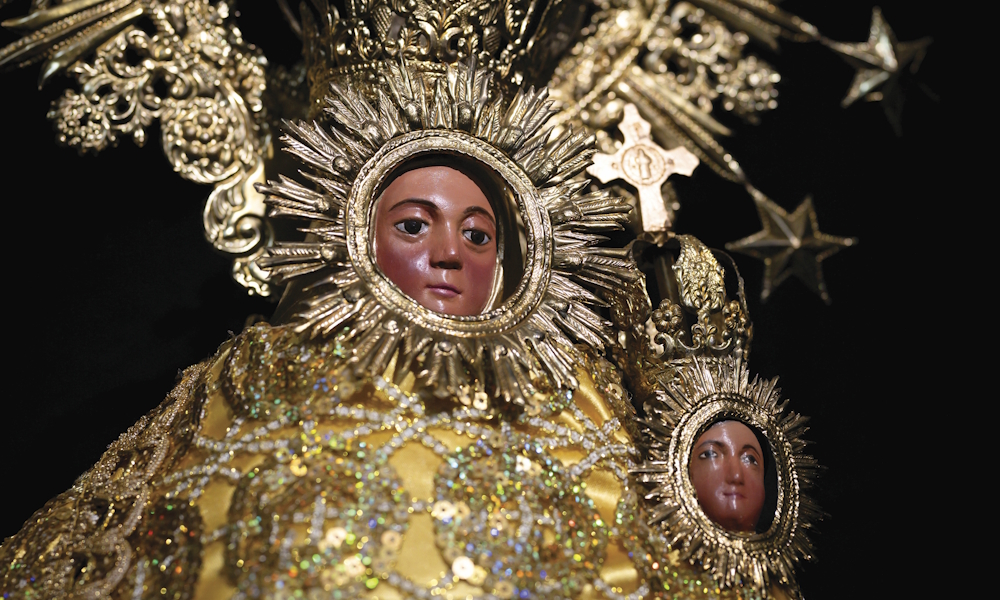
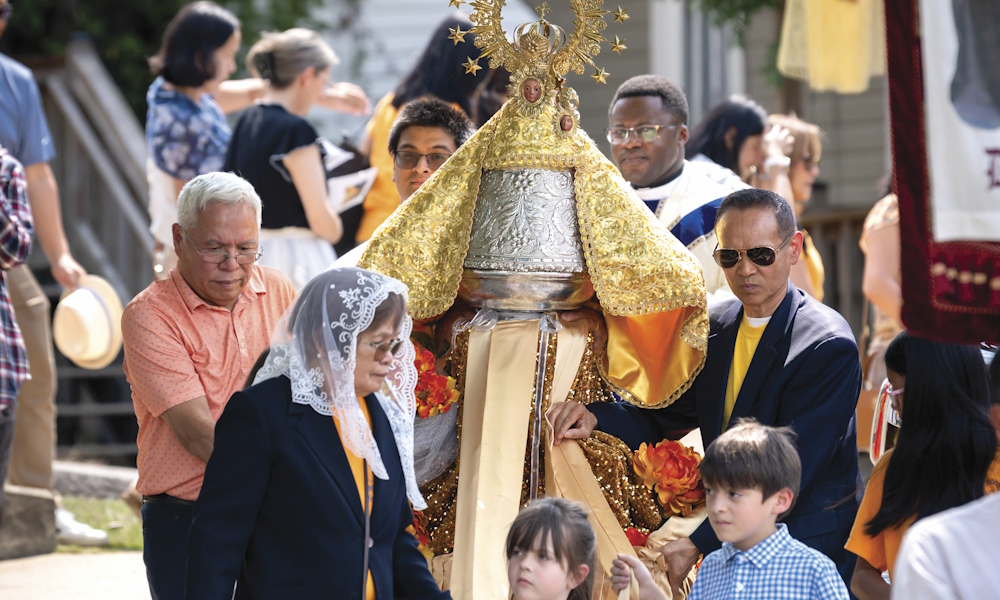
Our Lady of Peñafrancia
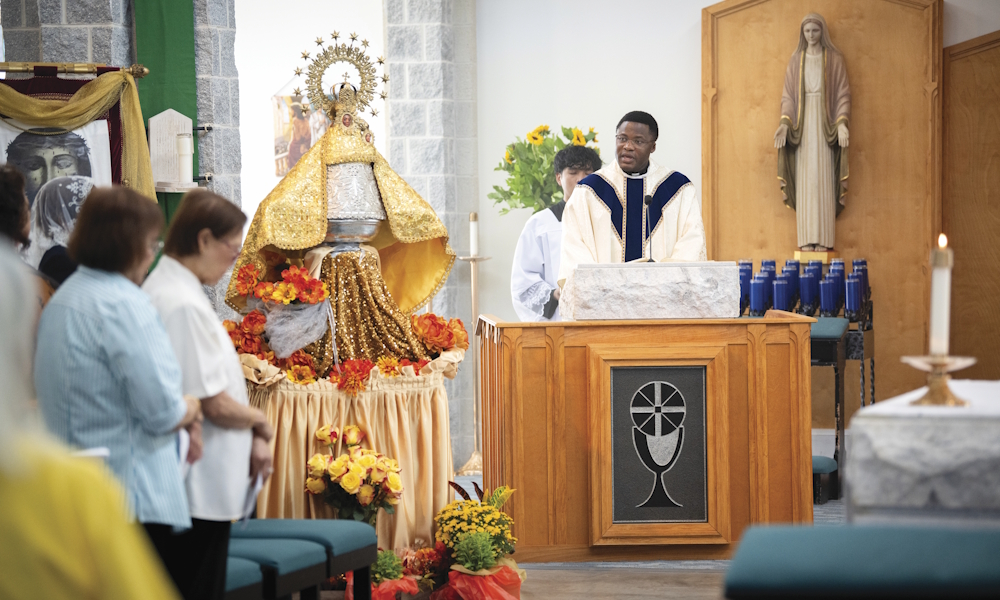
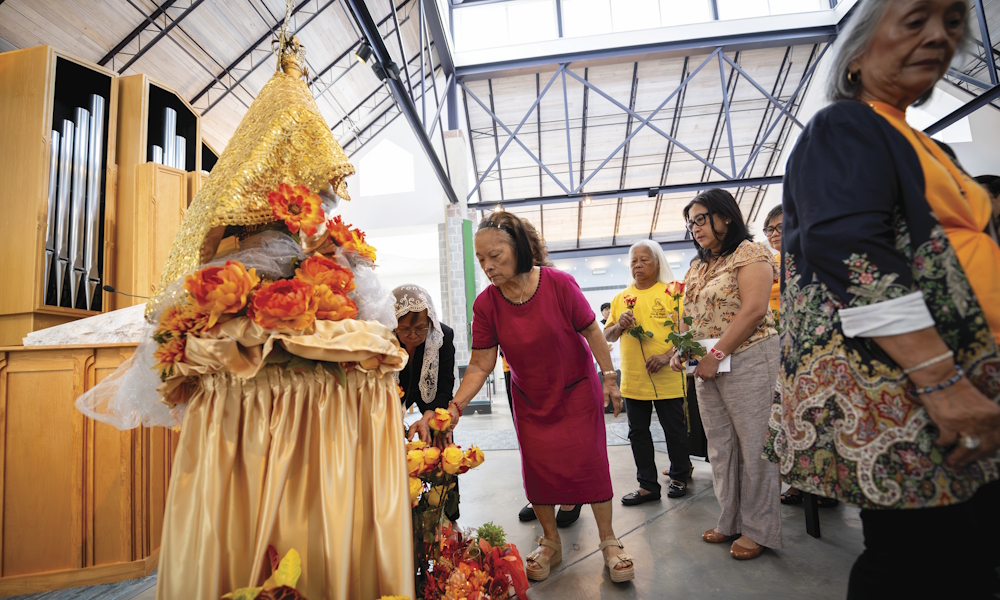
To honor Our Lady of Peñafrancia in the diocese, Veluz organizes a Mass held on the third Saturday of September each year. This year, the Mass was held at St. Stephen the Martyr Catholic Chapel in Birmingham. In preparation, Veluz and the community pray a novena, which is available at onevoicebhm.org/our-lady-penafrancia-novena.