Why St. Francis matters
Pope Leo XIV did a great favor for the Catholic Church in proclaiming a Jubilee Year of St. Francis, celebrating 800 years since the death of this beloved saint, which happened on Oct. 3, 1226.
Catholics are invited to “follow the example of the saint of Assisi” who has been for the Church a model of holiness of life and a constant witness of peace. This Jubilee Year began on Jan. 10, 2026, and will continue through Jan. 10, 2027.
Pope Leo XIV did a great favor for the Catholic Church in proclaiming a Jubilee Year of St. Francis, celebrating 800 years since the death of this beloved saint, which happened on Oct. 3, 1226.
Catholics are invited to “follow the example of the saint of Assisi” who has been for the Church a model of holiness of life and a constant witness of peace. This Jubilee Year began on Jan. 10, 2026, and will continue through Jan. 10, 2027.
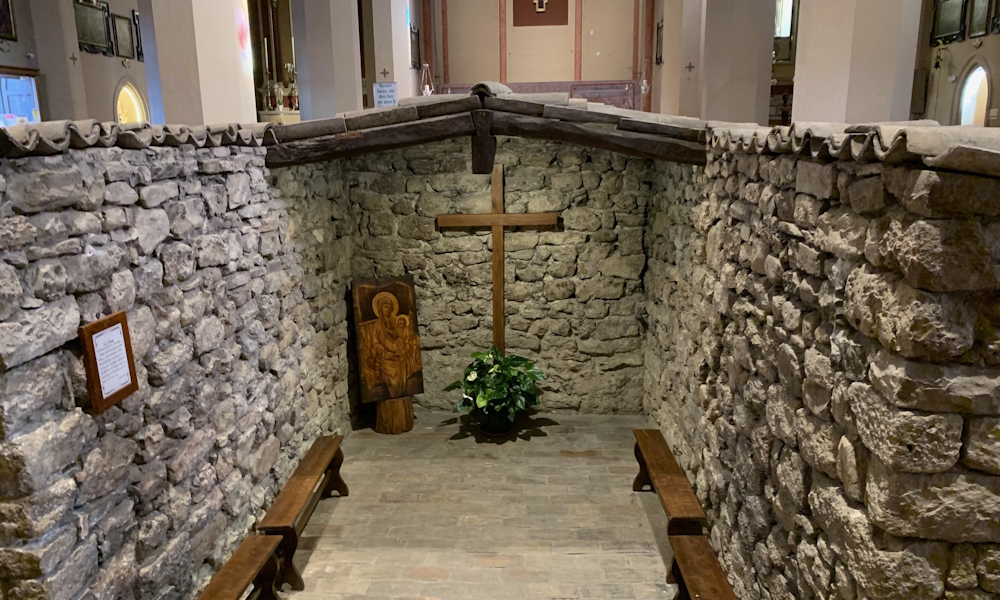
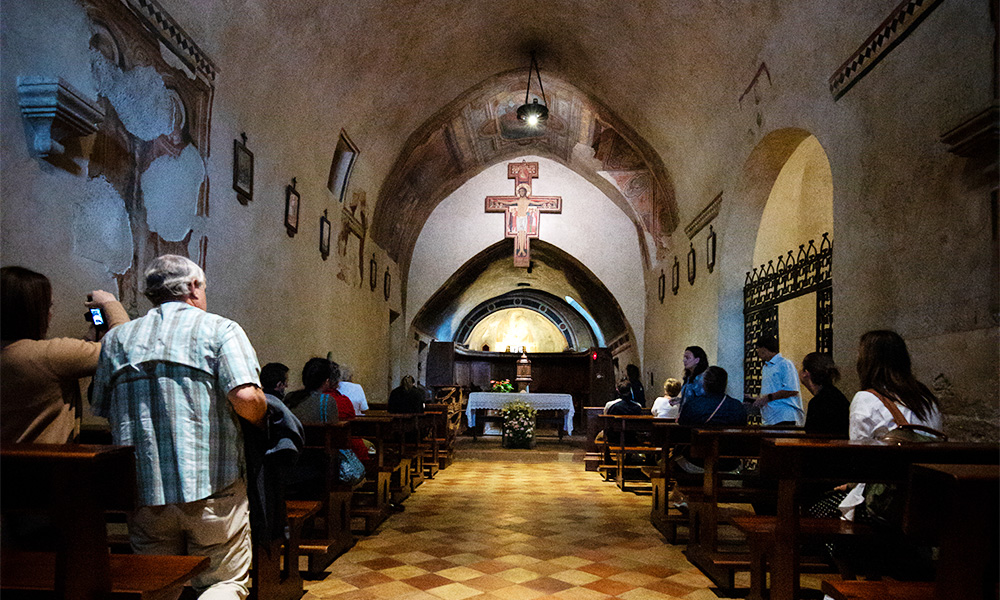
St. Francis is one of the most venerated figures of Christianity, heralded by people of all faiths and of no faith. He was a mystic, a poet, and a friar who heard a message from a cross in the dilapidated Church of San Damiano in Assisi that led him to set in motion one of the most inspiring and effective reform movements in the history of the Church, one which is still impacting Catholics in our own day and time. The message was very clear to him when he heard, “Francis, rebuild My Church, which is falling into ruin.”
St. Francis took the words literally at the time and began repairing, with the help of his former partying buddies, that very Church of San Damiano. Eventually, Francis came to understand his mission as a broader one: to reform the Catholic Church itself by living simply and by taking the Gospel message to people everywhere.
St. Francis matters for us today because those two characteristics of his mission are pivotal for the Catholic Church today: LIVING SIMPLY AND TAKING THE GOSPEL MESSAGE TO PEOPLE EVERYWHERE.
— ‘A foretaste of Paradise’ —
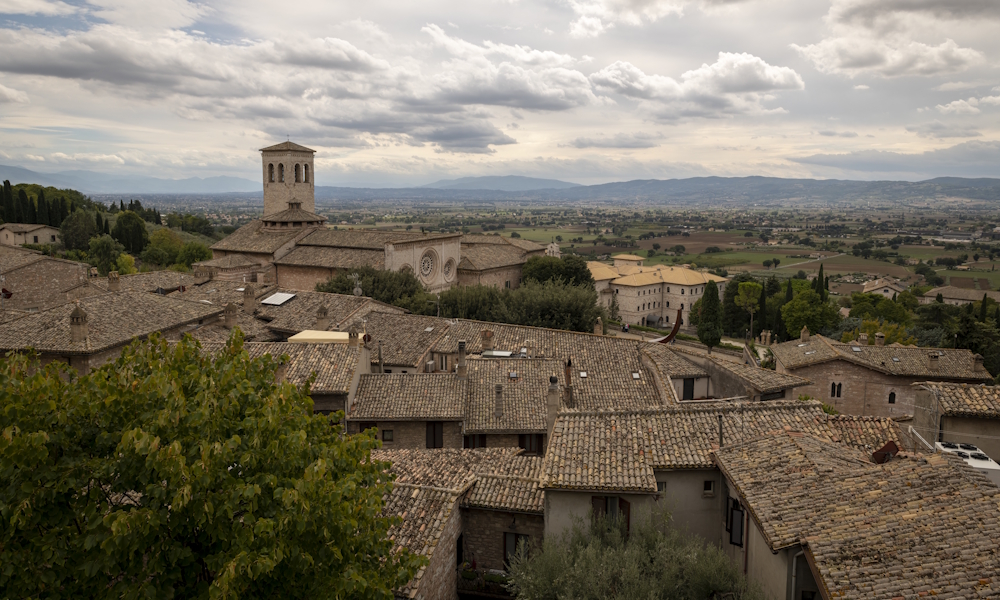
Francis was born in 1182 in the town of Assisi, in the province of modern-day Perugia, in the region of Umbria, north of Lazio and south of Tuscany. Most people visiting Italy bypass Assisi in favor of Rome, in the Lazio region, and Florence, in the region of Tuscany. Big mistake!
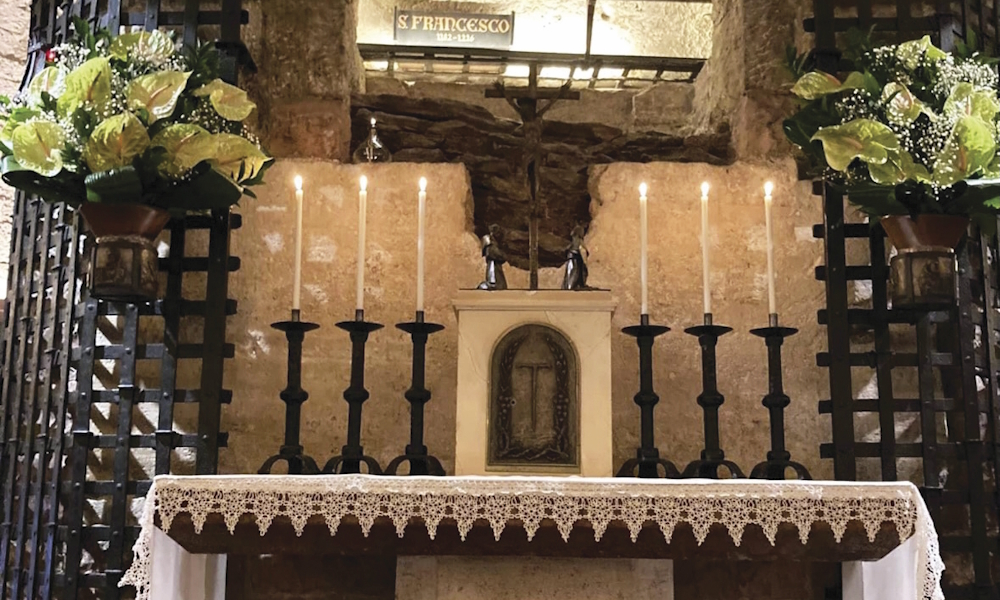
Because of the reputation of St. Francis and his origins in Assisi, the town of Assisi has maintained its medieval character. It has been said of Assisi by one of the chief biographers of St. Francis, a former mayor of Assisi, Arnaldo Fortini, that “even today many a visitor feels in Assisi’s beauty a touch of the divine.” He continues, “It is not surprising that throughout the centuries, poets, writers, and persons of all walks of life have described the city in such extravagant terms as ‘a foretaste of Paradise,’ and ‘a suburb of Heaven.’” (Francis of Assisi, Crossroad Publishing: 1981, p. 86)
— Evangelical poverty —
Francis was born into a wealthy family, the son of Peter Bernardone and his wife, Pica. His baptismal name was actually “John,” but his father nicknamed him “Francesco.” It is possible that his mother came from France, hence his nickname could have been a play on that French connection.
Much is written on the saint’s life (see recommended reading on page 12), but even without researching Francis’ life, his commitment to poverty as means of preaching the Gospel is well-known. During his time, other lay pietistic movements, such as the Humiliati and the Poor Men of Lyons, embraced a life of voluntary piety in their preaching, but, as noted by C. H. Lawrence in The Friars, Francis went further than any of them in his radical way of understanding evangelical poverty.
Anyone who sought admission to his fraternity was required, as a precondition of acceptance, to sell all his possessions and distribute the proceeds to the poor. His small flock of disciples was to wander through the world without property or income, sleeping in borrowed barns or shacks, like the hut that was their first home at Rivo Torto, and performing casual labor or begging for their daily food. The significance for him of this way of life is directly stated in the words of the First Rule:
“The brothers shall appropriate nothing to themselves, neither a place nor anything; but as pilgrims and strangers in this world, serving God in poverty and humility, they shall with confidence go seeking alms. Nor need they be ashamed, for the Lord made Himself poor for us in this world. This is that summit of most lofty poverty which made you, my most beloved brothers, heirs and kings of the Kingdom of Heaven.”
—‘Blest are the poor in spirit …’ —
The life of St. Francis was to exemplify in a profound way the Eight Beatitudes (Mt 5:3-12) and paramountly the first of them: “How blest are the poor in spirit; the reign of God is theirs.”
His teachings on poverty were a challenge to the mercantile spirit emerging in the medieval culture of his time. His teachings on poverty are a challenge even today to the materialistic culture. Adopting the perspective of St. Francis involves divesting. Just as he divested of his belongings in front of the old cathedral of Assisi and handed over his clothes to his father, symbolically making God the center of his life, so, too, we today are challenged to divest of whatever we possess that gets in the way of our relationship with God.
St. Francis challenges each of us to discern what in our individual lives is hazardous to a personal relationship with God.
Our Western culture has brought disaster to many, young and old, who have made idols of possessions and wealth, thinking they bring happiness. A culture with widespread addictions, drug use, and suicide is the result. Yet, witnessing Franciscan values provides hope. In our own diocese exists a Cenacolo community. Mother Elvira Petrozzi, foundress of the Cenacolo communities around the world, countered Western culture with one that reflects the perspective of living a life rooted in poverty of spirit, in the manner St. Francis inaugurated in the 13th century.
—‘Two other critical beatitudes’ —
St. Francis lived two other critical Beatitudes that are relevant for our times: “Blest are those who show mercy,” and “Blest, too, the peacemakers.”
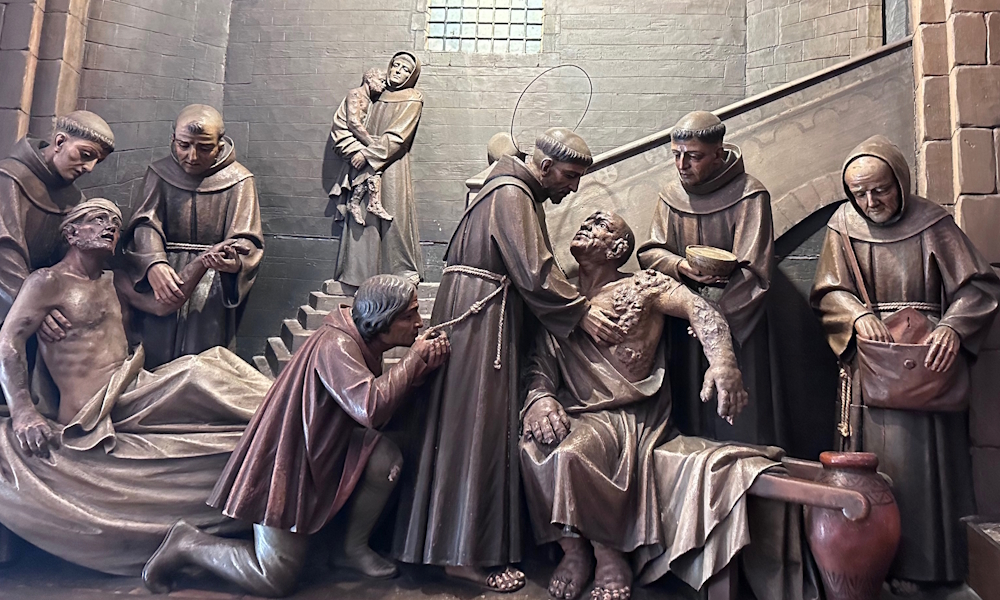
A particular example of St. Francis’ attitude of mercy is seen in the story of his meeting a leper. Coming from a family of wealth and superiority, he was said to have a terrible revulsion to lepers. In an effort to divest himself of that revulsion, one day he came across a leper. He stopped and greeted the leper with a kiss. When Francis mounted his horse to carry on his journey, he looked back to see the leper had vanished, realizing he had just encountered Jesus.
How much our society today needs to move from revulsion for certain classes of people to a spirit of welcome, especially for those who are strangers in our midst. Perhaps we could take the time to visit someone who feels rejected by our society and embrace them with the healing power and mercy of Jesus Christ, as St. Francis did.
“Blest, too, the peacemakers.” St. Francis is universally lauded for traveling to Egypt during the Fifth Crusade, in 1219. There, he and a companion met with Sultan Malik al-Kamil, the nephew of the famous Muslim leader Saladin, the ruler of Egypt and a powerful figure among the Muslim forces. It was a bold move to bridge the ongoing conflict between Christians and Muslims in an effort to foster peace.
Initially, he was met with opposition, but he stayed his course. St. Bonaventure described the meeting: “The sultan asked them by whom and why and in what capacity they had been sent, and how they got there; but Francis replied that they had been sent by God, not by men, to show him and his subjects the way of salvation and proclaim the truth of the Gospel message.” When the sultan saw his enthusiasm and courage, he listened to him willingly and pressed him to stay with him. Francis is said to have greeted the sultan with the greeting: “May the Lord give you peace,” similar to the traditional Muslim greeting of “Assalam o alaikum” or “Peace be upon you.”
Wouldn’t it be wonderful to have St. Francis with us today, attempting to negotiate peace with the Israelis and the Arabs in the Holy Land!
While perhaps not actually written by him, the great Prayer for Peace we all know by heart sums up his attitude to resolving conflicts: “Blest, too, the peacemakers.”
—‘Canticle of the Creatures’ —
I conclude by pointing out one of many other reasons for St. Francis’ relevance for today: his spiritual sense of the presence of God in all creation.
Beginning in 1225 and concluding shortly before his death in 1226, St. Francis composed the “Canticle of the Creatures.” It was reputedly written while St. Francis was suffering from malaria and near blindness, with rats crawling on him. He added verses about “Sister Death” shortly before he died, urging his followers to sing the anthem joyfully, not mournfully at his death.
He uses the terms “brother” and “sister” to highlight a deep connection with nature. Pope Francis’ second encyclical, Laudato si, on the topic of “care for our common home,” was partly inspired by this canticle of St. Francis.
One could go on for hours highlighting St. Francis’ impact on history and culture and his relevance for Catholics today. Suffice it to say, the spirit of St. Francis is very much still alive.
Thank you, Pope Leo, for giving our Church an opportunity to remember St. Francis during this special Jubilee Year! May this great saint intercede for us on the many serious issues facing us today, especially promoting the proper use of material goods so as to give glory to God; divesting of what hinders us from finding God and happiness in life; attempting to build bridges of harmony and peace in family life, Church life, and among nations; seeing God in all His creation and respecting Him as the author of all life, protecting life, promoting life, and avoiding a destructive consumeristic culture that acts in ways that are destructive to the creation God has entrusted to our care.
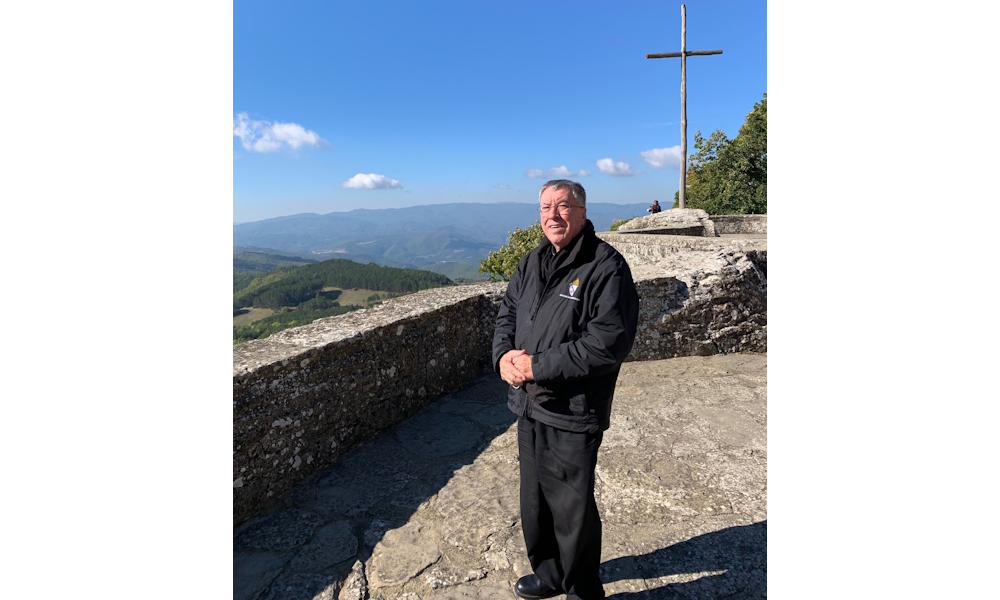
When I am in Assisi with family members on the feast of St. Francis, Oct. 4, I will remember all of you at Mass, praying for the intercession of Sts. Francis and Clare and St. Carlo Acutis, buried in Assisi and inspired to holiness of life by those great saints of Assisi!
Read more
In this Jubilee Year of St. Francis, pick up any one of these or numerous other books on St. Francis to help you enter into the spirit of this man acclaimed as, after the Virgin Mary and of course St. Joseph, one of the greatest saints in the Christian calendar and one of the most influential men in the whole of human history.
- Francis: The Journey and the Dream by Father Murray Bodo (St. Anthony Messenger Press, 1972)
- I, Francis by Carlo Carretto (Orbis Books, 1982)
- St. Francis of Assisi by G. K. Chesterton (Hodder & Stoughton, 1923)
Indulgence
During the Jubilee Year of St. Francis, the faithful, through special prayers and pilgrimages, may receive a partial or plenary indulgence, either for themselves or for deceased loved ones. In addition to the usual requirements (sacramental confession, Eucharistic communion, and prayer for the intentions of the Holy Father), to receive the indulgence, the faithful are encouraged to make a pilgrimage to any Franciscan conventual church (or place of worship anywhere in the world named after St. Francis), and in meditation and prayer ask God for the grace to follow the example of St. Francis, concluding with the Our Father, the Creed, and invocations to the Blessed Virgin Mary, St. Francis, St. Clare of Assisi, and all saints of the Franciscan family. Those who are sick or homebound and those who care for them may obtain a plenary indulgence without a pilgrimage, provided they fulfill the usual conditions and spiritually unite themselves to the jubilee celebrations.
A Prayer for the Special Jubilee Year of St. Francis
Saint Francis, our brother, you who eight hundred years ago
went to meet Sister Death as a man at peace,
intercede for us before the Lord.
You recognized true peace in the Crucifix of San Damiano,
teach us to seek in Him the source of all reconciliation
that breaks down every wall.
You who, unarmed, crossed the lines of war
and misunderstanding,
give us the courage to build bridges
where the world raises up boundaries.
In this time afflicted by conflict and division,
intercede for us so that we may become peacemakers:
unarmed and disarming witnesses of the peace that
comes from Christ.
Amen.