The unwavering faith of the Philippines brought to Alabama
The Philippines, with its 7,641 islands, 175 dialects, and various influences from previous colonizers (Spain, Japan, and the United States), is quite diverse in its culture, tradition, music, and art, yet there is one powerful force that unites Filipinos — our Catholic Christian religion. The Philippines is ranked third in the world in terms of having the largest percentage of Catholics, with roughly 80 percent of the total population professing the faith.
The Philippines, with its 7,641 islands, 175 dialects, and various influences from previous colonizers (Spain, Japan, and the United States), is quite diverse in its culture, tradition, music, and art, yet there is one powerful force that unites Filipinos — our Catholic Christian religion. The Philippines is ranked third in the world in terms of having the largest percentage of Catholics, with roughly 80 percent of the total population professing the faith.
The Spanish explorer Ferdinand Magellan set foot on the islands on March 16, 1521. A large wooden cross was planted under his directive on the island of Cebu after the natives of the island accepted Christianity, including Cebu's king and queen, Rajah Humabon and Queen Juana. The first Holy Mass was celebrated on March 31, 1521, which just so happened to be Easter Sunday. Just as that cross continues to stand firm over 500 years later, Filipinos continue to stand firm in their Catholic faith, including those who have left the motherland.
The community in the Diocese of Birmingham is no exception. In the 1980s, the community worked to connect with other Filipinos, resulting in the formation of the Filipino-American Association of Greater Birmingham (FAAGB) in December 1989. While the association is secular, the founding president, the late Dr. Cecil Nepomuceno, was a member of Prince of Peace Catholic Church in Hoover and encouraged the preservation of Filipino heritage, traditions, values, and culture, while also supporting community unity and service.
Over the next decade, the community’s bonds grew, but it remained somewhat small in numbers. That changed, however, in the early 2000s. The Birmingham area, in particular, saw an influx of Filipino nurses as a result of recruitment efforts by Princeton Baptist and Brookwood Baptist hospitals. Their arrival greatly strengthened the community, and Catholic participation increasingly became an important part of community life.
With a focus on faith, several leaders within the community worked to preserve Filipino Catholic traditions. Gabriel Salaparan reached out to Father Bryan Jerabek in 2014 about a treasured part of Filipino history and culture: Simbang Gabi.
SIMBANG GABI IN BIRMINGHAM: MORE THAN JUST A FILIPINO TRADITION
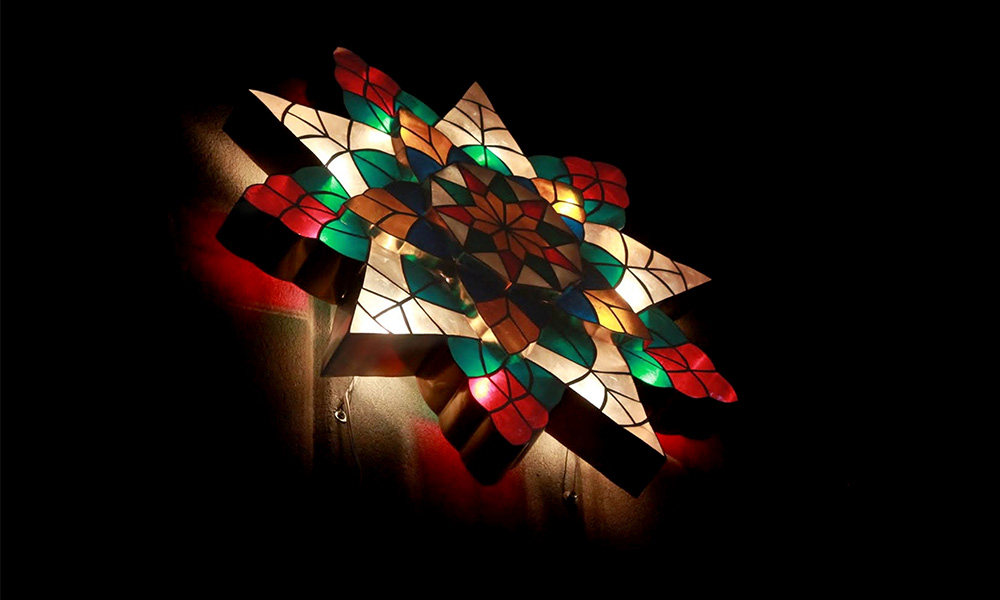
Simbang Gabi, or “Night Mass” in Tagalog, is a Filipino religious tradition originating from the Spanish era in the 1580s. Liturgically, Simbang Gabi is a series, or novena, of votive Masses in honor of the Blessed Virgin Mary in preparation for Christmas. Historically, the Masses were celebrated during the predawn hours to accommodate farmers who needed to begin their daily labors very early in the morning to avoid the scorching heat of the sun. The use of lanterns, or parol, to light the way to the Masses became a lasting symbol of the Filipino Christmas. In the United States, many Filipino communities adapt the tradition to evening Masses due to work, family, and church schedules; however, the tradition still incorporates parol, Filipino Christmas hymns, Tagalog, Filipino clothing, processions, flowers, Filipino food, and fellowship, or salo-salo, after Mass.
In the diocese, with the steadfast support of then shepherd of Birmingham, Bishop Robert Baker, the first Simbang Gabi Mass in Birmingham was celebrated by Father Bryan Jerabek on Dec. 15, 2014, at St. Barnabas Catholic Church. From meager beginnings, Simbang Gabi has steadily flourished thanks to a handful of individuals devoting time and effort to continue the tradition. Every year, Simbang Gabi grows in attendance, as different parishes throughout the area host the novena, including St. Stephen the Martyr Catholic Chapel, St. Peter the Apostle Catholic Church, and the Cathedral of St. Paul. “We always know Christmas is on the horizon when the Simbang Gabi Masses are under way,” says Bishop Emeritus Baker. “We are grateful to the Filipino community for highlighting the importance of preparing our hearts for the celebration of the feast of Christ’s birth. They do it so well!”
While the continued celebration of Simbang Gabi preserves the Filipino Catholic tradition, for those in attendance it is much more: hearts are touched and eyes filled with tears of happiness and longing to be with loved ones back home.
Realizing the tradition’s impact, Michael Tabuena, current director of Simbang Gabi, notes: “During the celebration of our tenth anniversary, I accepted Gabriel's offer to shadow him … I witnessed firsthand the dedication, sacrifice, and faith that made this tradition possible. As director, my mission is to preserve and strengthen Simbang Gabi, ensuring that future generations can continue to experience its spiritual, cultural, and community significance. I see myself not as an owner of this tradition, but as a steward entrusted to guide it forward and one day, pass it on to the next generation of leaders who will continue its faith, fellowship, and cultural heritage."
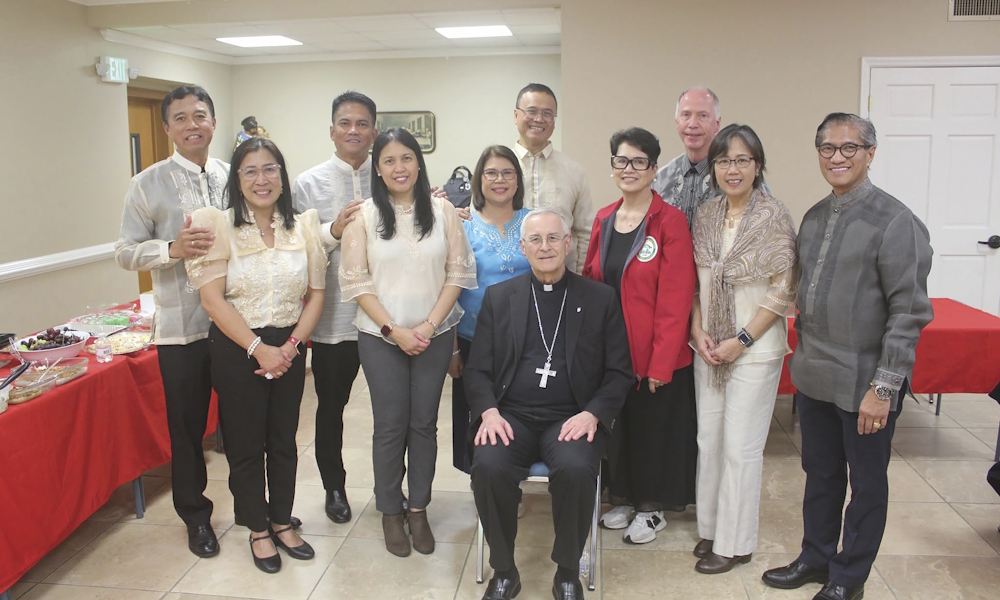
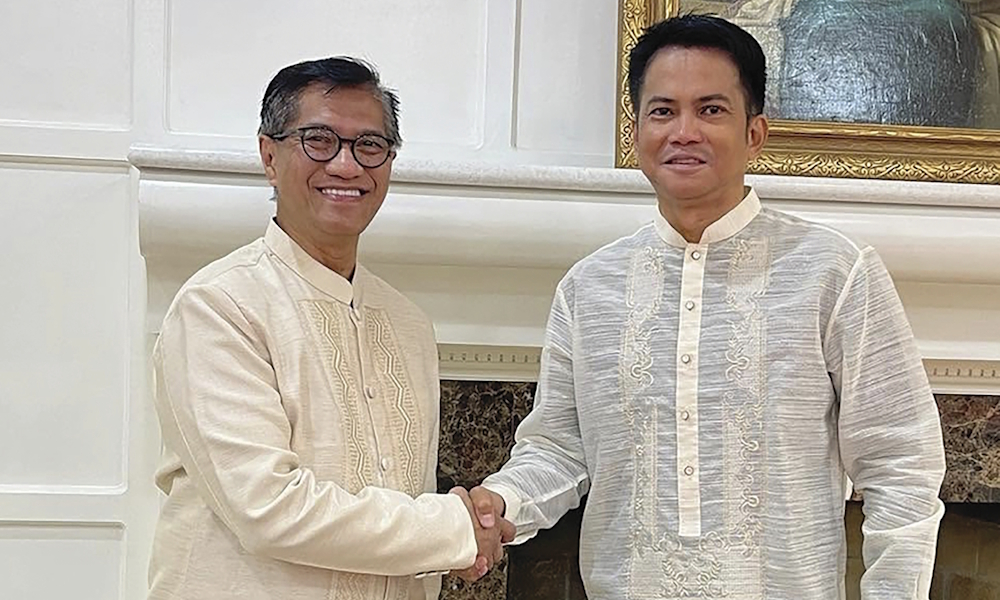
The Filipino Catholic Community is no longer simply a group of Catholics attending ordinary parish Masses; rather, it has developed a recognizable Catholic cultural identity within the diocese, featuring Filipino faith, Mass traditions, devotions, music, food, festivals, and diocesan participation.
Besides Simbang Gabi, the Filipino Catholic Community celebrates Santo Niño/Sinulog and marks the feast of Our Lady of Peñafrancia, the patroness of the Bicol region.