The Fraternity of the Poor of Jesus Christ
Cultivating the Franciscan spirit in the diocese and beyond
Cultivating the Franciscan spirit in the diocese and beyond
The Fraternity of the Poor of Jesus Christ emerged from a moment of profound spiritual inquiry in the life of its founder, Father Gilson Sobreiro de Araújo. Born in Brazil in 1970, Father Gilson was a priest with a deep passion for missionary work, having served in both European refugee missions and Brazilian prisons. In the early 2000s, while ministering to young people struggling with drug addiction on the outskirts of São Paulo, he was struck by the radical effort these individuals made to remain sober — an effort that challenged the comfort of his own religious life.
The Fraternity of the Poor of Jesus Christ emerged from a moment of profound spiritual inquiry in the life of its founder, Father Gilson Sobreiro de Araújo. Born in Brazil in 1970, Father Gilson was a priest with a deep passion for missionary work, having served in both European refugee missions and Brazilian prisons. In the early 2000s, while ministering to young people struggling with drug addiction on the outskirts of São Paulo, he was struck by the radical effort these individuals made to remain sober — an effort that challenged the comfort of his own religious life.
Responding to a divine call to “let go of superficiality” and seek depth, Father Gilson, along with co-foundress Sister Servant and a small group of dedicated youth, rented a house in a poor neighborhood known as Vila Natal in October 2001. This first house became a place where members of the fraternity and those they served lived in radical commonality, sharing everything from food to clothing. Originally known as the Missionary Community of “The Way,” the fraternity’s purpose was to meet people exactly where they were, untethered by rigid structures, to love and welcome them just as Jesus did.
Franciscan roots
While the Fraternity of the Poor of Jesus Christ (P.J.C.) is a relatively young community, the spiritual foundation is deeply anchored in the Franciscan tradition. St. Francis of Assisi and St. Clare of Assisi are honored as two of our community’s five holy patrons, guiding our understanding of fraternity and poverty. Like Francis, we view ourselves not merely as followers of an idea or a humanitarian cause, but as followers of the person of Jesus of Nazareth. For the P.J.C., being Franciscan means embracing the “bold pretension” that St. Francis had: to live the Gospel without gloss (sine glossa), holding nothing back for oneself. This Franciscan identity is expressed through our community’s commitment to radical poverty and our “bold pretension” to want Jesus entirely.
The charism
The heart of the Poor of Jesus Christ identity is summarized in the motto: Iesus Totus, Totus Iesu (Jesus all, all of Jesus). This is not merely a beautiful sentiment; it is a concrete and demanding way of life.
The charism is a gift of grace (charis) that acts as a criterion for every decision made. It involves a “double movement”: to want Jesus entirely and to belong entirely to Him. The former is a deep desire to know and love Him in depth, not just in fragments, and the latter is a response of total surrender, allowing Him to guide choices, paths, and even sufferings.
This path requires radicality — not as an exaggeration but as “wholeness.” It is an invitation to live with an undivided heart, unified and centered on Jesus. We believe that without constant deepening and conversion, a heart becomes fragmented. Therefore, we strive for a daily “realignment” with the Gospel, knowing that personal limitations are not obstacles but opportunities for God’s grace to work.
This charismatic conviction is what fuels our mission. We believe that consecrated life is “Heaven in anticipation,” a dynamic state that gives life to the Gospel in every prayer, every encounter, and every moment during the day. By centering our lives on Jesus, we are naturally decentralized toward the marginalized. Our charism compels us to seek out those whose lives have been “stolen by meaninglessness” and offer them the hope found in Christ.
The life
The members of the Poor of Jesus Christ include consecrated religious friars and sisters, as well as lay associates. Every member participates in the Holy Sacrifice of the Mass and observes a daily Holy Hour of adoration before the Blessed Sacrament. Days are woven together by the Liturgy of the Hours, Lectio Divina, the Holy Rosary, and the Little Crown of the Blessed Virgin Mary.
In the charism of the Poor of Jesus Christ, fraternal life is not merely a social arrangement or a shared living space; it is a profound theological reality and a vital instrument of mission. The community is the place where we must share “faith, prayer, intercession, conversion, and communion.” (OS 148) It is the primary environment where religious brothers and sisters work out our salvation and offer the world a “true face of Christ.”
The community’s Rule of life (OS) emphasizes that members are not in the community simply to “do good” in an external sense, but “above all, to want good” for those they live with. (OS 147) This internal love is the benchmark for all external ministry.
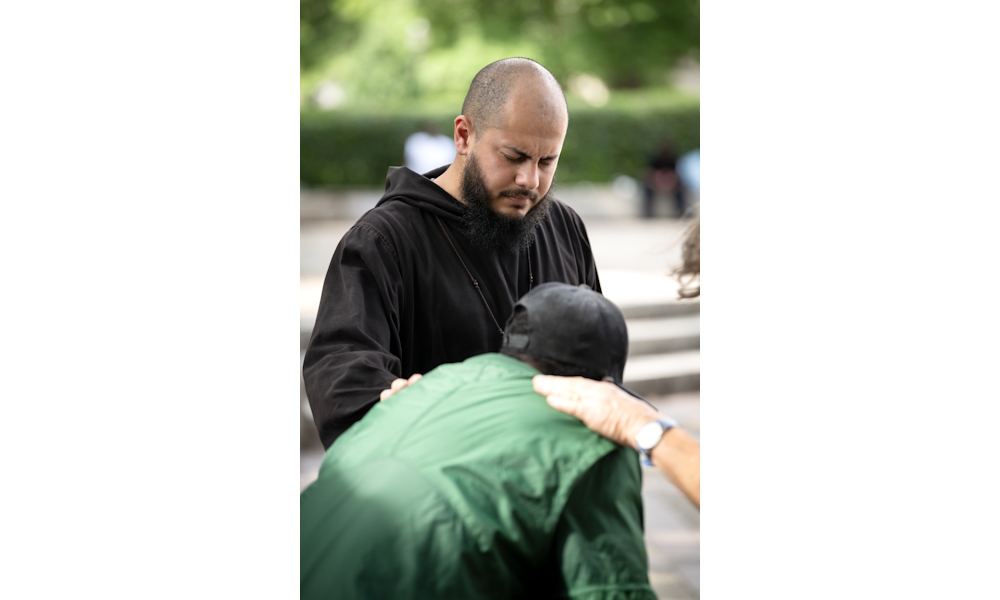
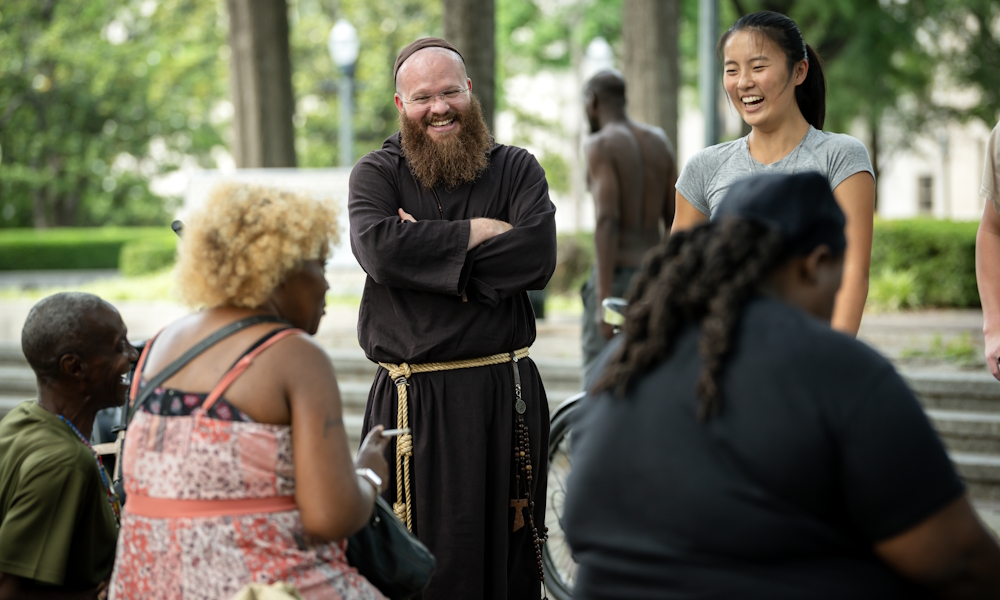
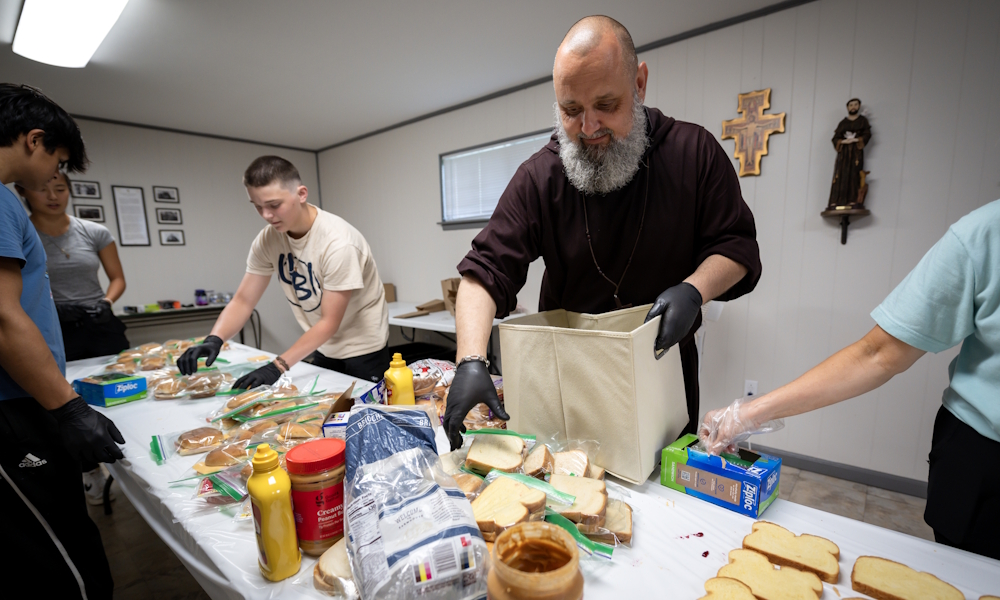
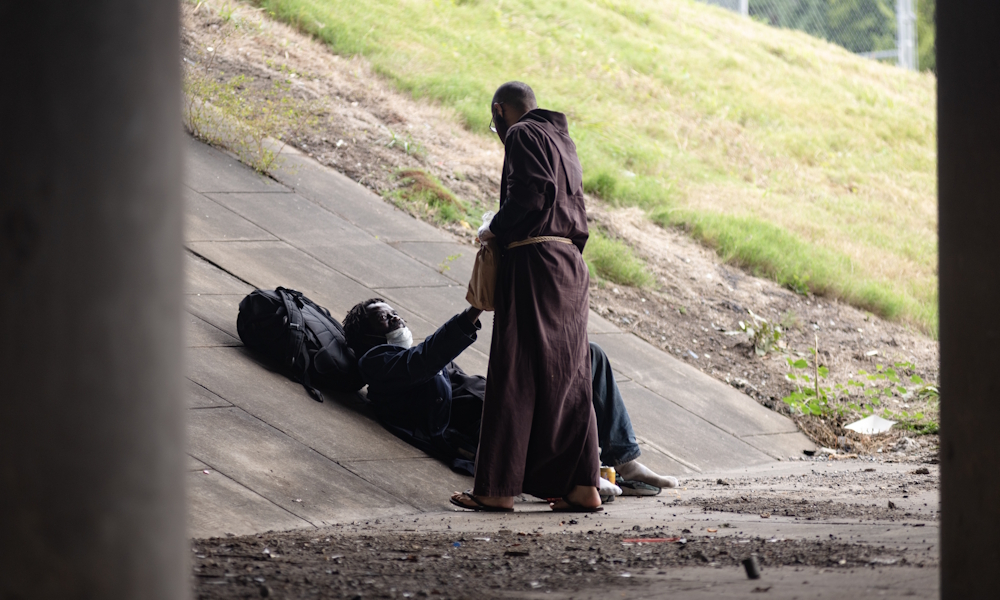
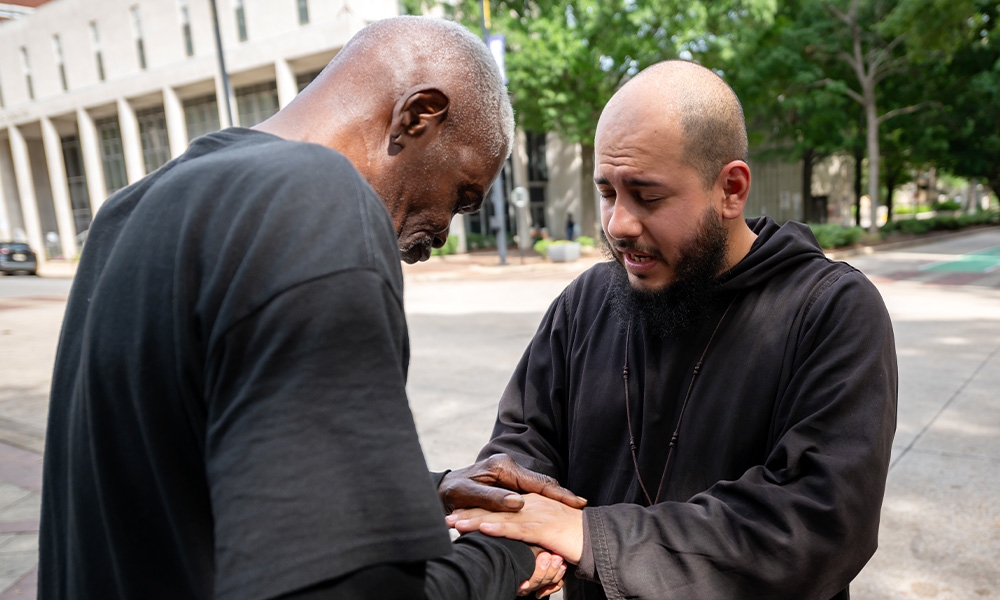
In the Diocese of Birmingham, the community’s mission is lived out through three dimensions: Kerygma (proclamation), Diaconia (service), and Koinonia (fellowship or communion).Our pastoral service is focused on the poor, ministering to the homeless and addicted and evangelizing. We not only reach out to those living on the streets or suffering from substance abuse, offering both spiritual support and practical assistance with food, clothes, and hygiene products, but we also share the Word of God in the streets, in our neighborhood, and in the parishes where we serve.