Sister Servants of the Eternal Word
Cultivating the Franciscan spirit in the diocese and beyond
Cultivating the Franciscan spirit in the diocese and beyond
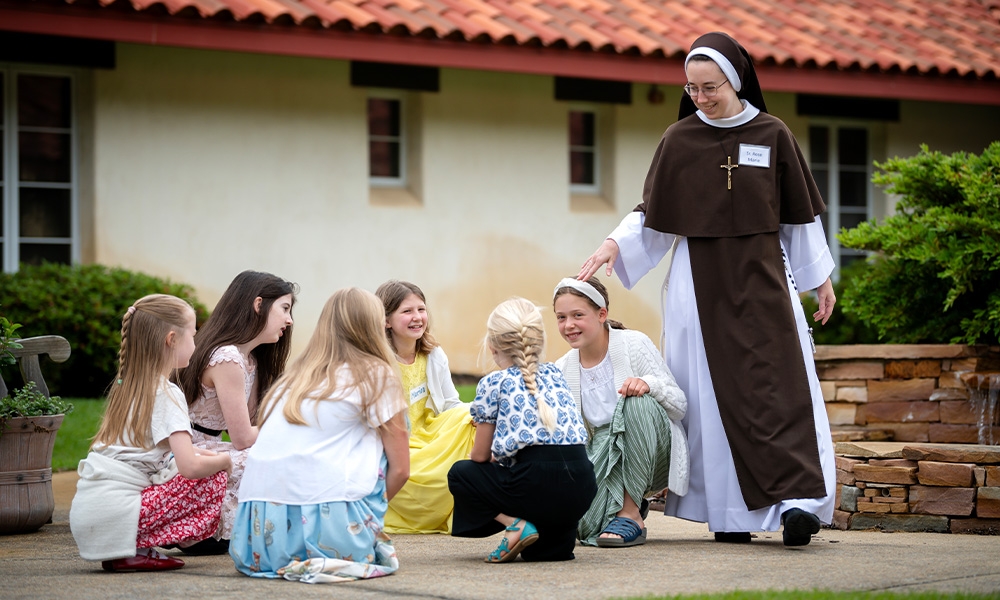
When people see the Sister Servants of the Eternal Word in their white and brown habit, cord cincture, and large rosary, many puzzled Catholics stop them and ask what kind of sisters we are. Franciscan? Dominican? We smile and answer, “Yes!” The community was founded in Birmingham by Mother Mary Gabriel in 1987. When answering God’s call to found the community, she chose to take both Sts. Dominic and Francis together as patrons, two saints who met in Rome and labored for the “conversion of the world and return a countless number of lost sheep to the fold.”
When people see the Sister Servants of the Eternal Word in their white and brown habit, cord cincture, and large rosary, many puzzled Catholics stop them and ask what kind of sisters we are. Franciscan? Dominican? We smile and answer, “Yes!” The community was founded in Birmingham by Mother Mary Gabriel in 1987. When answering God’s call to found the community, she chose to take both Sts. Dominic and Francis together as patrons, two saints who met in Rome and labored for the “conversion of the world and return a countless number of lost sheep to the fold.”
Having established the Sister Servants with the defined apostolate of evangelization through catechesis and retreats, Mother Mary Gabriel would one day write a letter to the community that elaborated on her appreciation for these two saints. She wrote, “The unity of their hearts in Jesus Christ and their loving devotion to His Immaculate Mother typify the unity, love, and zeal that gave impetus to and sealed their friendship. They inspire us how to teach the faith by the holy witness of their lives. We must be convinced that personal holiness is necessary in order to be an effective teacher of the Catholic faith.” Any time Mother Mary Gabriel was asked about academic degrees she had earned, she was known to say, “The letters after your name are worthless without the St. (saint) before it.” In other words, her priority, and her wish, for all the sisters in the community was to focus on earning the title of “Saint,” rather than worldly honors. If we do that, all our apostolic work will be fruitful.
Let’s take a moment, though, to focus on St. Francis as the Church prepares to mark the 800th anniversary of his death. St. Francis was notably fascinated by the humility of God. He especially focused on Jesus’ humility in becoming man, suffering the Passion, and in the mystery of the Eucharist. His persistent marveling eventually developed into the worldwide traditions of Nativity scenes and the Stations of the Cross.
St. Francis’ profound Eucharistic devotion inspired him to write in A Letter to the Entire Order: “Let the whole of mankind tremble, the whole world shake and the heavens exult, when Christ, the Son of the living God, is present on the altar in the hands of a priest. O admirable heights and sublime lowliness! O sublime humility! O humble sublimity! That the Lord of the universe, God and the Son of God, so humbles Himself that for our salvation He hides Himself under the forms of bread! Look, brothers, at the humility of God and pour out your hearts before Him! Humble yourselves, as well, that you may be exalted by Him. Therefore, hold back nothing of yourselves for yourselves so that He Who gives Himself totally to you may receive you totally.”
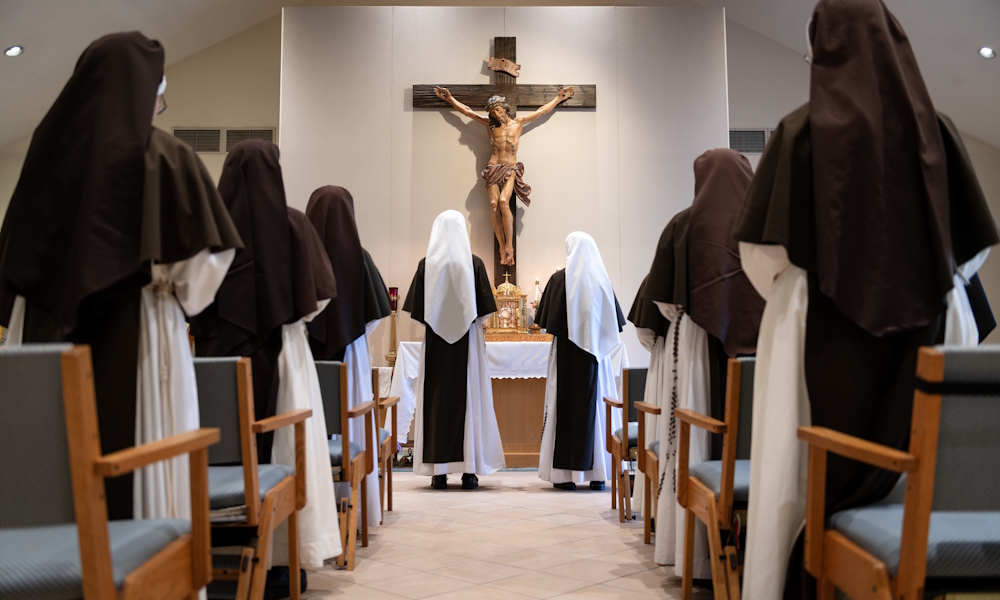
Loving devotion toward Jesus’ humble gift of Himself in the Incarnation, Passion, and Eucharist form the bedrock of the Sister Servants’ life of prayer. A typical day begins with an hour of silent Eucharistic adoration and the tremendous gift of exposition during common prayer continues throughout the day. Daily reception of Holy Communion is irreplaceable in each sister’s striving for the individual holiness Mother Mary Gabriel insisted was necessary for a flourishing community and apostolate.
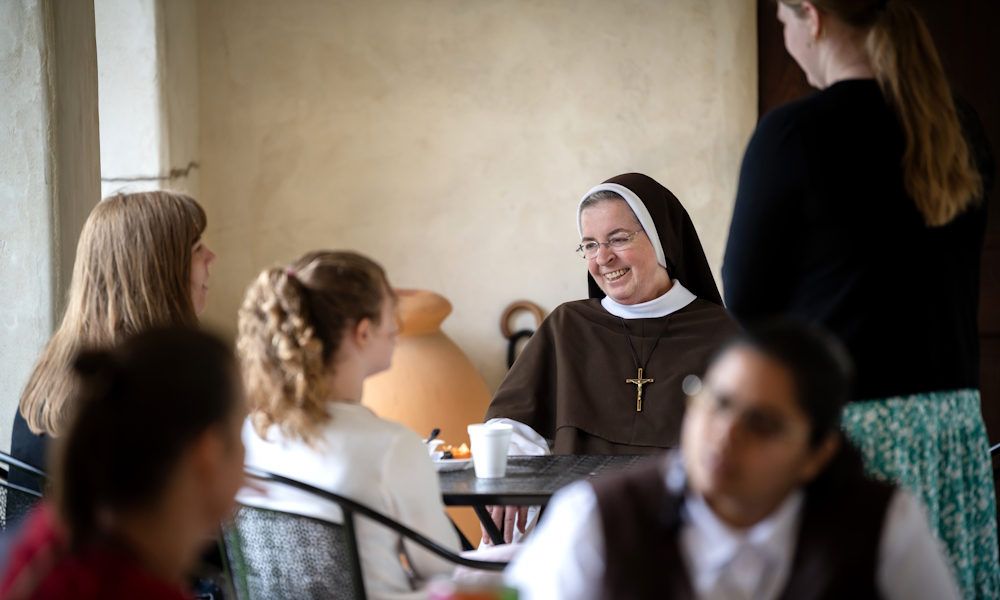
The community’s retreat apostolate also gives evidence of Franciscan inspiration. To the sisters, Casa Maria is not a facility we rent out. It is our home, into which we invite retreatants for a few days. In that time, they enter into our life, with common prayer, liturgy, meals, and conversation together. The sisters organize the retreats, schedule retreat masters, prepare the retreat house and the meals, and are with the retreatants throughout their stay. This is St. Francis’ approach to apostolic work; that his followers be right in the midst of the people they serve, sharing in all their ordinary labors and, through genuine relationships, inviting others to pursue deeper love of God.
In seeking union and conformity with Christ, St. Francis strove to find ways to humble himself as Christ had. He soon learned that it was impossible to match Jesus’ humility, but he sought ways to become as humble as he could, or as he saw it, as “small” as he could. This was particularly through simplicity and voluntary poverty. These are the traits that typify St. Francis and typify his spiritual children even to this day. In response to Francis’ lowering himself in every way he could, God has raised him up to the greatest honors of canonization by the Church and renown throughout the world, even eight centuries after his death. “For the one who is least among all of you is the one who is the greatest.” (Lk 9:48) We are grateful for St. Francis’ intercession as we, too, seek to learn conformity to Christ!