‘Pray, stay, rejoice, invite’
Diocese holds day of formation for catechists
Diocese holds day of formation for catechists
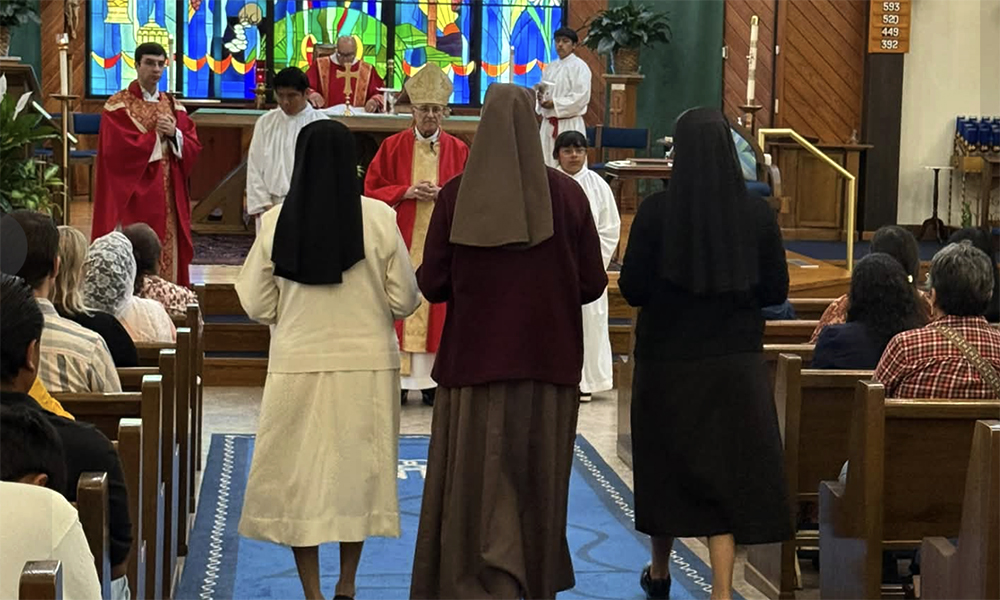
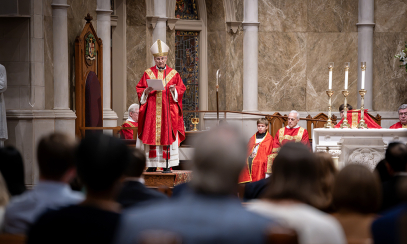
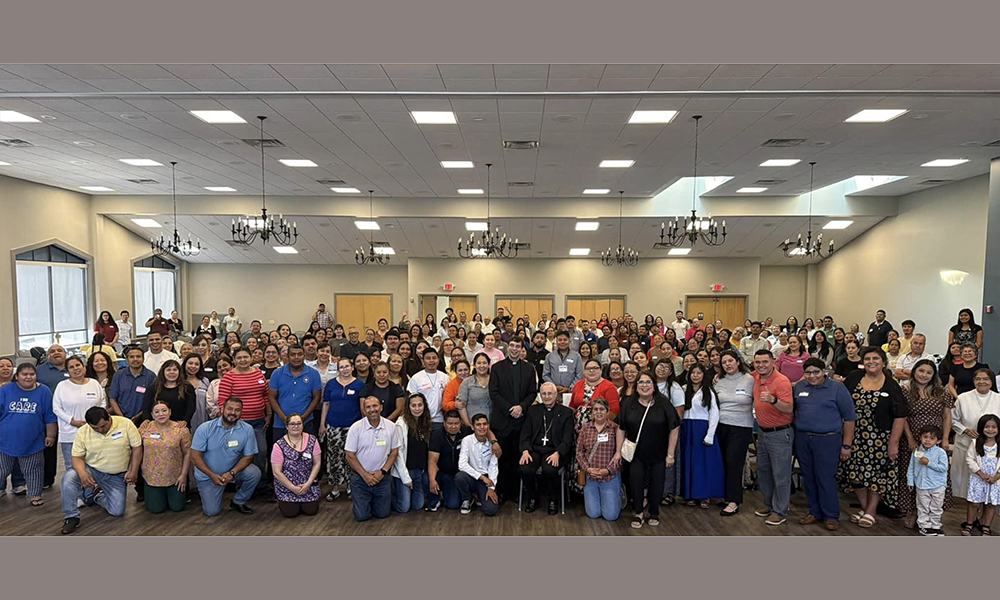
On Sept. 19, the feast of St. Januarius, the bishop traveled to St. Peter the Apostle Catholic Church in Hoover to celebrate Mass for those gathered for a diocesan-sponsored Catechists’ Formation Day. The complete text of the bishop’s homily follows herein.
On Sept. 19, the feast of St. Januarius, the bishop traveled to St. Peter the Apostle Catholic Church in Hoover to celebrate Mass for those gathered for a diocesan-sponsored Catechists’ Formation Day. The complete text of the bishop’s homily follows herein.
Dear catechists, brothers and sisters in Christ, today the Church gives us St. Januarius, an Italian bishop who gave his whole life, down to his blood, as a witness to Jesus Christ. And it is no accident that the word “martyr” simply means witness. That is exactly what we are asking of you today, catechists: not to be experts who hand out information, but witnesses who hand over a life.
The seed that dies to live
St. Paul tells us something astonishing in the first reading: what is sown is perishable, but what is raised is imperishable; sown in weakness, raised in power. A catechist often sows without ever seeing the harvest. You teach, you pray, you invite, and sometimes it seems like nothing changes. But Paul reminds us that the seed must disappear from sight before it gives life beneath the soil. That hidden, humble, seemingly fruitless work is exactly where God is acting with the greatest power.
We were formed, Paul says, in the image of the “earthly man,” but we are destined to bear the image of the “Heavenly Man,” Christ Himself. Catechesis is not first about information transfer. It is about letting people see, in you, a living image of the Risen Christ.
Walking in God's presence
Today's psalm gives us the key to everything: “I will walk before God in the light of the living.” Before you are teachers, you are people who walk with God. That daily closeness - prayer, Mass, adoration, examining the day with Jesus - is not an optional extra for the catechist. It is the very source of everything you will later share. No one can bear witness to a friendship they don't actually have.
The Sower and the soil
In the Gospel, Jesus Himself is the Sower. He is the One Who sows the Word. Not us! Our work, the catechist's work, is to prepare the ground: to soften the hardened path, to clear away the stones, to pull out the thorns of anxiety, riches, and the pleasures of life that choke the Word before it can bear fruit.
And how is that soil prepared? It is prepared not with perfect arguments, but with a “generous and good heart.” It is a heart that listens, accompanies, and loves without conditions. And it does so with great perseverance because we almost never see immediate fruit. Sowing without seeing an instant harvest is not failure; rather, it is faithfulness.
The method: pray, stay, rejoice, invite
Dear catechists, the method of the missionary disciple is simple, and you already know it.
- Pray every day, without excuses.
- Stay close to Jesus, in the Eucharist and in His Word.
- Do not be afraid to share the joy of being Christian - a real joy, not a performed one.
- Invite others to join Christ's movement here on earth.
Conclusion
Like St. Januarius, you are not called to win every argument with perfect words, but to be witnesses, people whose very lives leave others amazed because it is obvious that Christ is alive in you. Keep preparing the soil with patience. Keep walking in the presence of God. And one day, maybe not today, you will see the harvest: men and women, children and young people, becoming true missionary disciples, amazed by what Christ is doing in their own lives and in the world.
May St. Januarius intercede for us. May we always walk in the presence of God in the light of the living. Amen.
For the Spanish version, please click here.