‘Having only God before my eyes’
Bishop Raica celebrates annual Red Mass
Bishop Raica celebrates annual Red Mass
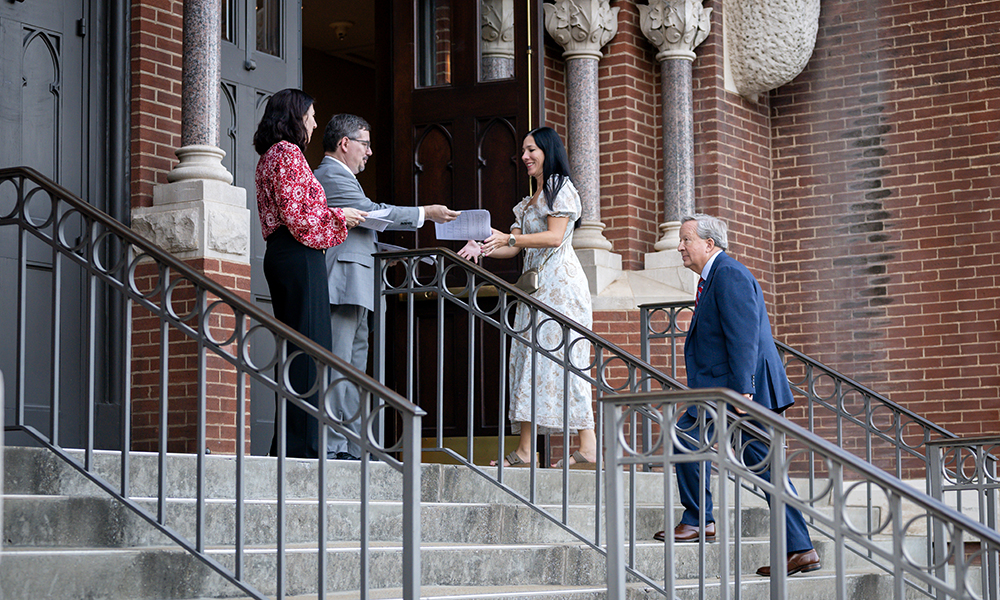
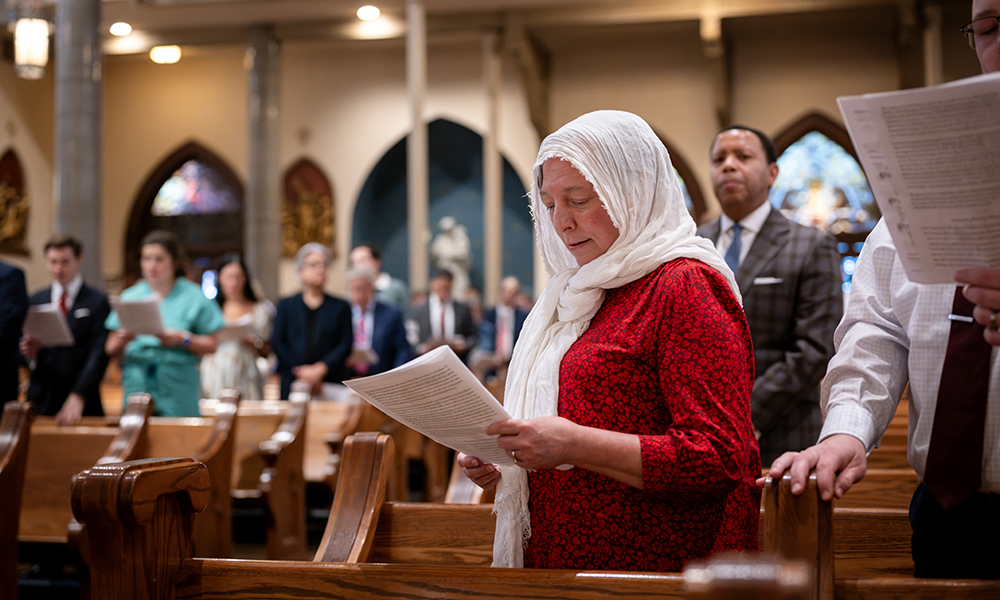
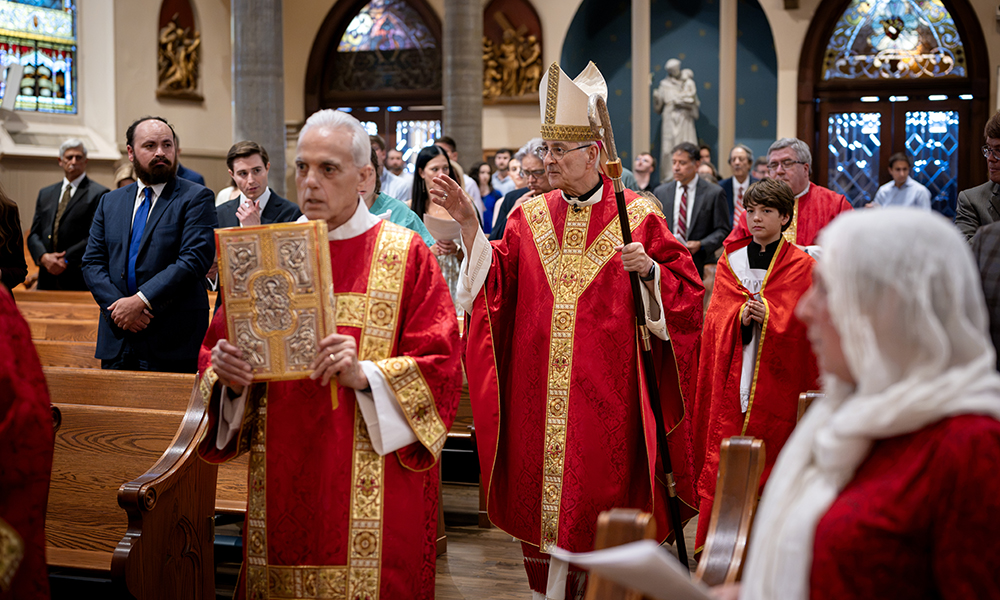
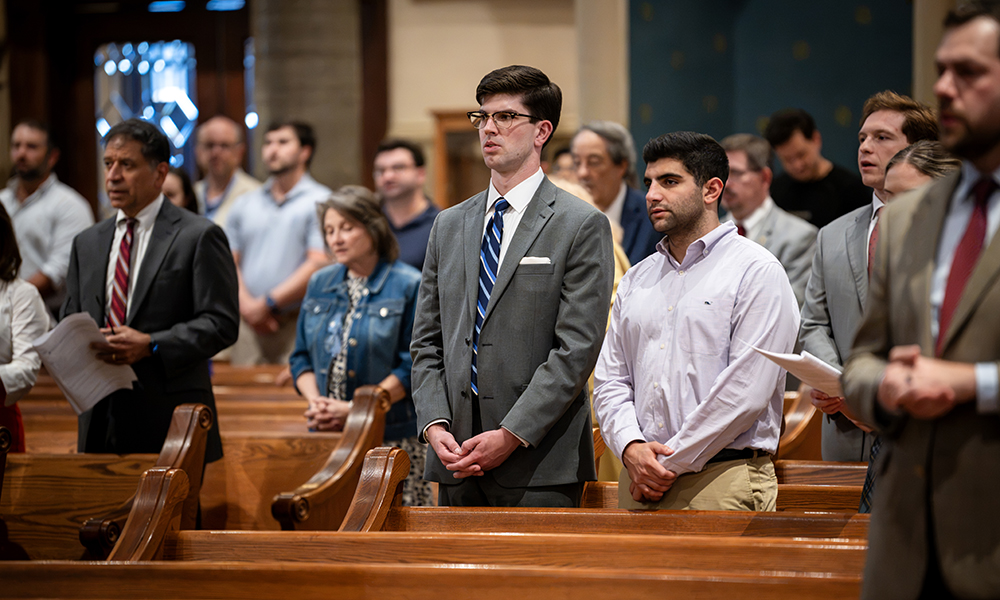
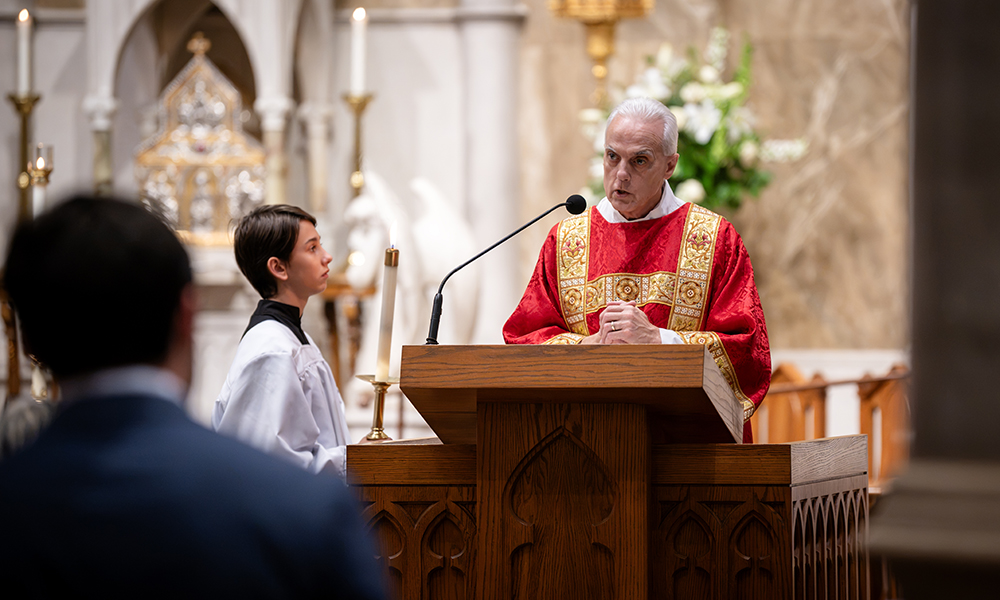
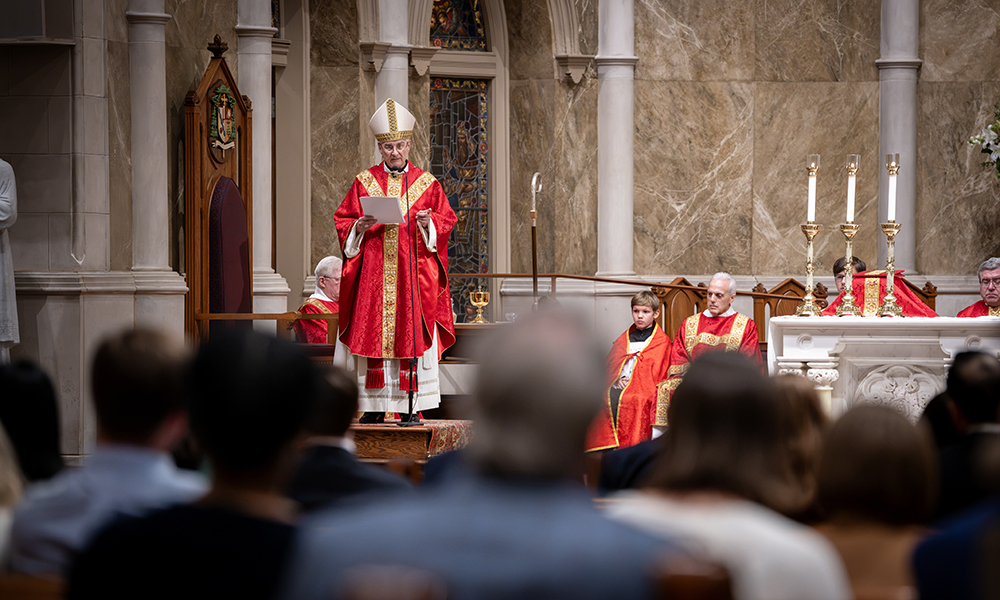
On Oct. 1, Bishop Raica celebrated the annual Red Mass at the Cathedral of St. Paul. The Mass, sponsored by the Diocese of Birmingham in Alabama and the Catholic Lawyers of the St. Thomas More Society, is a Mass of the Holy Spirit celebrated annually at the opening of the judicial year to invoke divine guidance for all who seek and administer justice. This Thirteenth Century European custom received its name from the red color of the vestments worn by the celebrant and the scarlet robes worn by the Lord High Justices. The Red Mass came to the United States in 1877 and has been celebrated in Alabama since 1974. The complete text of the bishop’s homily follows herein.
On Oct. 1, Bishop Raica celebrated the annual Red Mass at the Cathedral of St. Paul. The Mass, sponsored by the Diocese of Birmingham in Alabama and the Catholic Lawyers of the St. Thomas More Society, is a Mass of the Holy Spirit celebrated annually at the opening of the judicial year to invoke divine guidance for all who seek and administer justice. This Thirteenth Century European custom received its name from the red color of the vestments worn by the celebrant and the scarlet robes worn by the Lord High Justices. The Red Mass came to the United States in 1877 and has been celebrated in Alabama since 1974. The complete text of the bishop’s homily follows herein.
My dear brothers and sisters in Christ, distinguished judges and justices, members of the bar, attorneys, prosecutors, public defenders, para legals, law students and professors, law enforcement officers, court personnel, and our elected and appointed public officials and canonists and ecclesiastical judges:
It is my distinct joy to welcome you to this annual Red Mass here at the Cathedral of St. Paul in downtown Birmingham. We gather every year to invoke the power of the Holy Spirit upon all who serve the cause of justice in our communities. We pray that the Spirit will enlighten minds, strengthen consciences, and renew commitment to the important work entrusted to you.
The Gospel, too, gives us a beautiful mission: “The Kingdom of God is at hand for you.” Jesus sends His disciples to bring peace, to heal what is broken, and to announce the favor of God that He has drawn near to His people.
That mission belongs not only to the Church’s ministers. In a particular way, it is shared with all who seek to build a society in which human dignity is respected, justice is upheld, freedom is protected, and every person has the opportunity to contribute to the common good of society.
The legal profession also participates in God’s work of building a more just and peaceful human society. Indeed, that is a noble vocation. It is a vocation that finds its deepest meaning in Christ, our King.
- The dignity of every person is the foundation of justice
Our first reading from Job, in the Old Testament, offers us a remarkable declaration of hope: “I know that my Vindicator [other translations: Redeemer] lives.” (cf. Job 19:25)
Even in suffering, which seemed to plague Job for most of his adult life, Job trusts, in a remarkable way, that his life is not forgotten by God and that, ultimately, truth and justice will have their vindication and prevail in the end. What a powerful reminder for those entrusted with the administration of justice!
Before a person is a plaintiff or defendant, a petitioner or respondent, a victim or an accused, a witness or an offender, that person is a human being, created in the image and likeness of God.
Human dignity is an innate and inalienable characteristic of our humanity. It is not bestowed by a government, a court, or a legislature. It comes from the Creator. Our laws can recognize and protect the rights that flow from that dignity, but they do not create it nor can they take it totally away.
St. Thomas Aquinas, the celebrated Dominican theologian and scholar, teaches that justice consists in “the constant and firm will to render to each person his or her due.” (Summa Theologiae, II–II, q. 58, a. 1) That is the heart of your vocation: to give each person his or her due through the various processes and procedures that protect the rights, especially the right of defense.
The victim deserves protection and recognition of the harm suffered. The accused deserves due process, the right of defense, and a fair hearing. The community deserves public safety and the impartial administration of justice. And every person deserves every respect for the dignity that comes from God.
This is why the law must always remain at the service of the human person and the common good. As Aquinas reminds us, law is directed toward the common good, not private advantage. (Summa Theologiae, I–II, q. 90, a. 2)
What a wonderful responsibility you have! Your work helps establish the conditions in which individuals, families, and society can flourish.
2. We are servants of justice, with God before our eyes
I recall a professor of mine, a distinguished judge of the Roman Rota which treats second and third instances of ecclesiastical cases brought before it, would frequently remind us students of the importance of “judicial deontology”: the moral responsibilities that accompany the exercise of judicial authority.
He warned us of what he called the “halo effect”: the danger of assuming that, because we have been entrusted with authority over the lives of other by our decisions and judgements, that we somehow occupy the place of God and can act without any guardrails in place. I have never forgotten that lesson. We are servants of the law and of justice, not their masters or owners.
That is why I recall that, whenever I had to write a definitive sentence in my judicial work in a case before the diocesan tribunal, the dispositive part of the sentence always included a familiar expression: “Having only God before my eyes.”
Those words helped me maintain my focus on the right relationship and balance required in applying the law to the facts, arriving at a judgment with fairness and equity, according to the law, jurisprudence, and truth. They also reminded me that the authority entrusted to me to function in this noble capacity was not mine to exercise according to personal preference, whim, resentment, or a desire to prevail or punish.
Ultimately, it was a responsibility before God, and what a valuable examination of conscience this is for all of us during this Red Mass today in which we invoke the guidance and grace of the Holy Spirit!
So, the questions remain: In our work, are we seeking the truth? (Not my truth or your truth, but the truth of the matter before us!) Are we respecting the dignity of the person before us? Are we exercising authority for the good of others? Are we seeking justice, or simply trying to win an argument at any expense?
St. Thomas More, the celebrated saint for jurists and those in the legal profession, whose fidelity to conscience cost him his life, remains a powerful example of integrity in public service. His witness reminds us that professional responsibility and fidelity to conscience must never be separated or compromised.
And integrity requires courage, but it also requires humility. Judges must decide impartially and fairly. Attorneys must advocate conscientiously and honestly. Prosecutors must seek justice, and the truth of the matter, not simply convictions. Public defenders must safeguard the rights of those entrusted to their care. Public officials must exercise authority for the common good.
We can disagree vigorously, according to our position in an argument, and still treat one another with respect. Indeed, civility is not a weakness. It is a sign of confidence in the truth and of respect for the dignity of those with whom we disagree.
The credibility of our institutions depends not only upon the decisions they make, but also upon the integrity and fairness with which those decisions are reached. Whenever people encounter fairness, honesty, and respect, public trust is strengthened. That is a service to the whole society so that the communities in which we live thrive in greater freedom.
3. Justice must correct what is wrong and restore what can be healed
In today's Gospel, Jesus sends His disciples with a message of peace, but peace is not simply the absence of conflict. True peace requires justice. When someone has been harmed, the wrong must be acknowledged. When a law has been broken, society has a legitimate responsibility, indeed an obligation, to respond.
Yet our Christian tradition invites us to ask: What is the purpose of our response? The renown St. Thomas Aquinas teaches that the proper effect of law is to lead people toward goodness, when the law itself is directed toward the true good and the common good. (Summa Theologiae, I–II, q. 92, a. 1)
This is a particularly important insight for a nuanced understanding of punishment. Justice must hold people accountable, but it should never become an instrument of revenge.
A penalty must be proportionate to the offense, protect society, and uphold the rights of those who have suffered harm. Whenever possible, it should also encourage reform and rehabilitation of the perpetrator.
Thus, there is a medicinal character of justice: correcting what is wrong in the hope that something good may be restored. We must never forget victims, nor should we impose reconciliation upon those who have been injured. Public safety and accountability remain essential.
But neither should we conclude that a person's worst decision or action must define the rest of his or her life. When someone has accepted responsibility, fulfilled a just penalty, and taken meaningful steps toward rehabilitation, the opportunity to re-enter society can become an avenue and source of renewed hope. It must also be acknowledged, regrettably, that there may be or are some instances when even this possibility seems remote due to the nature of the crime, the inability of the individual to reform, and our overarching desire to protect society and the individual from further injury.
Nevertheless, a person who can be restored to responsible citizenship can once again support a family, serve a neighbor, and contribute to the common good. It is justice reaching toward its fullest purpose.
Moreover, mercy does not erase the truth or excuse wrongdoing. It allows us to exercise justice with wisdom, compassion, and a recognition that conversion and restoration remain possible.
The Kingdom of God is visible whenever justice protects the innocent, holds wrongdoing accountable, and opens a path toward a more hopeful future.
4. Christ the King: Our source of hope and our mission
In one of our more solemn prayers during the Solemnity of Christ the King, His Kingdom is described as one of truth and life, holiness and grace, justice, love, and peace. These beautiful words illustrate the values that can transform our communities.
A Kingdom of truth calls us to integrity.
A Kingdom of justice calls us to protect human dignity and render to each person his or her due.
A Kingdom of freedom calls us to respect the rights and responsibilities of every person allowing me to become truly and fully myself.
A Kingdom of love calls us to see in the person before us not merely a case, an adversary, or a problem, but a fellow human being.
And a Kingdom of peace calls us to resolve our differences through reason, dialogue, and the faithful administration of law.
Dear friends, thank you for the work you do. Thank you for the hours spent seeking truth, protecting rights, resolving disputes, and helping people through difficult circumstances to find a modicum of peace.
Thank you, also, for your steadfast dedication to the institutions that sustain our communities and for your efforts to ensure that justice is accessible, the vulnerable are not forgotten, and every person has an opportunity to flourish.
The people of the Diocese of Birmingham in Alabama are grateful for your service.
Today, we implore the Holy Spirit to renew your noble vocation. May He grant our judges wisdom, our attorneys’ integrity, our public officials prudence, our law enforcement officers’ courage, and our future lawyers a profound love of truth and justice.
And may He help all of us remember that our authority, our talents, and our responsibilities are gifts entrusted to us for the service of others. Our hope rests ultimately not in the perfection of our institutions, but in the Lord Who calls us to participate in His work.
Through the prayerful and powerful intercession of St. Thomas More, St. Thomas Aquinas, and St. Thérèse of the Child Jesus, whose feast day we commemorate today in our ecclesiastical tradition, may God bless you, your families, and all those entrusted to your professional care.
May we serve with integrity, exercise justice with mercy, protect the dignity of every person, and build communities where truth, freedom, love, and peace can flourish. And may we always “keep God before our eyes,” remembering that the Kingdom we serve is not our own.
The Kingdom of God is at hand. Let us help make it visible in our courts, in our laws, in our public service, and in the lives of the people we are called to serve. Amen.