The Nicene Creed: Part Four
I believe in one Lord Jesus Christ …
I believe in one Lord Jesus Christ …
In the time that Jesus was on the earth, the title “Lordship” meant absolute, undisputed ownership. Our profession of Jesus as “Lord” says that we believe that He is the undisputed master over our lives and is worthy of worship.
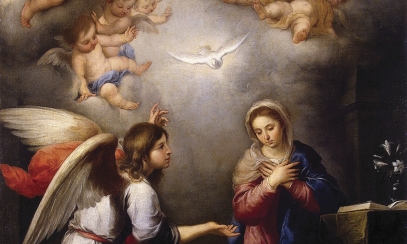
The name Jesus Christ is very symbolic. Jesus means “God saves.” We are accustomed to calling Jesus the Christ, but, in reality, “Christ” is not a name. It is a title. In the Greek language, Christ means “anointed,” and in Hebrew, it means “Messiah.” Kings, prophets, and priests were anointed with oil as a sign of being chosen by God. At His baptism, Jesus was anointed, not by oil, but by the Holy Spirit, which descended on Him like a dove. He became the Christ, the Anointed One, the Messiah.[i]
… the only begotten Son of God, born of the Father before all ages.
Begotten means “caused to exist.” So, Jesus, the Son of God, was caused to exist before all ages that we know to be. Before the creation of the heavens and the earth, Jesus existed. St. John the Apostle told us this in his opening verses of his Gospel: “In the beginning was the Word, and the Word was with God, and the Word was God. He was in the beginning with God.”[ii] (Word, or Logos in Greek, was another name for Jesus.)
God from God, Light from Light, true God from true God, begotten, not made, consubstantial with the Father; …
This section of the Creed was the most hotly debated of the whole Nicaea Council. This is the part with which the Arians disagreed. They adamantly refused to believe that Jesus was of the same essence as God. They continued to insist that He was created as a creature of God, like us (though higher in nature), and was subordinate (inferior) to God the Father. Some of the theologians proposed that Jesus was only a human person with special gifts given to Him by God.
The council would ultimately define the Church’s teaching on this matter by saying that Jesus was not created but has existed from all eternity with God the Father. There was never a time when Jesus, the Son of God, did not exist. Thus, we proclaim in the Creed that He was begotten, not made.[iii]
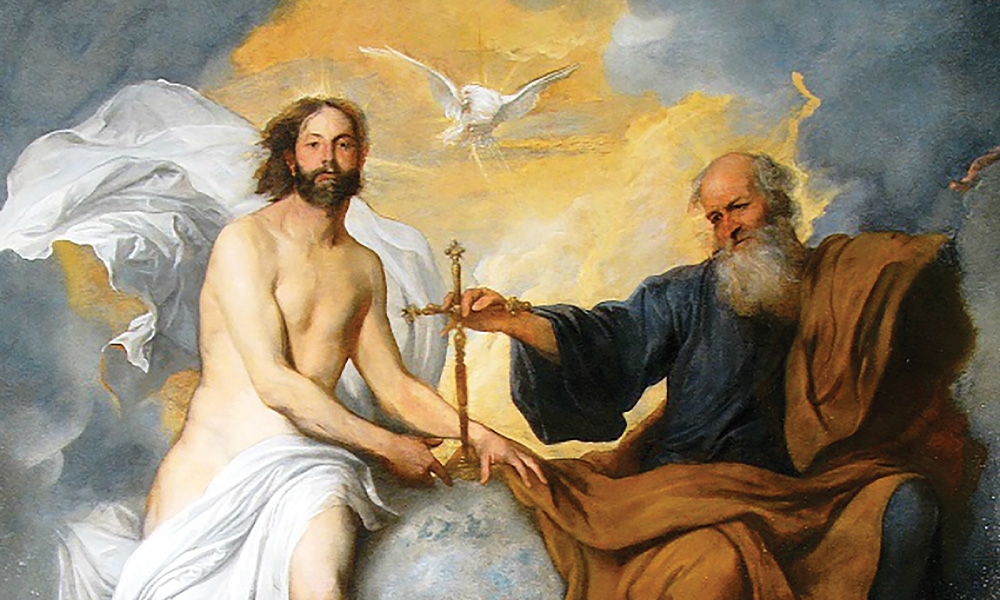
So, what is the difference between begotten and made? Think of it like this: When man and woman conceive a child, it will share similarities of its parents. However, the child is unique in its nature. This is not true with Jesus. He is not similar to the Father: He is one in being with Him. We are human beings. Jesus is “God-Being.” He is “consubstantial” (Homoousion in Greek) with the Father. In other words, He is of the same substance. He is “God from God,” “Light from Light.” Just as a torch is lit one to another, the Father and Son are distinct, but both are Light. True God (Jesus) from true God (the Father). Jesus is coeternal and coequal with God.
… through Him all things were made.
Now, wait a minute! Didn’t we just say in the very first line of the Creed that God the Father is the maker of Heaven and earth? How can it be now that Jesus is the One through Whom all things were made? The point being made by the Church is that Jesus has existed from all eternity, “from all ages,” even though He had not yet become incarnate (become human). This puts emphasis on the point that God cannot be separated. When one of the persons acts, all act together — Father, Son, and Holy Spirit. Why did the council fathers think this was so important? Because, if Jesus Christ was only a human person like us, created in time out of nothing, then He could not save us. If Jesus was only a human person, His death on the cross would have been meaningless; it would have been an end in itself only.
In the next issue, we will look at the words: “For us men and for our salvation He came down from Heaven …
[i] Ernst, Father Tony The Nicene Creed: What do we believe and why?, www.stsppchurch.com/uploads/the_creed
[ii] John 1:1-2
[iii] Ernst, Part II
Deacon Robert Long serves Our Lady of the Valley Catholic Parish in Birmingham. He was ordained to the permanent diaconate on Dec. 7, 2013, by Bishop Emeritus Robert Baker at the Cathedral of St. Paul. Excerpts from Deacon Long’s series on the Nicene Creed will be published in issues of the One Voice through the end of 2026. The following comprises the fourth installment of his eight-part series.