The Nicene Creed: Part Three
“… maker of heaven and earth, of all things visible and invisible.”
“… maker of heaven and earth, of all things visible and invisible.”
We are told in the Book of Genesis (and reemphasized throughout the Old and New Testaments) that God created Heaven and earth and thus it was all good.[i] We believe that God and only God created the universe. Spoken in Trinitarian terms, we believe that it is equally true that the Father, Son, and Holy Spirit together are the one, indivisible principle of creation.[ii] “Heaven and earth” means everything that exists. The Catechism tells us that “‘the earth’ is the world of men, while ‘Heaven’ or ‘the heavens’ can designate both the firmament [the arch of the sky] and God’s own ‘place…’” “Finally, ‘Heaven’ refers to the saints and the ‘place’ of the spiritual creatures, the angels, who surround God.”[iii]
We are told in the Book of Genesis (and reemphasized throughout the Old and New Testaments) that God created Heaven and earth and thus it was all good.[i] We believe that God and only God created the universe. Spoken in Trinitarian terms, we believe that it is equally true that the Father, Son, and Holy Spirit together are the one, indivisible principle of creation.[ii] “Heaven and earth” means everything that exists. The Catechism tells us that “‘the earth’ is the world of men, while ‘Heaven’ or ‘the heavens’ can designate both the firmament [the arch of the sky] and God’s own ‘place…’” “Finally, ‘Heaven’ refers to the saints and the ‘place’ of the spiritual creatures, the angels, who surround God.”[iii]
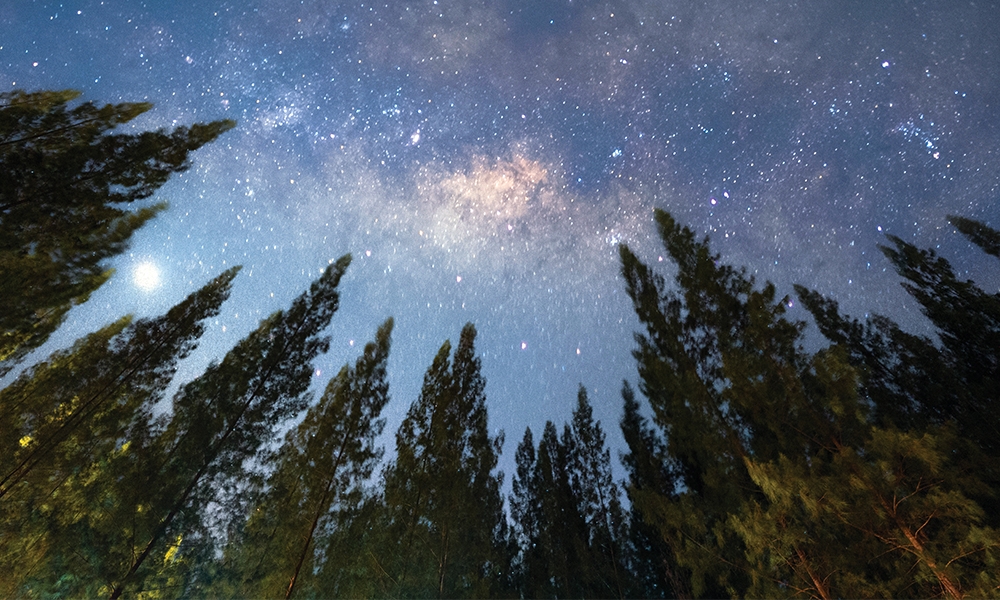
We certainly believe in what we can see of God’s creation, the “visible”: nature in all its glory, mankind, the lesser creatures (and yes, man is a creature of God, too), the sun and moon, the stars and planets in their wondrous glory. Our Catechism teaches that nothing exists that does not owe its existence to God the Creator. We believe that the world began when God’s word drew it out of nothingness. All existent beings, all of nature, and all human history came from this initial event when time began.
There are those who argue that this belief contradicts the modern theory of biological evolution, but the doctrine of creation and the theory of biological evolution do not necessarily contradict each other. The philosopher Peter Kreeft puts it like this: “We do not know how God arranged for the world He created to come to perfection. He could have used the evolution of species by natural selection (‘the survival of the fittest’) to produce the human body. Scripture says He ‘formed’ it out of dust from the ground. (Gn 2:7) However, the breath of life (the soul) was then ‘breathed’ into man by God. (Gn 2:7) Souls cannot evolve from matter but must be directly created by God. Insofar as evolution explains bodies, it does not contradict the doctrine of creation. Insofar as it claims to explain souls, it does not. But it is unscientific and illogical to try to explain immaterial souls by material biology. There can be no real contradiction, ever, between true science and true religion, because truth can never contradict truth.”[iv]
For a comprehensive study on Darwin’s theory of evolution and the Catholic doctrine of creation, I strongly recommend the book, Darwin and Doctrine – The Compatibility of Evolution and Catholicism, by Daniel Kuebler.(iv-a)
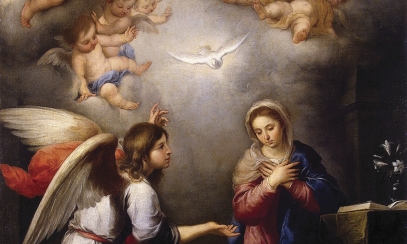
We also profess our belief in the invisible as well, the existence of angels — spiritual, non-corporeal beings. St. Augustine tells us that “angel is the name of their office, not of their nature. Their nature (substance) is ‘spirit.’” With their whole beings, the angels are servants and messengers of God.[v] They are the mighty ones who do His word, hearkening to the voice of His word. Angels have been present since creation and throughout the history of salvation and serving the accomplishment of the divine plan. They will be present at Christ’s return, which they will announce, to serve at His judgment.[vi]
All the angels belong to Christ because they were created through Him and for Him. St. Paul tells us that “in Him were created all things in Heaven and on earth, the visible and the invisible, whether thrones or dominions or principalities or powers [names of the rankings of angels]; all things were created through Him and for Him.[vii] In the meantime, the whole life of the Church benefits from the mysterious and powerful help of angels, just as we personally benefit from the protection of our own guardian angel.[viii]
We also believe in our eternal souls, invisible to us, but part of our being. As humans, we have both a spirit and a body. At our conception, God gave us a soul. It was created immediately by God — it was not “produced” by our parents. It is immortal. It does not perish when it separates from the body at death, and it will be reunited with the body at the final resurrection and share eternal blessedness in another invisible reality: Heaven.
In the next issue, we will look at the words: “I believe in one Lord Jesus Christ …”
[i] Genesis 1:1
[ii] Catechism of the Catholic Church, 316, John 1:1-5
[iii] Ibid, # 326
[iv] Kreeft, Peter J. Catholic Christianity. San Francisco, Ca: Ignatius Press, 2001, pp. 48, 49
[iv-a] Kuebler, Daniel, Darwin and Doctrine. Elk Grove Village, IL: Word on Fire, 2025
[v] Catechism of the Catholic Church, 329
[vi] Acts 1:10-11
[vii] Colossians 1:16
[viii] Matthew 18:10
Deacon Robert Long serves Our Lady of the Valley Catholic Parish in Birmingham. He was ordained to the permanent diaconate on Dec. 7, 2013, by Bishop Emeritus Robert Baker at the Cathedral of St. Paul. Excerpts from Deacon Long’s series on the Nicene Creed will be published in issues of the One Voice through the end of 2026. The following comprises the second installment of his 8-part series.