‘Serve the Lord with gladness!’
Bishop ordains seminarian to the transitional diaconate
Bishop ordains seminarian to the transitional diaconate
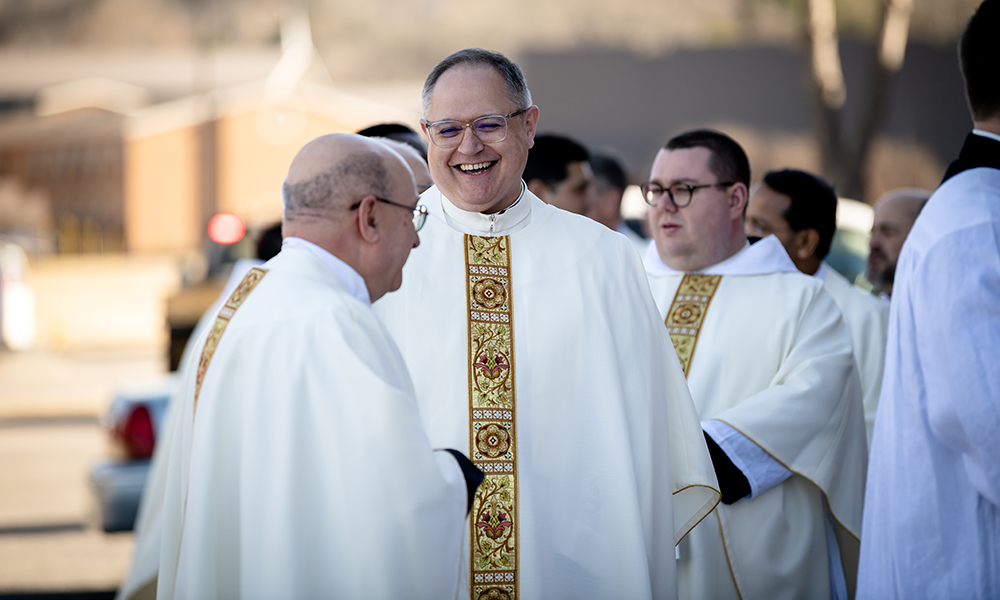
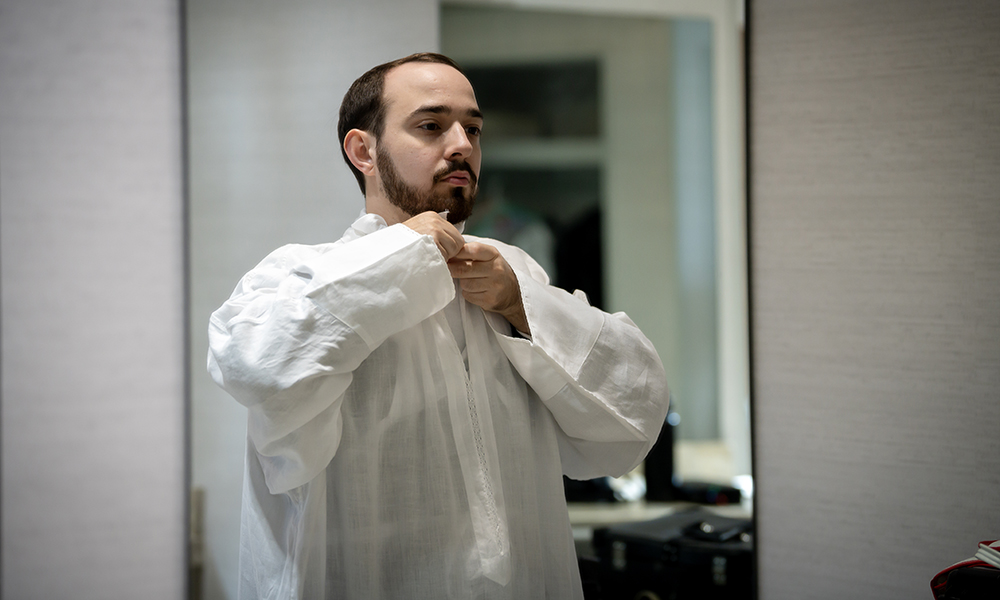
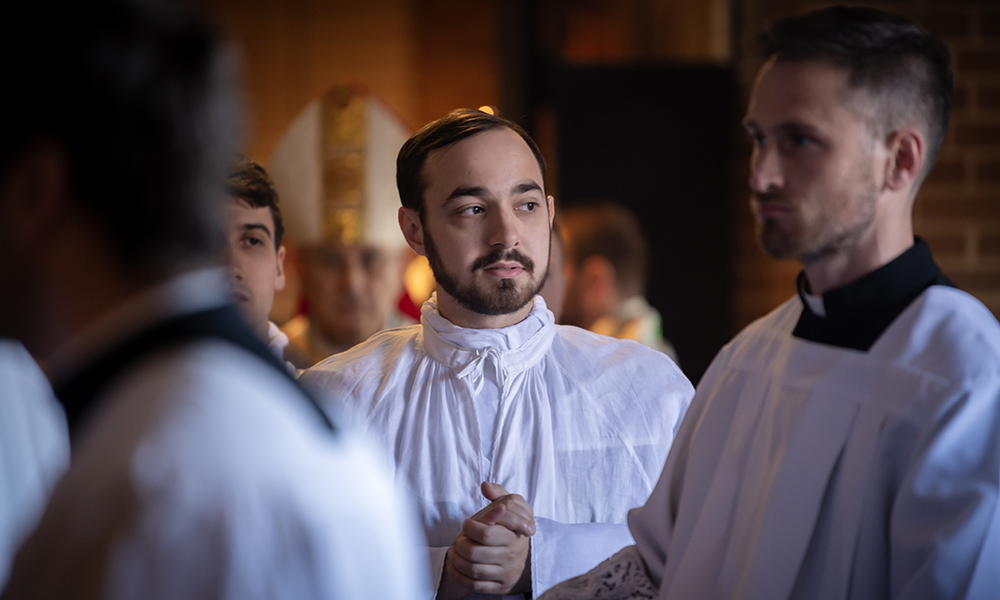
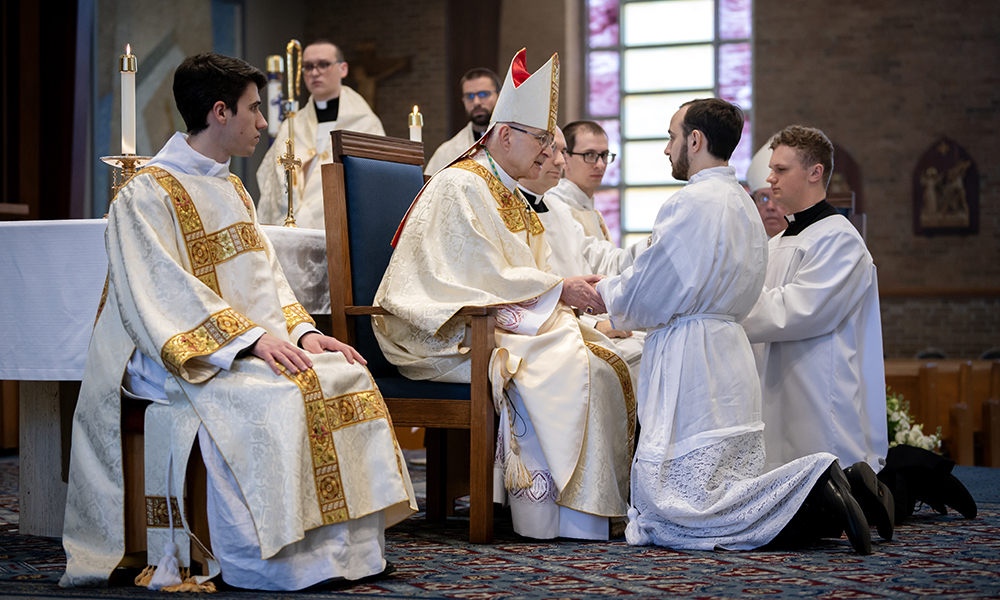
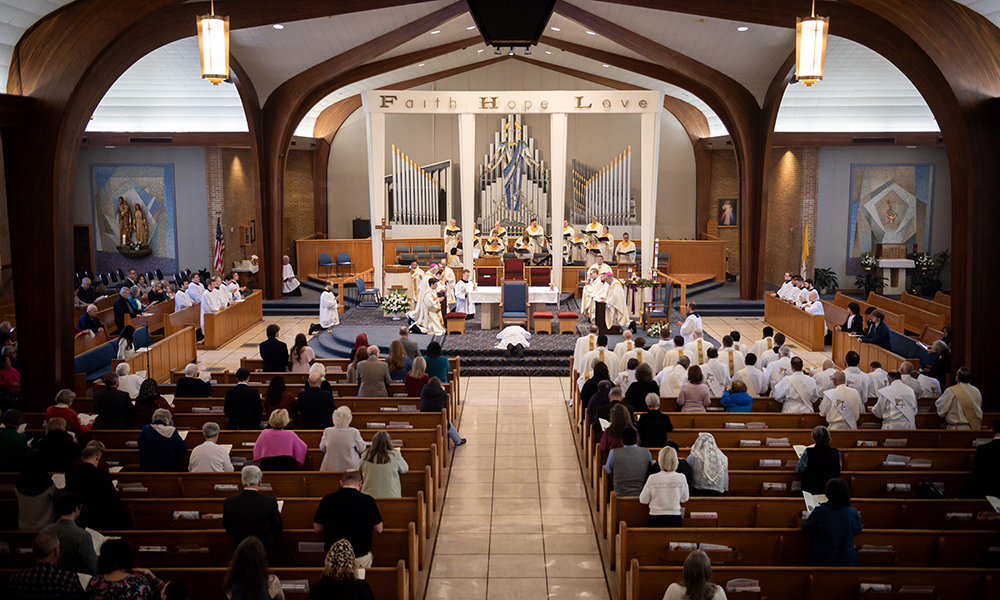
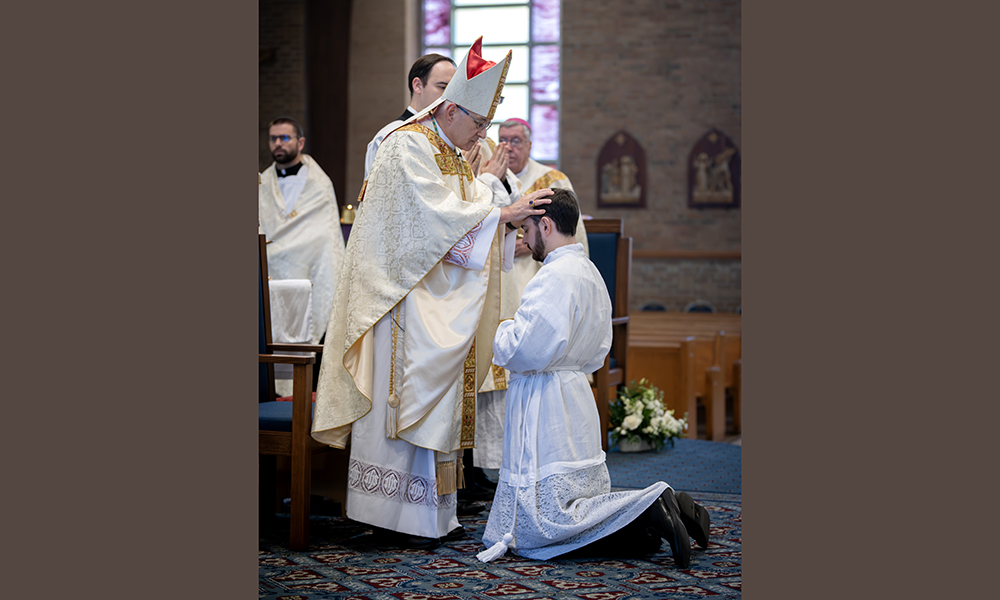
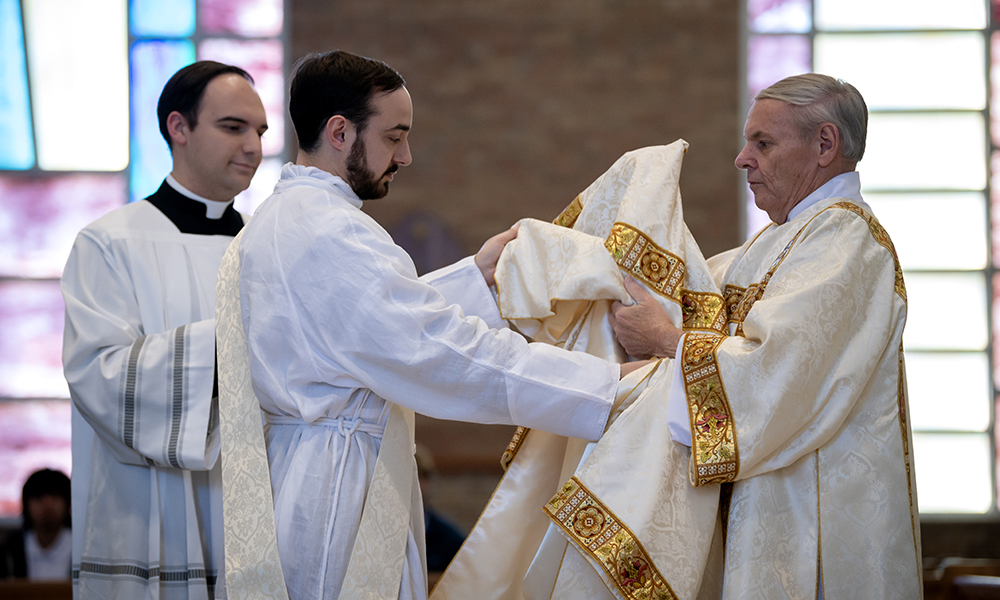
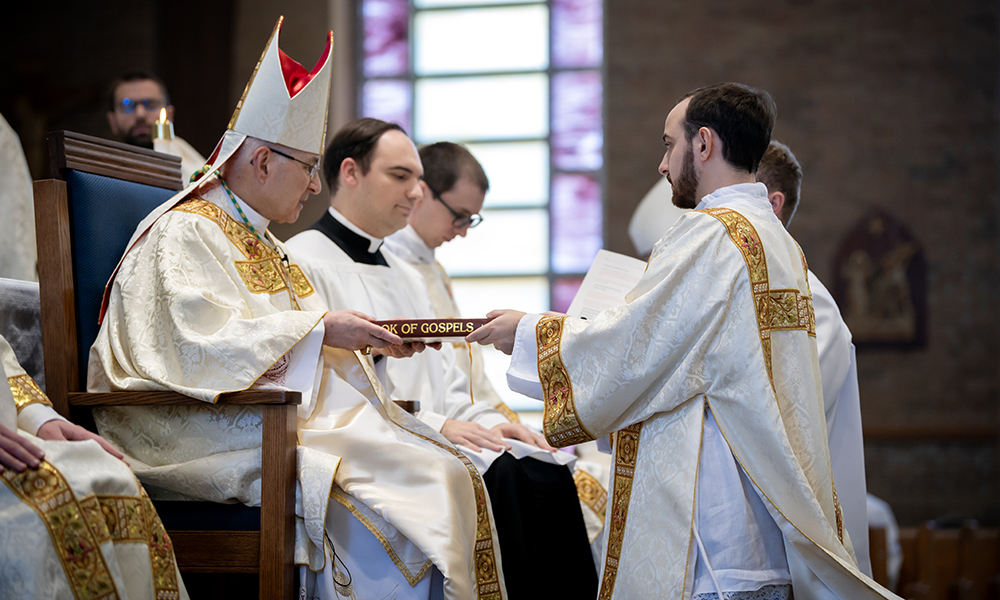
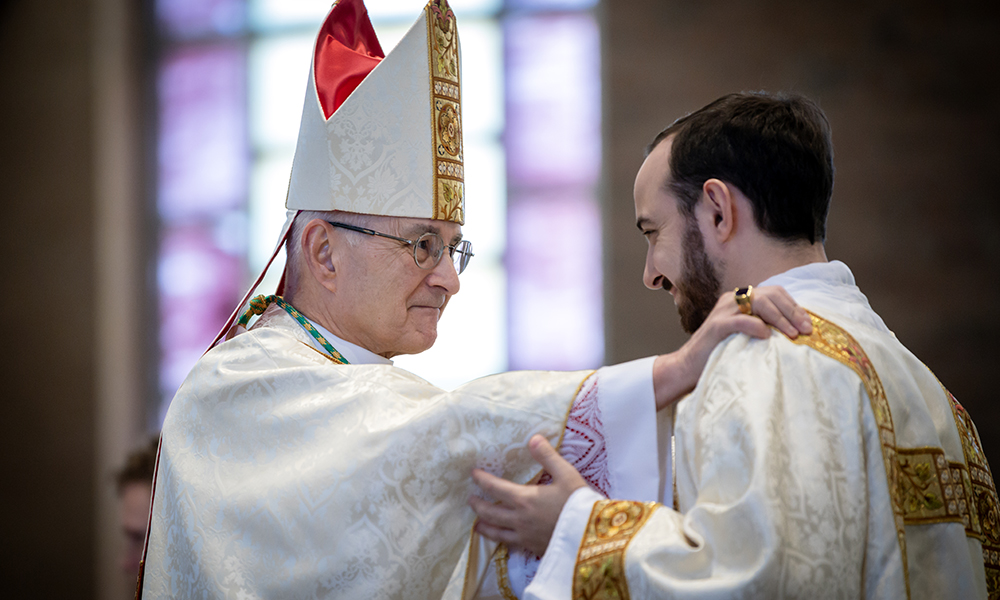
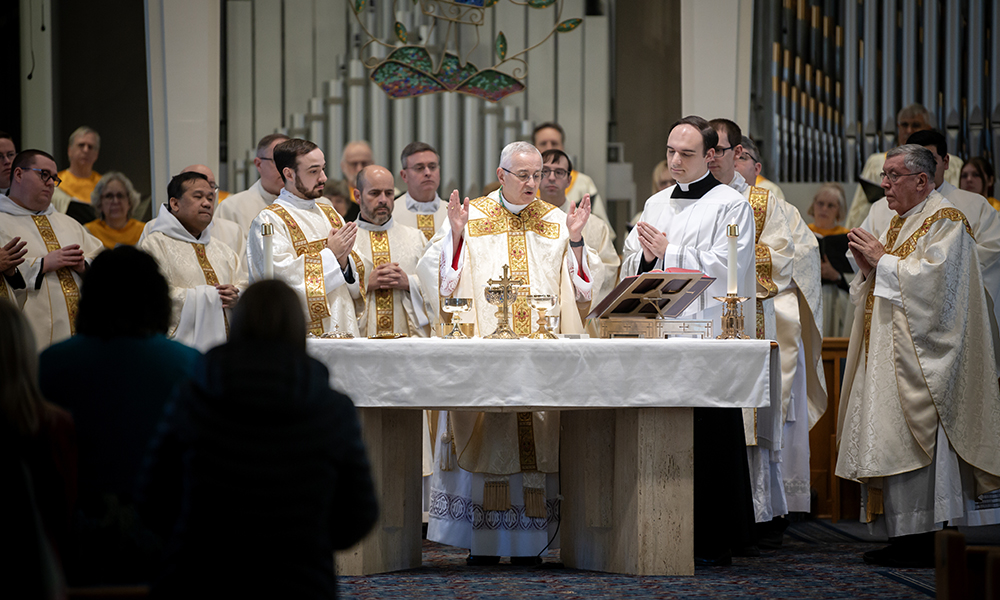
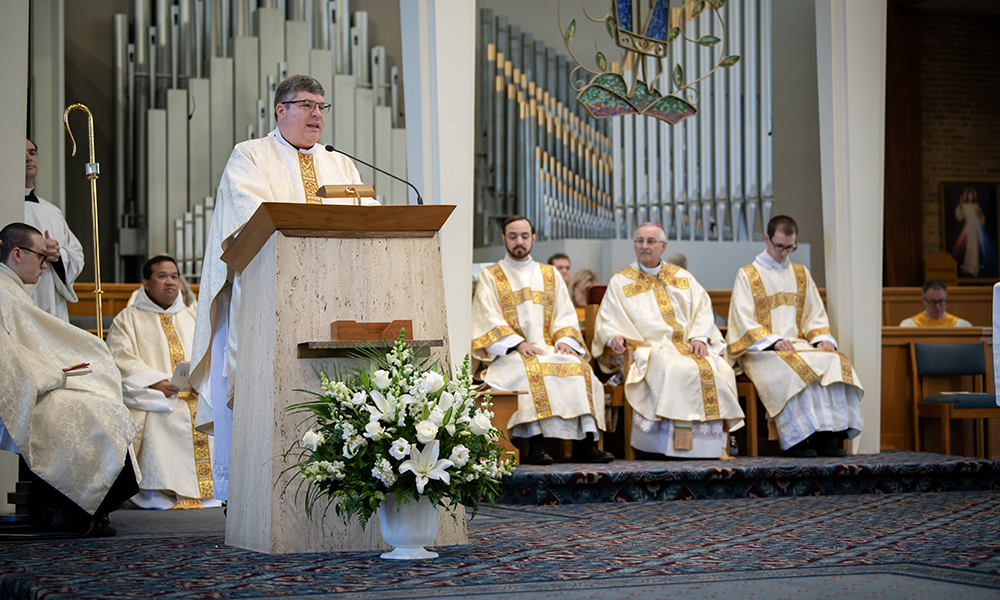
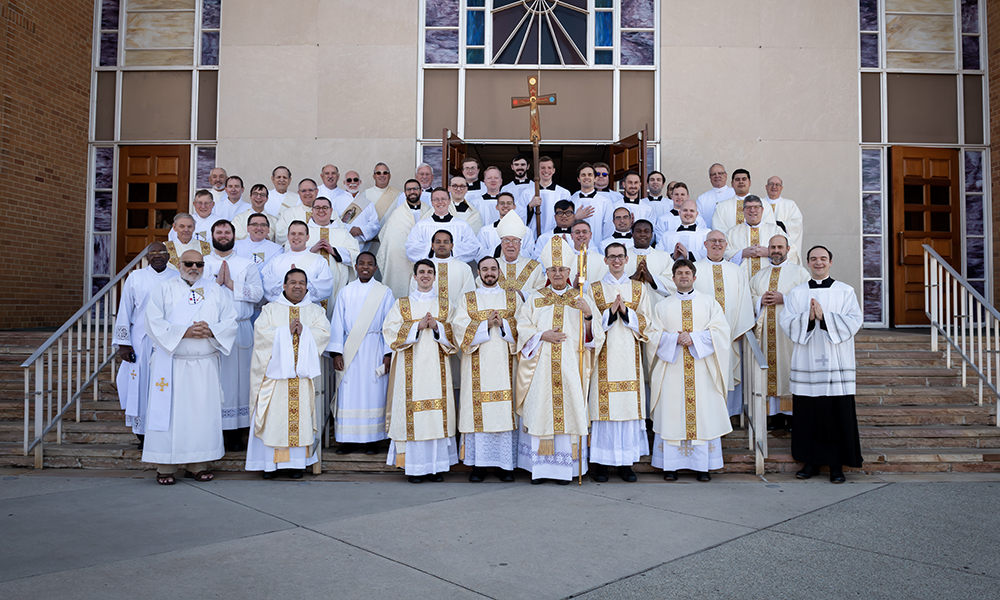
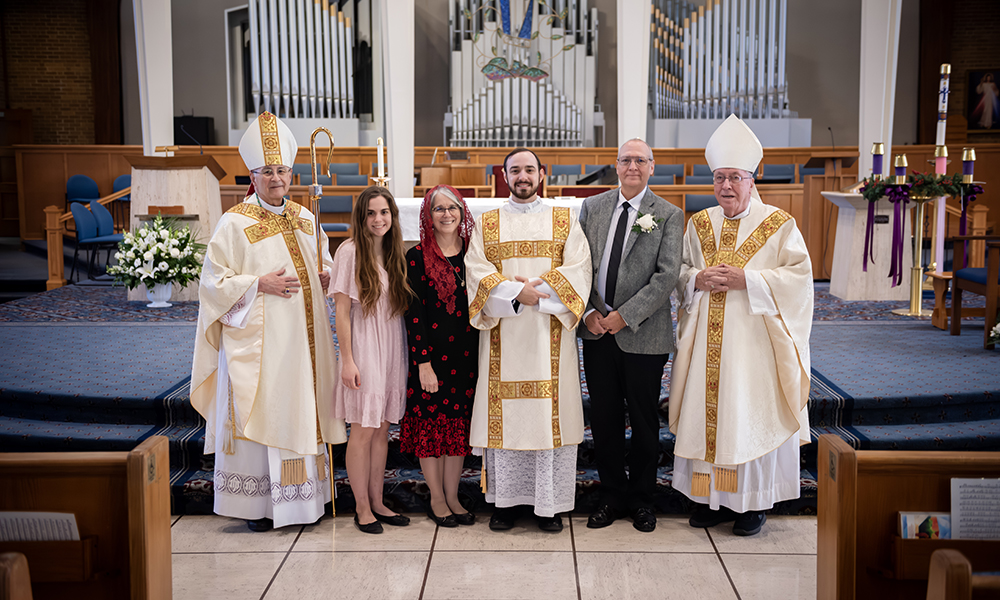
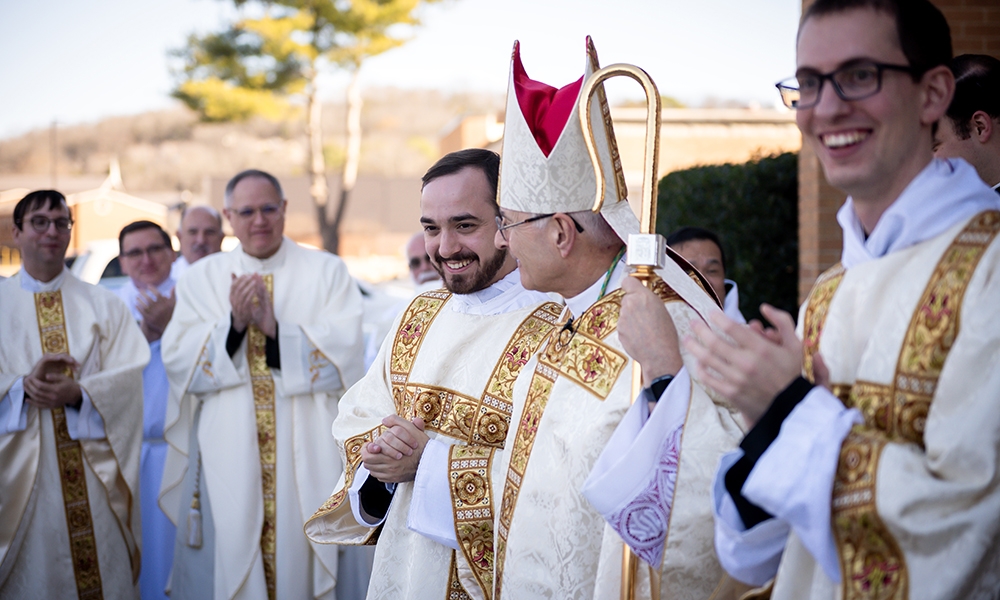
On Dec. 20, Bishop Raica ordained John Stephen Gardiner to the transitional diaconate at Holy Spirit Catholic Parish in Huntsville. Bishop Emeritus Baker, along with numerous priests of the diocese, concelebrated. The complete text of the bishop’s homily follows herein.
On Dec. 20, Bishop Raica ordained John Stephen Gardiner to the transitional diaconate at Holy Spirit Catholic Parish in Huntsville. Bishop Emeritus Baker, along with numerous priests of the diocese, concelebrated. The complete text of the bishop’s homily follows herein.
My brothers and sisters in Christ and John Stephen Gardiner, today the Church of Birmingham is filled with gratitude and hope. The Church of the Holy Spirit rejoices. We delight in what God is doing among us, and we give thanks for John Stephen Gardiner who is about to be ordained deacon—called, chosen, and sent for service in the name of Jesus Christ for ministry of service to the people of God. A warm welcome to his parents and family, his fellow seminarians and deacons from his time in Formation at St. Meinrad, our seminarians from the Diocese of Birmingham, brother priests, deacons, religious, parishioners of Holy Spirit and those parishioners from parishes where John received formation and friends from near and far and to the Knights of Columbus. A special welcome to Bishop Robert Baker, our Bishop Emeritus, and to Benedictine Father Mateo Zamorra, representing St. Meinrad Abbey and Seminary. Normally, diaconal ordinations are celebrated in the Cathedral; however, today, we are here at Holy Spirit Parish in the northern part of the diocese. Holy Spirit Parish celebrates its 60th year as a parish community here in Huntsville. You are a witness of what Holy Spirit Parish can do in raising up deacons and priests for ministry. God is working throughout our diocese, so I’m elated to be here to share this beautiful service with those gathered here and indeed the entire parish.
The Word of God we have heard this morning is rich with promise and encouragement. From the prophet Jeremiah we hear the Lord say, “Before I formed you in the womb, I knew you… to whomever I send you, you shall go.” (Jeremiah 1:5) This is not simply a word spoken long ago. It is a living word spoken today to all in ministry, but especially, to you John. Your call to the diaconate did not begin with an application or consist merely of a program of formation. It began in the heart of God. Long before you found your place in the Church, God found you. Like Jeremiah, you may at times feel unworthy or inadequate, but the Lord’s assurance remains firm: “Do not be afraid… I am with you.” (Isaiah 41:10) Some reflect the idea that God does not call the qualified; God qualifies those whom He calls! Today with your call from the Church of Birmingham, you will be qualified to speak in the name of the Church! It is daunting and a bit overwhelming. It is something we should never take for granted. We are the proclaimers of the saving mystery of God, while guarding with our very lives the blessing of this call and the truths of our faith we are called to profess.
The diaconate, as we are reminded in the Acts of the Apostles, was born out of a very practical need. The early Church discovered that some in the community were being overlooked, that certain widows were not being properly cared for. The response was not indifference or complaint, but discernment and action. Men “filled with the Spirit and wisdom” were chosen so that both the spiritual and practical needs of the community would be met and the Gospel would continue to be spread as this early Christian community grew in numbers. This tells us something essential about the deacon’s vocation. It is deeply rooted in the real lives of real people. It stands at the intersection of prayer and practice, of charity and organization, of faith proclaimed and faith lived.
One of your patrons, and mine as well, St. Stephen, the protomartyr, whose story is captured in the Acts of the Apostles, is a significant witness in the life of a deacon. Not only do you and I share his name, we also are reminded daily about the impact of this person in the Christian life of the early Church. He lived his life boldly. In the end, he offered his life as a witness to the glory of God in martyrdom. His name means “crown.” We must do the same: through our service rendered give glory to His name.
As a sidebar, I notice the coincidence that we share our names. I am Steven John and you are John Stephen! It is a providential that we are given the names of two powerful saints.
A deacon is ordained not to a title, but to a ministry—indeed, to a life of service. As Jesus tells us in the Gospel, “Whoever wishes to be great among you shall be your servant.” (Matthew 20:26) The deacon is configured sacramentally to Christ the Servant, the One Who did not come to be served but to serve and to give His life as a ransom for many. This service is not occasional or symbolic; rather, it is enduring and concrete. It is expressed in service at the altar, in the proclamation of the Gospel, and in charity and service to those most in need. The deacon reminds the whole Church that authority in the Kingdom of God is always expressed as love poured out.
For this reason, the Church looks for particular virtues in those called to the diaconate. A deacon must be a man of faith and integrity, rooted in prayer and nourished by the Eucharist. He must be trustworthy, compassionate, and prudent—someone who listens well and speaks with honesty and hope. He must be able to navigate the practical realities of parish life with patience and generosity and a bit of creativity, whether coordinating ministries, accompanying families, or serving those who are poor, sick, or marginalized. Above all, a deacon must have a heart open to others, a heart willing to give oneself for the life and mission of the Church. It is about saying yes, looking for new opportunities to be Christ to another. Domination or ideological positions have no place in ministry as we seek to reflect the witness of Christ and the deacon protomartyr Stephen.
Relationships are central to this vocation. The deacon serves in communion, with his bishop, with priests, with other deacons, and with the lay faithful. He serves within parishes and communities, building bridges, fostering unity, and ensuring that no one is forgotten or left behind. His ministry brings him close to people in their joys and struggles, their hopes and wounds. In these encounters, the deacon becomes a living sign of Christ’s nearness and care.
Today’s psalm reminds us: “Serve the Lord with gladness.” (Psalm 100:2) This is not a burdensome service, but a joyful one because it flows from gratitude. “The Lord is God; He made us, His we are.” (Psalm 100:3) Deacons serve not because they must, but because they belong to the Lord and to His people. Their joy becomes a quiet but powerful witness to the goodness of God. It is to affirm I’m found, I live, I know the One Who called out to me and saved me!
As we celebrate this ordination, we turn with confidence to the Blessed Virgin Mary, the Mother of God and the model of all Christian service. Her life was shaped by a bold and daring yes to God. In her humility and trust, she allowed her entire life to proclaim God’s goodness. She did not seek recognition. Instead, she placed herself completely at the service of the Lord’s plan. May she accompany Deacon John, teaching him how to listen attentively, to respond generously, and to magnify the Lord through lives given in love.
Dear John, today the Church entrusts you with a sacred ministry. Serve with faith, serve with humility, and serve with joy. Know that the Lord who has begun this good work in you will bring it to completion. And may your life, like Mary’s, proclaim everywhere the greatness of God and the hope of the Gospel. “Serve the Lord with gladness!” May God bless you!