‘Now is the acceptable time’
Bishop Raica celebrates the beginning of Lent
Bishop Raica celebrates the beginning of Lent
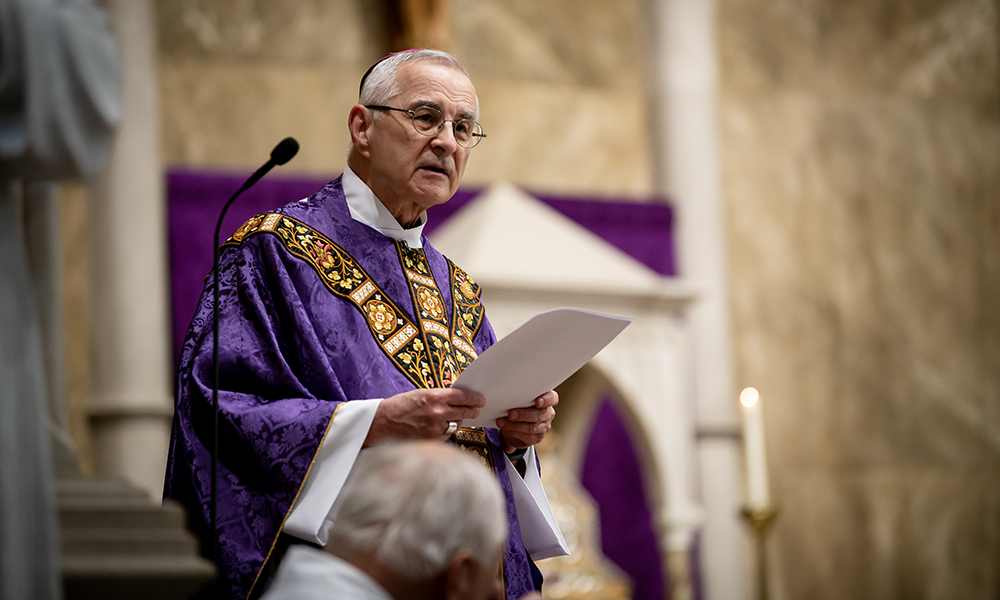
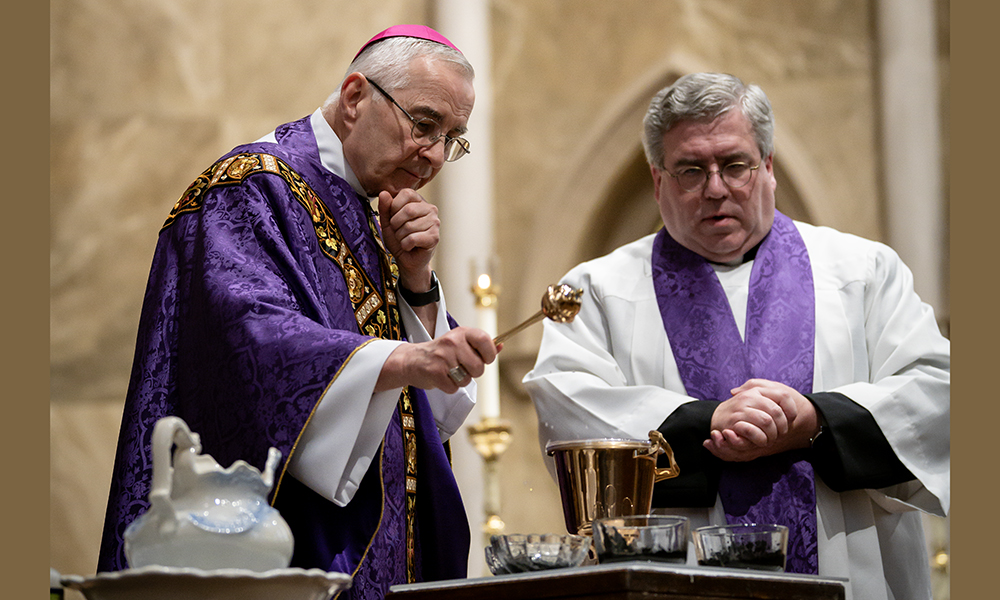
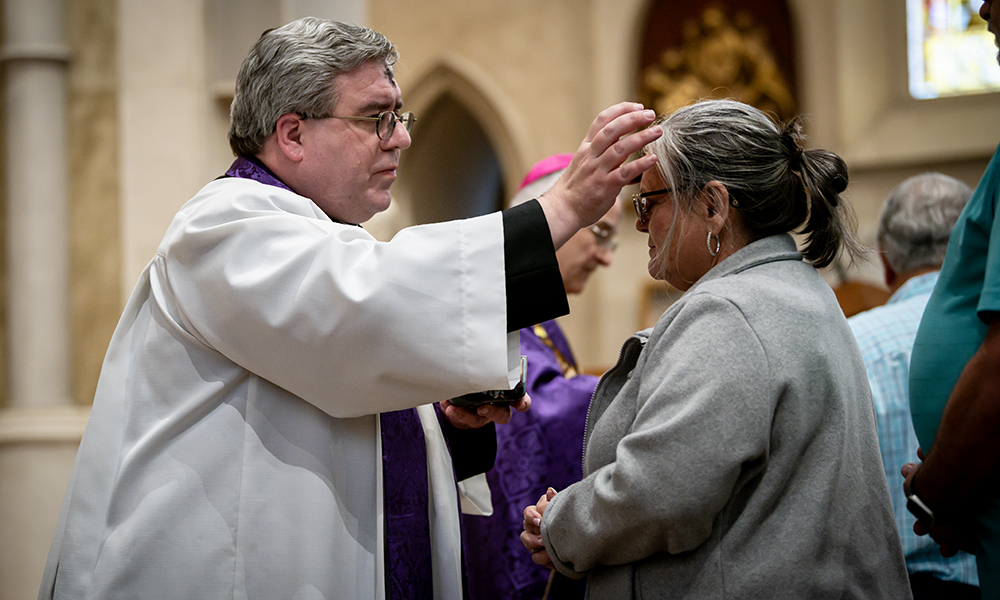
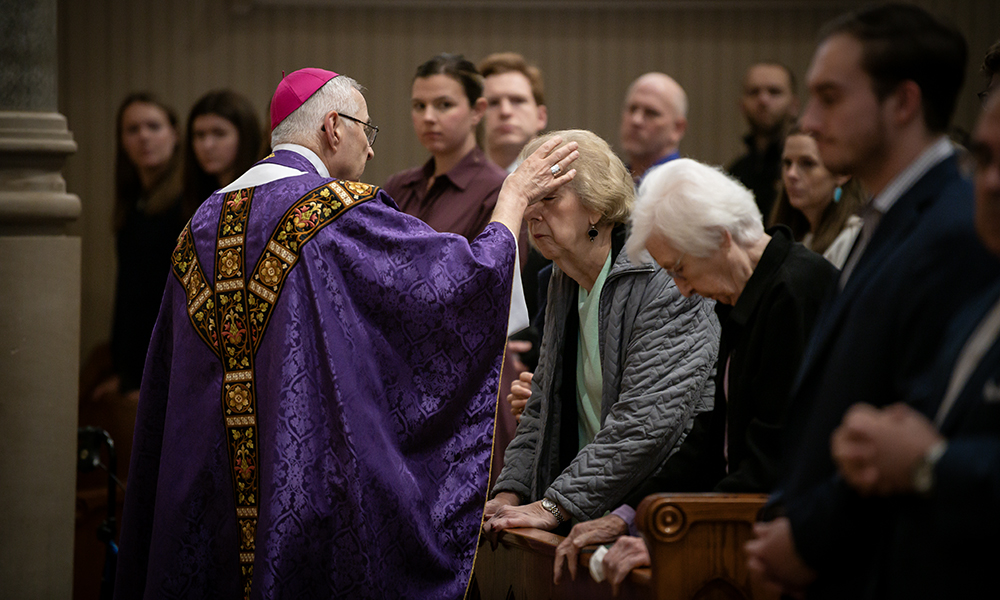
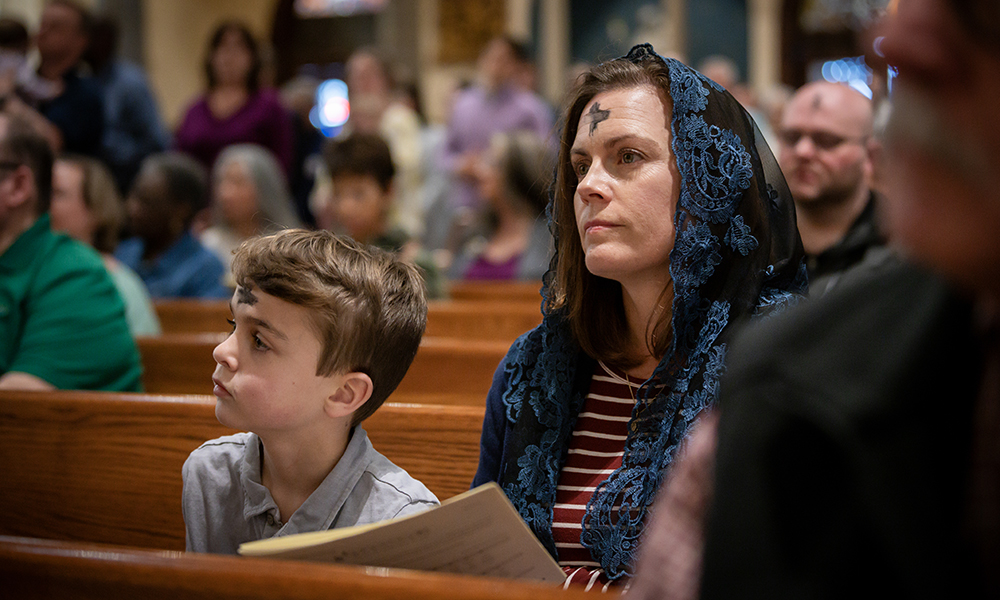
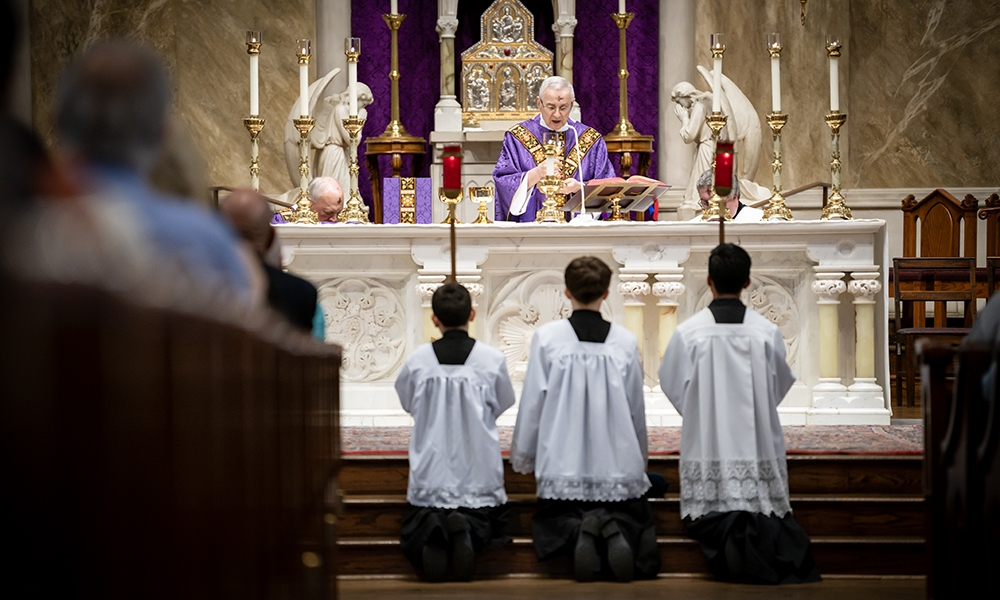
On Feb. 18, Bishop Raica celebrated Ash Wednesday Mass at the Cathedral of St. Paul in Birmingham. The complete text of his homily follows herein.
On Feb. 18, Bishop Raica celebrated Ash Wednesday Mass at the Cathedral of St. Paul in Birmingham. The complete text of his homily follows herein.
My sisters and brothers, welcome to the Cathedral of St. Paul, our diocesan parish church as we begin this Lenten journey together.
Today, Ash Wednesday confronts us with truth: the truth of who we are and the greater truth of Who God is.
Through the prophet Joel, we hear the Lord’s urgent appeal: “Return to Me with your whole heart.” Not adjust your habits. Not refine your image. Not improve your spiritual résumé. We hear a simple verb of command: Return. Return.
Perhaps, this is why the prophet adds, “Rend your hearts, not your garments.” The return, or conversion, is a changing of direction. Conversion, here, is not something cosmetic. It is not religious self-improvement. It is something more. It is tearing open our hearts in surrender to God’s transforming grace.
And that surrender, if genuine, produces what we might call an “extreme makeover,” not of appearance, but of identity; not external renovation, but interior re-creation.
From self-improvement to surrender
In our culture, we love the idea of self-improvement / self-help. Bookstore shelves are filled with self-help books. We look at podcasts and videos nowadays. I confess that I’m guilty of this myself! Self-improvement is constant and everywhere. We upgrade devices. We optimize schedules. We refine diets. We curate our public images. Even spirituality can become a project of self-enhancement.
St. Paul tells the Corinthian Christians something far more radical: “We are ambassadors for Christ… Be reconciled to God.” And then he underscores the urgency: “Now is the acceptable time.”
Reconciliation is not self-engineered. It is received. Grace precedes effort. God is always making the first move.
Psalm 51, our responsorial, makes this unmistakable: “Create in me a clean heart, O God.”
Notice the verb: create. The psalmist does not say, “Help me fix myself.” He asks God to do what only God can do — to bring forth something new where our hearts are closed, where we have spiritual paralysis, where there was brokenness.
This is Lent. It is not moral polishing or buffing out the rough edges, but divine surgery; not behavior management, but heart transformation.
The “extreme makeover” of grace
By surrendering to grace, the change is dramatic.
The prophet Joel reminds us Who God is: “Gracious and merciful, slow to anger, rich in kindness.” We do not approach a reluctant judge; we approach a Father, eager to restore.
God’s grace does not merely forgive; it overwhelms. It reorders our loves, heals our vision, and recalibrates our priorities.
Ashes placed on our forehead declare, “You are dust.” But they also proclaim something greater: You are dust loved by God, dust redeemed by Christ, dust destined for glory.
The process of Lent, going from ashes to Easter, reshapes our self-understanding. We stand before God not as managers of our virtue, but as recipients of mercy and grace.
And that inevitably reshapes how we see our neighbor.
Conversion and the poor
In our Gospel, Matthew 6, Jesus gives us the tried and tested path: prayer, fasting, almsgiving, reorienting and re-prioritizing our relationships.
Prayer restores our relationship with God. Fasting restores order within ourselves. Almsgiving restores our relationship with others, especially the poor.
Fasting without charity becomes self-absorption. Prayer without solidarity becomes illusion. Almsgiving without interior conversion becomes philanthropy detached from faith.
When grace overwhelms us, we become more alert to mercy; the mercy we receive and the mercy we are called to give and share our resources.
If we truly know ourselves as recipients of abundant love, how could we remain indifferent to those who lack daily bread, stability, or dignity. Where we can become Christ to others?
A joyful season – The resurrection joy awaits!
Psalm 51 concludes with hope: “Restore to me the joy of Your salvation.”
Lent is not grim self-denial. It is preparation for joy. When we surrender to grace, we do not become diminished. We become even more alive, overwhelmed by God’s mercy, more transparent witnesses, credible ambassadors of reconciliation.
As we receive ashes today, hear the deeper invitation: Do not settle for self-improvement. Do not reduce Lent to a spiritual diet plan. Allow God’s merciful grace to overwhelm you.
And there we are again: Return! Return to the Lord with your whole heart. Let Him create in you a clean heart. Let Him reconcile you. Let Him remake you.
And then, go forth as living witnesses, proclaiming that God’s mercy is real, that God’s love is abundant, and that transformation of heart, mind, and soul is possible.
Now is the acceptable time. Now is the day of salvation.