A Legacy of Love
Marriage is frequently described as being “an image of Christ’s love for His Church.” While the imagery is quite profound, one newlywed, Mary-Margaret Blackwood Mascari, sums up the sacrament quite succinctly: “Marriage is to will the good of the other. It’s to help each other get to Heaven.”
Marriage is frequently described as being “an image of Christ’s love for His Church.” While the imagery is quite profound, one newlywed, Mary-Margaret Blackwood Mascari, sums up the sacrament quite succinctly: “Marriage is to will the good of the other. It’s to help each other get to Heaven.”
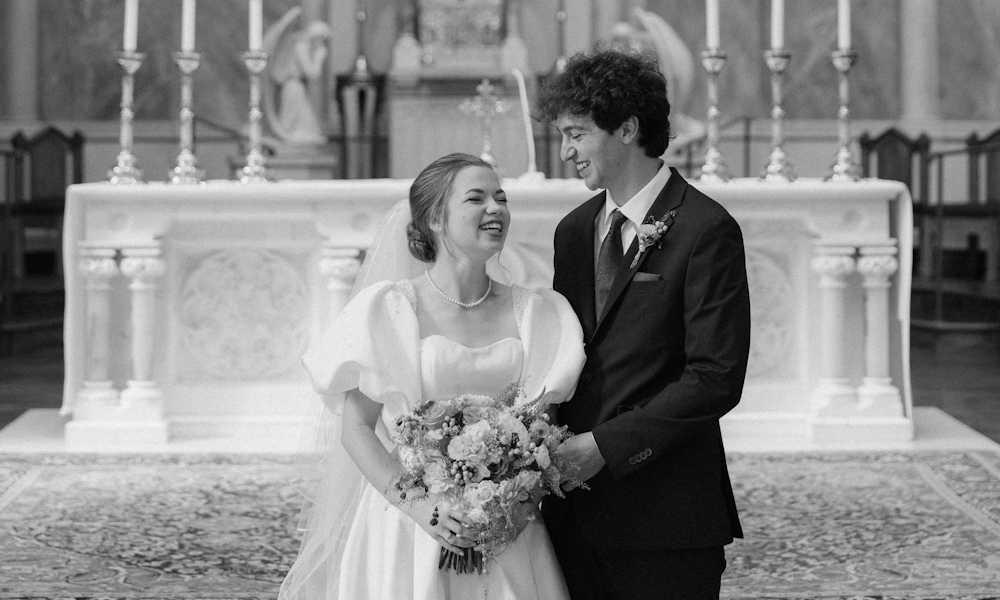
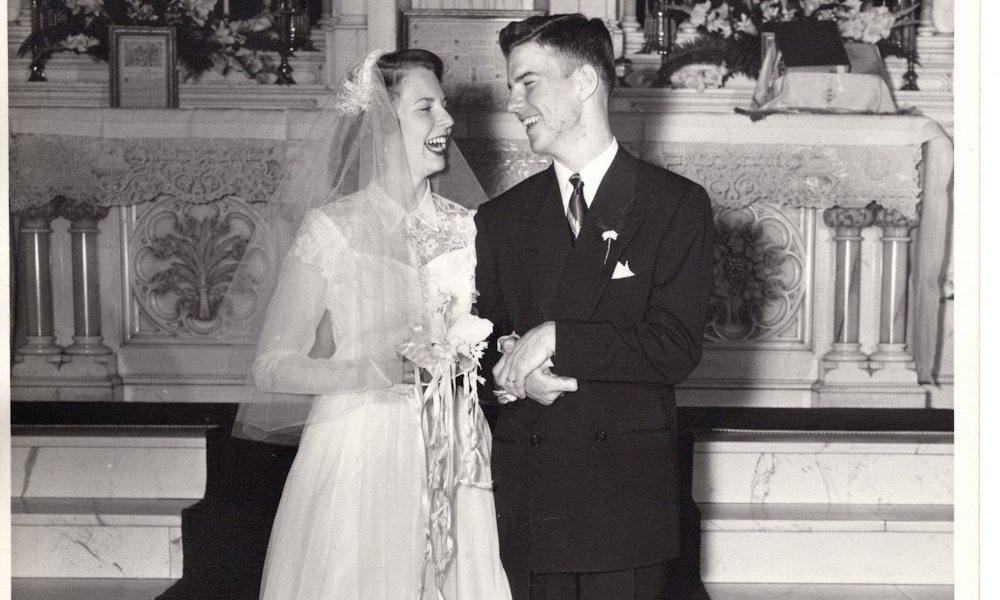
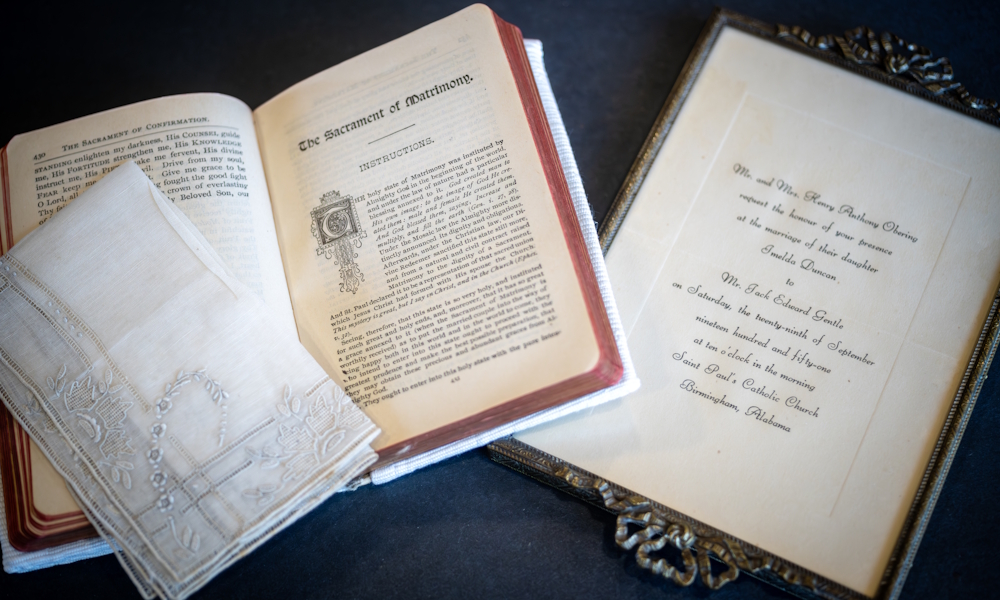
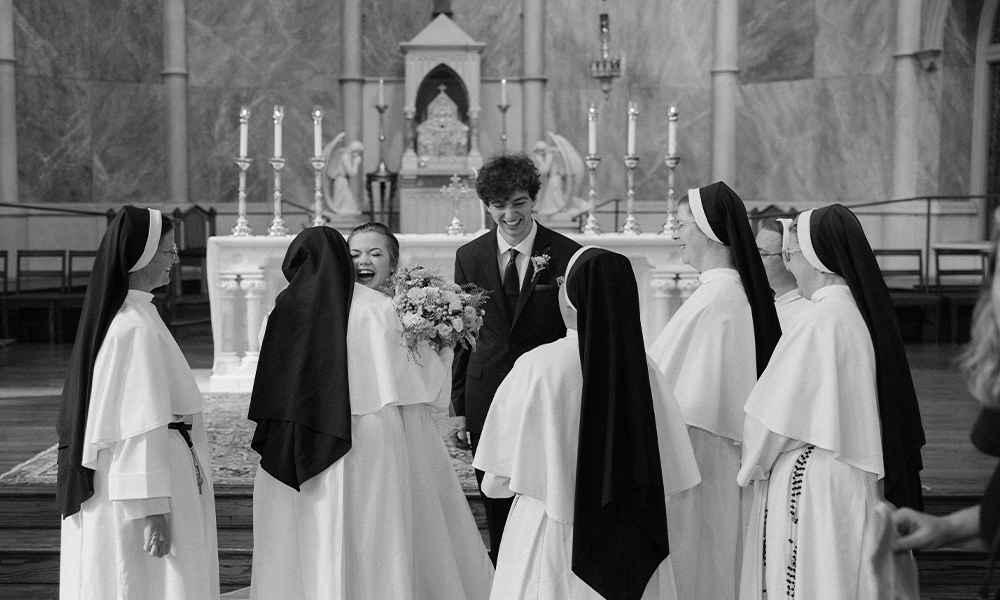
Mascari married Thomas Anthony Mascari, III, in October of last year at the Cathedral of St. Paul. She is the product of a devout Catholic family with strong ties to the cathedral. Not only did her maternal grandparents get married at what was then St. Paul’s Church 74 years ago, but over a century ago, her maternal great-grandparents were also wed at St. Paul’s. Remarkably, before that union, in 1897, only four years after the church was dedicated, Mascari’s maternal great-great-grandparents exchanged vows in the same sacred place.
So to say the family has a rich history with the church would be an understatement, yet while the building itself holds a tangible connection to the family’s faithful departed, what the building represents is far greater than mere brick and mortar. The “legacy of love” and the passing down of the Catholic faith serve as the true and lasting testament.
With generation after generation, love played a significant role in laying foundations strong in the faith. For Mascari, when it came time for college, her foundation in the faith prompted her to attend an Awakening Retreat, which is a retreat for college students by students supported by Catholic Campus Ministries.
As she progressed through college, she kept her heart open to the Lord’s call, even to the point of visiting the Dominican Sisters of St. Cecilia and calling the Sisters of Life. Once she discerned religious life was not the path the Lord was calling her to, a contentment came over her. Two years after her first Awakening Retreat, she attended as a volunteer staff member. It was at that retreat that she met her future husband.
From their first date being at church to attend Mass to praying the Rosary together each night over the phone, the relationship had a familiar bedrock. “We were able to grow more in love through our faith,” Mascari points out.
As the couple awaits the birth of their first child, Mascari says, “I do” each day to the love God “has planted in their hearts” with the hope of becoming “a visible sign of God’s love in the world.” As she takes up the task of walking in her forebearers’ footsteps, she acknowledges the vocation is not without its challenges.
The secular world has, over time, diminished marriage to something that is viewed as almost expendable. The sacrament of Matrimony, however, is anything but a trivial fulfillment of fleeting whims. To the contrary, in a pastoral letter on the sacrament, the United States Conference of Catholic Bishops clearly states that marriage is “nothing less than a participation in the covenant between Christ and the Church.”
Those words can be unnerving for some yet puzzling for others. To truly grasp the sacrament of Matrimony and its “participation in the unbreakable covenant between Christ the Bridegroom and His Bride, the Church,” one must take a few steps back for a wider view.
First, sacraments are efficacious signs of grace, which means the sacraments aren’t simply symbolic. The sacraments and their “outward signs” truly make present God’s grace. At Baptism, the faithful are called to “exercise their baptismal priesthood by the witness of holy lives and practical charity.” (CCC 1273) In other words, once baptized, the faithful are fortified with the justifying and sanctifying grace to live lives of holiness, which are marked by bringing others to know the Lord.
Since God is love and we are made in His image and likeness, it makes sense that the natural way or path to holiness, not only for ourselves but for others, is through love. As His children, God knows the best path for each of us and He calls us to that path, or vocation, in life.
In that regard, the Bishops explain, “God established marriage so that man and woman could participate in His love and thus selflessly give themselves to each other in love,” and it is in looking to “His love” where the imagery of Bridegroom and Bride becomes clear. Christ’s love of His Church, which was proven by His death, is a love characterized by absolute and total self-giving.
Citing the Catechism of the Catholic Church, Pope St. Paul VI’s Gaudium et Spes, and Pope St. John Paul II’s Familiaris Consortio, the Bishops continue: “The Holy Spirit binds the spouses together through their exchange of promises in a bond of love and fidelity unto death. … The same love that defines the Church now defines the communion between the two spouses: authentic married love is caught up into divine love and is directed and enriched by the redemptive power of Christ and the salvific action of the Church. When Christian couples receive the grace of the sacrament of Matrimony, Christ dwells with them, gives them the strength to take up their crosses, and so follow Him, to rise again after they have fallen, to forgive one another, to bear one another’s burdens, to be subject to one another out of reverence for Christ, and to love one another with supernatural, tender, and fruitful love. … The couple is challenged to grow, through grace, into what they already are: that is, an image of Christ’s love for His Church.”