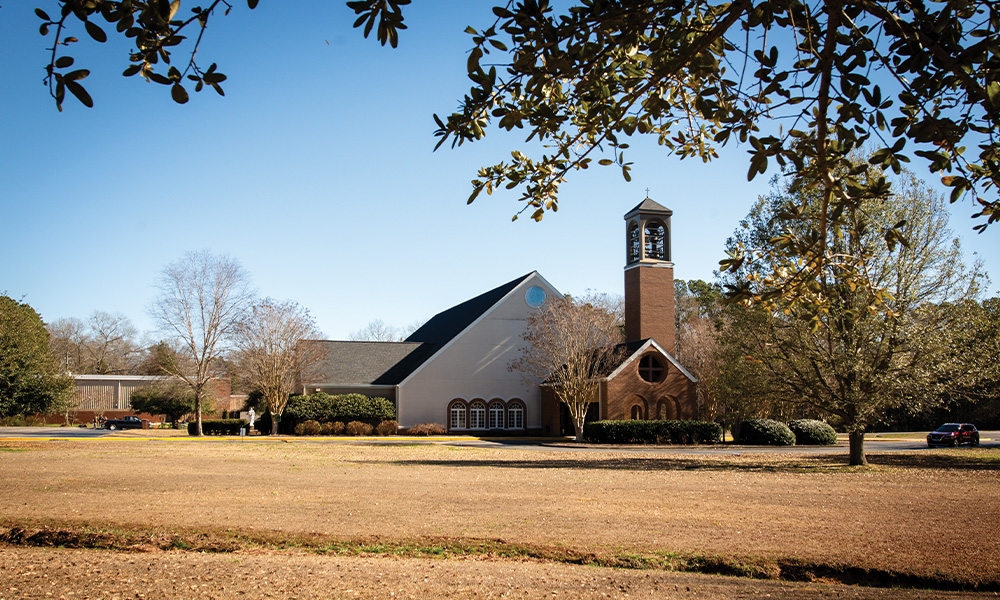
Sacred Heart of Jesus Catholic Parish, Anniston
A historical sketch of Sacred Heart Parish in Anniston begins along with the development of the Catholic community in North Alabama, in the late 1880s. About 340 years since Hernando DeSoto’s expeditions through Alabama, accompanied by Capuchin priests who said the first Masses in Alabama, Anniston grew as a post-Civil War industrial hub, producing cast iron pipe and other foundry industries in brass. The growth in industry in Calhoun County brought a growth in population in the mountainous region of Alabama, and along with it, the Catholic community began to develop. In 1883, the Catholic community, served by Jesuit priests from Selma, had grown to about 60 members. The community built a small frame church in the Glen Addie area of Anniston, at the corner of Third and Spruce Streets.
A historical sketch of Sacred Heart Parish in Anniston begins along with the development of the Catholic community in North Alabama, in the late 1880s. About 340 years since Hernando DeSoto’s expeditions through Alabama, accompanied by Capuchin priests who said the first Masses in Alabama, Anniston grew as a post-Civil War industrial hub, producing cast iron pipe and other foundry industries in brass. The growth in industry in Calhoun County brought a growth in population in the mountainous region of Alabama, and along with it, the Catholic community began to develop. In 1883, the Catholic community, served by Jesuit priests from Selma, had grown to about 60 members. The community built a small frame church in the Glen Addie area of Anniston, at the corner of Third and Spruce Streets.
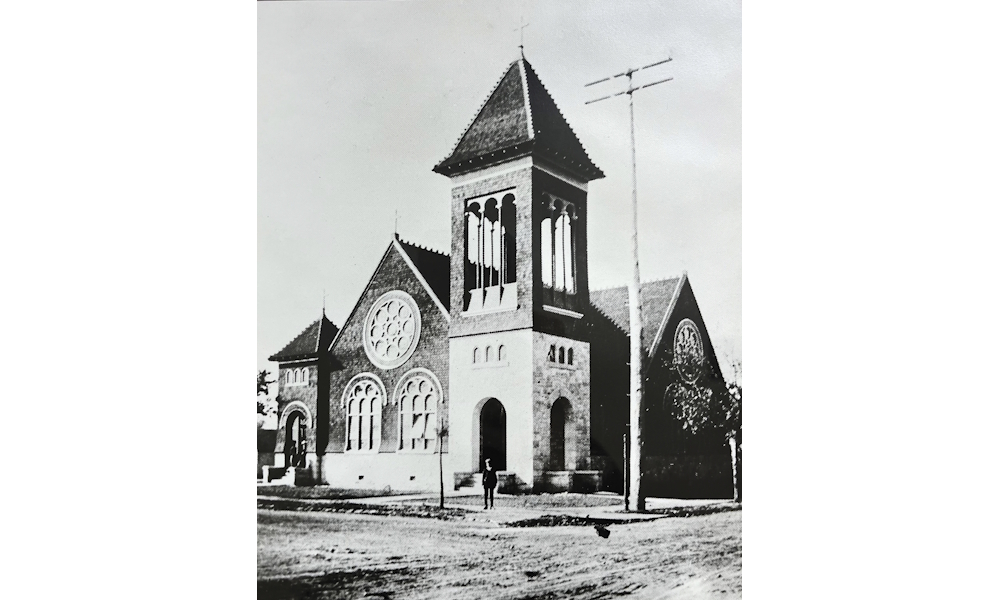
The community soon outgrew its small church and began meeting in a rented hall on Noble Street. Soon, Bishop Edward Allen, the fifth Bishop of Mobile, making a pastoral visit to Anniston, decided it would be best to buy land and build a permanent church. The land at the corner of 11th Street and Quintard Avenue was sold to the bishop by the vestry of Grace Episcopal Church, and Bishop Allen consecrated the large and handsome brick church on Nov. 19, 1899. The community continued to grow, welcoming Italian immigrant families and others, and adult converts to Catholicism are noted in the baptismal record.
The life of the parish continued stably through the beginning of the 20th century, until on Palm Sunday night, 1922, the beautiful parish church was destroyed by a fire reported to be “of mysterious origin” in local newspapers. Only a few months before, in Birmingham, Father James Coyle was murdered by a Ku Klux Klan member and judge, in hatred of the Catholic faith. It is to be noted that throughout the United States in the 1920s, there was a groundswell of anti-Catholic and anti-immigrant sentiment that fueled much violence against the Church and its institutions. In 1923, a new parish church was built in the same place, though of much smaller and simpler construction.
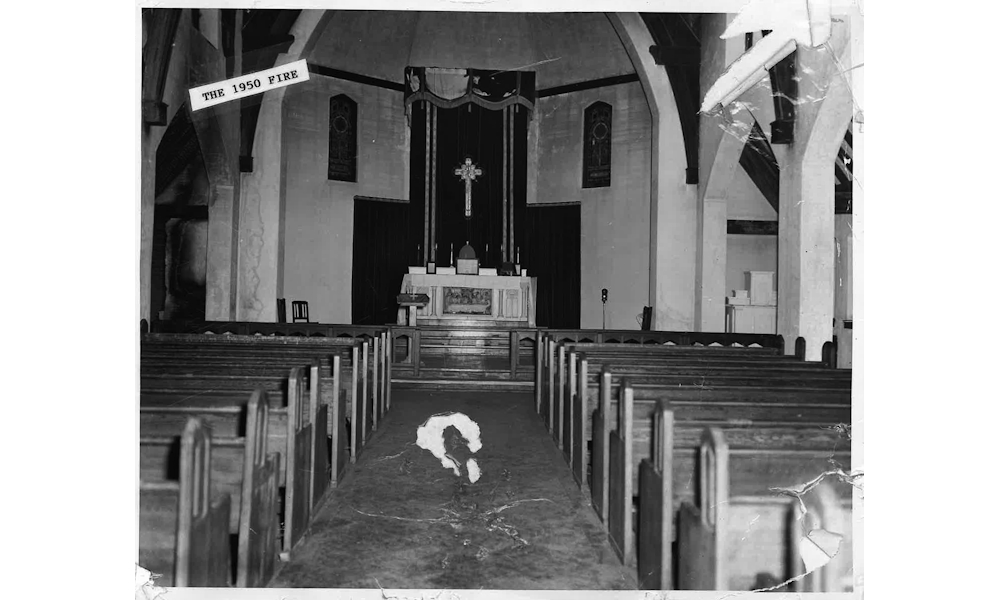
The parish did not grow or decline in a significant way until the arrival of the 27th Division at Ft. McClellan. With the stationing of such a large military force during the World War II period, the parish grew tremendously, and many military families made Anniston their permanent residence. On the afternoon of Jan. 11, 1950, an unidentified assailant broke into the church and burned the side altar of the Blessed Virgin Mary. The resulting fire ruined the entire interior of the church, though the structure was saved by the quick action of local firefighters.
In 1955, a group of parents in the parish, together with the parish priest, Father Frank Giri, began a feasibility study for a school. St. Mary’s School was opened on McCall Drive, in a residential area of Anniston. Eventually, the property came to hold a school, cafeteria, and convent for the Benedictine Sisters of Cullman who originally staffed the school.
After the Second Vatican Council, the sanctuary of the church was restructured, and for many years, the life of the parish continued in a sleepy fashion, with Masses and sacraments celebrated regularly.
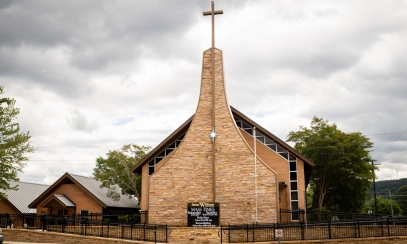
In 1989, Father Richard Donohoe arrived as pastor, and the parish community was organized to begin the process of building a new church. A 22-acre property was purchased at the corner of Greenbrier Dear Road and Golden Springs Road, and groundbreaking was held on Dec. 14, 1997. The existing church building on Quintard Boulevard was sold to the Lutheran Community, which closed its doors permanently in 2024. The school building in McCall Drive was sold in 1999 and became a manufacturing center for fine violins.
At the same time of the sale of the old school on McCall Drive, an opportunity arose to purchase the abandoned post school at Ft. McClellan. Several groups of parents came together, and again, with the organization of Father Donohoe, the building was purchased with the approval of Bishop Foley, the Third Bishop of Birmingham, and began accepting students for high school in addition to the traditional K-8 model that had been in place in Anniston for many years.
Around the time of the construction of the new church, the parish was developing in another significant way. The Spanish-speaking community of Calhoun County was growing along with the poultry industry, and the Hispanic community of the parish began to take form and develop its life and contributions to the community. For a number of years, the Spanish language Mass was not held in the church, but rather in the Knights of Columbus Hall. It was not until the time of Father Robert Sullivan that a regular Sunday Mass in Spanish was held in the new church building in Golden Springs.
The life of the parish continued normally under the leadership of Father Sullivan from 2000-2006. Following him was Father Bryan Lowe, who served in the parish from 2006-2017. After Father Lowe’s tenure, Father Charley Alookaran led the parish until Father John McDonald was assigned to the parish in 2019.
In 2020, the parish was blessed with the presence of the Missionary Guadalupan Sisters of the Holy Spirit, who established a convent in the parish with three sisters.
Two years later, the circumstances of maintaining the K-12 school in the parish became untenable financially and organizationally, and the school closed in May of that year. With the closure of the school department of the parish, the focus of parish activities returned to the campus of the church, and the number of volunteers and parish families steadily increased to about 980 registered families today.
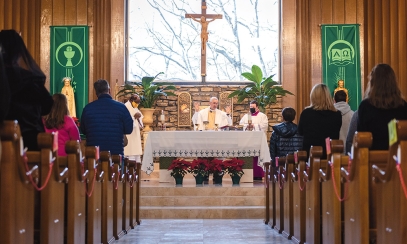
The community continues to work and plan for the future of the parish, with the Spanish-speaking community of the parish forming about forty percent of the total parish community, and about 75 percent of the community under the age of 21. The parish has a fully functioning Pastoral Council and Finance Council, along with the Knights of Columbus, Catholic Marriage and Family Movement, Evangelization Ministries, St. Vincent DePaul Society, and many other outreach and spiritual ministries. A special focus on liturgy and liturgical beauty marks the celebrations of the parish, and with God’s favor, the community will continue to embody its mission: “Striving to be like Christ, committed to living the Gospel by participating in the sacraments, promoting spiritual growth and religious education, and being an example of Jesus’ Eucharistic love.”