‘Christ is the “oil of gladness” for a waiting world’
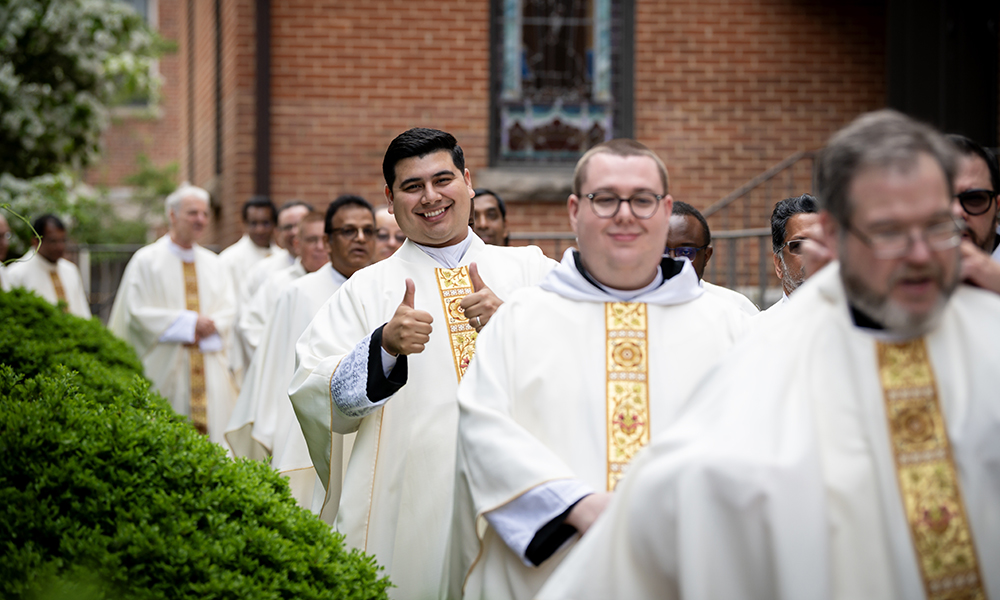
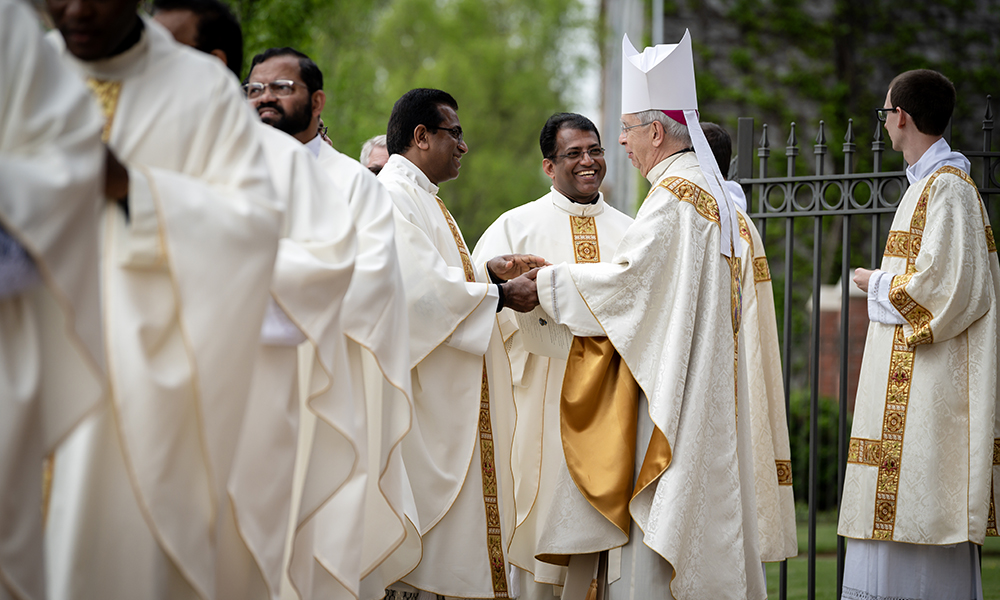
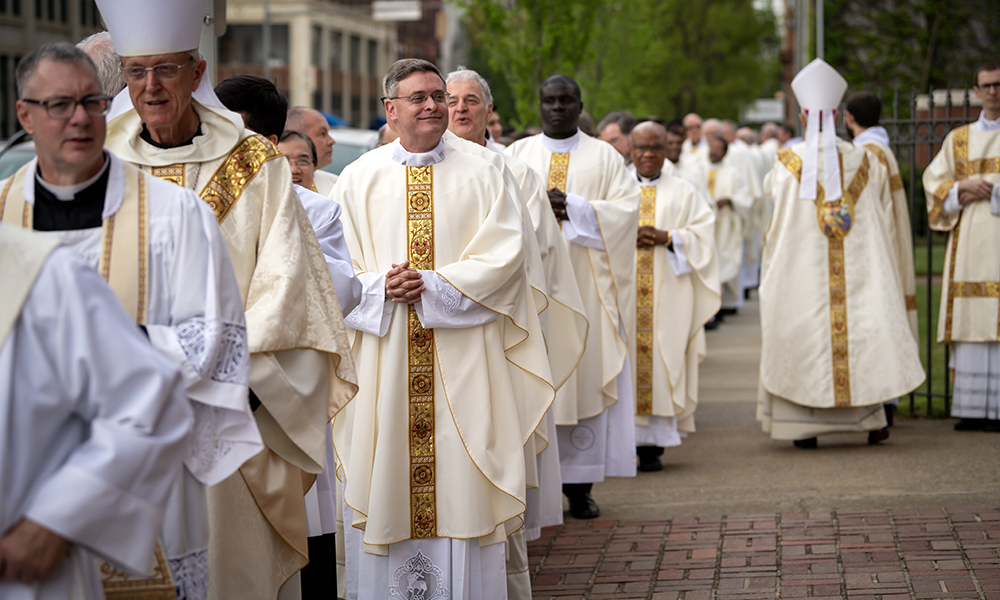
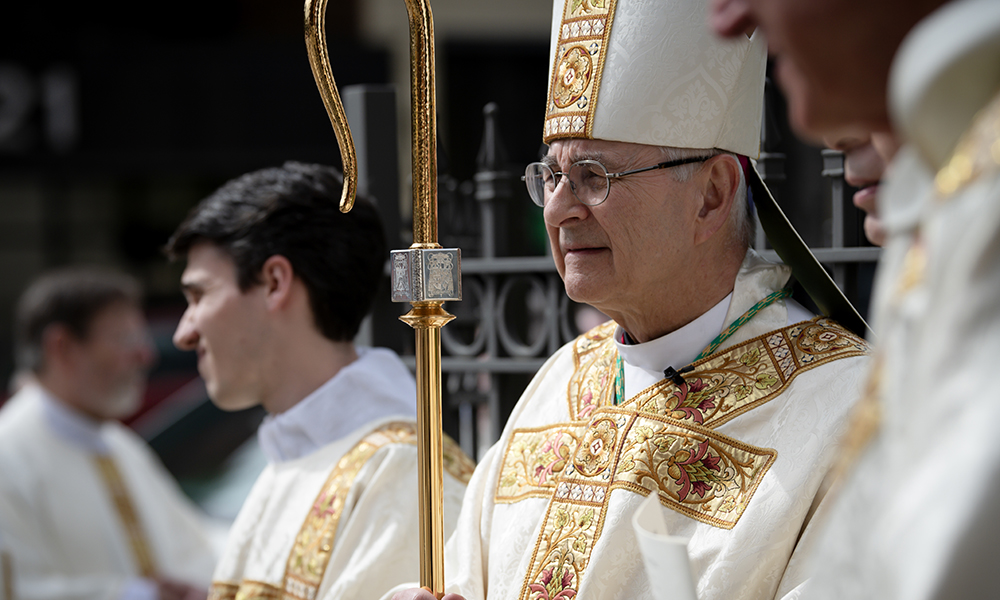
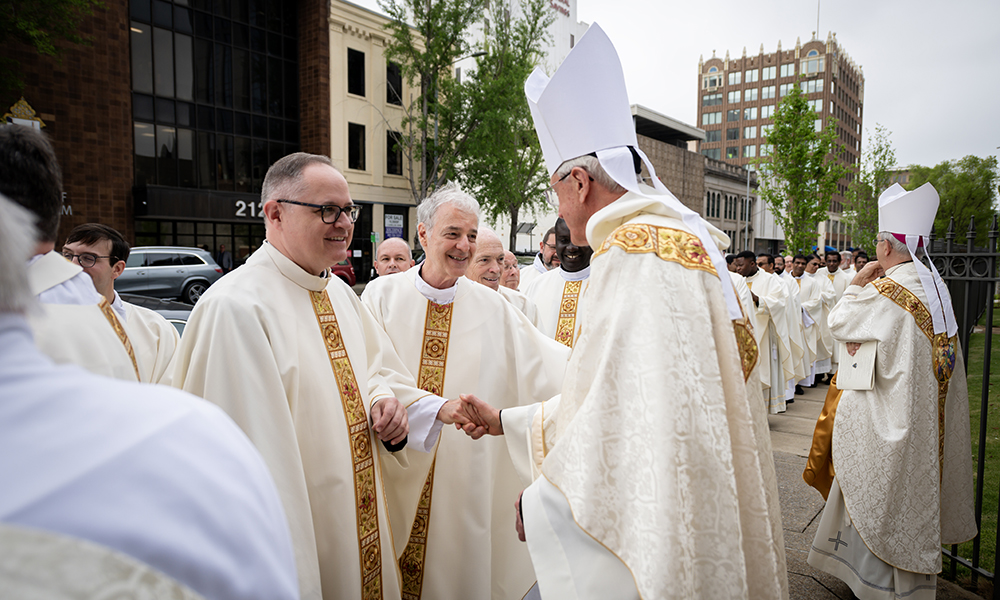
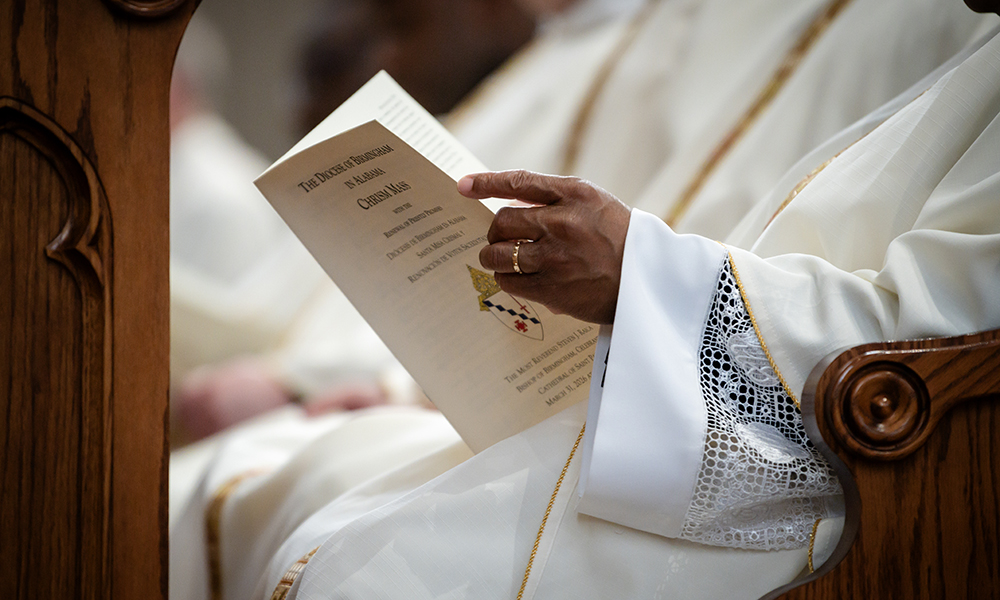
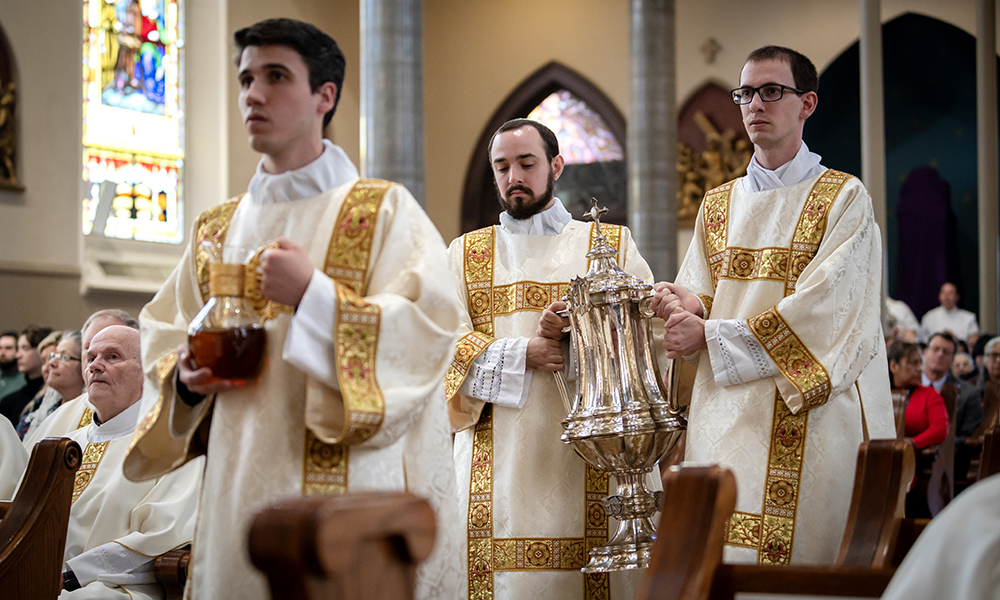
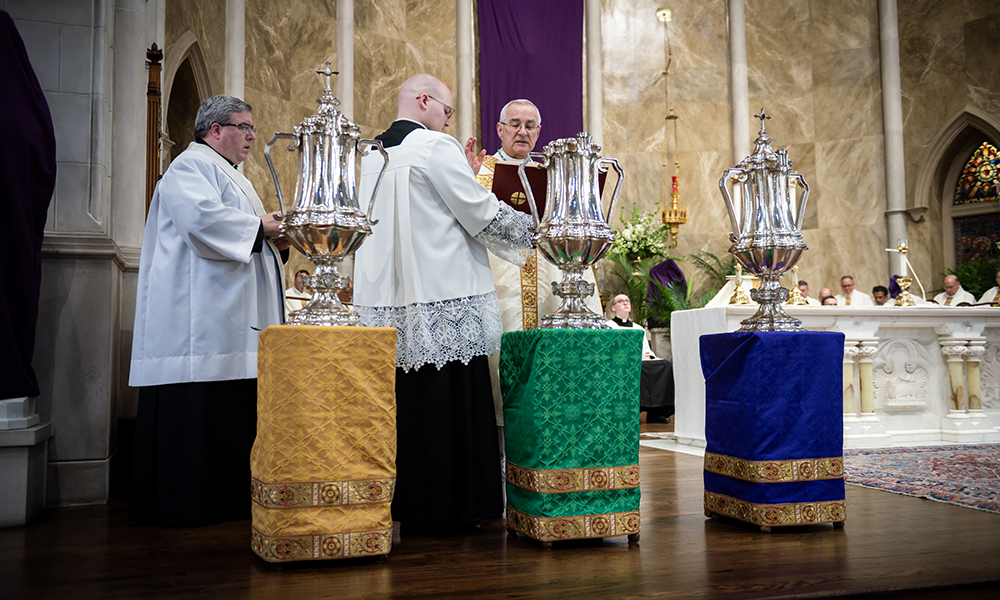
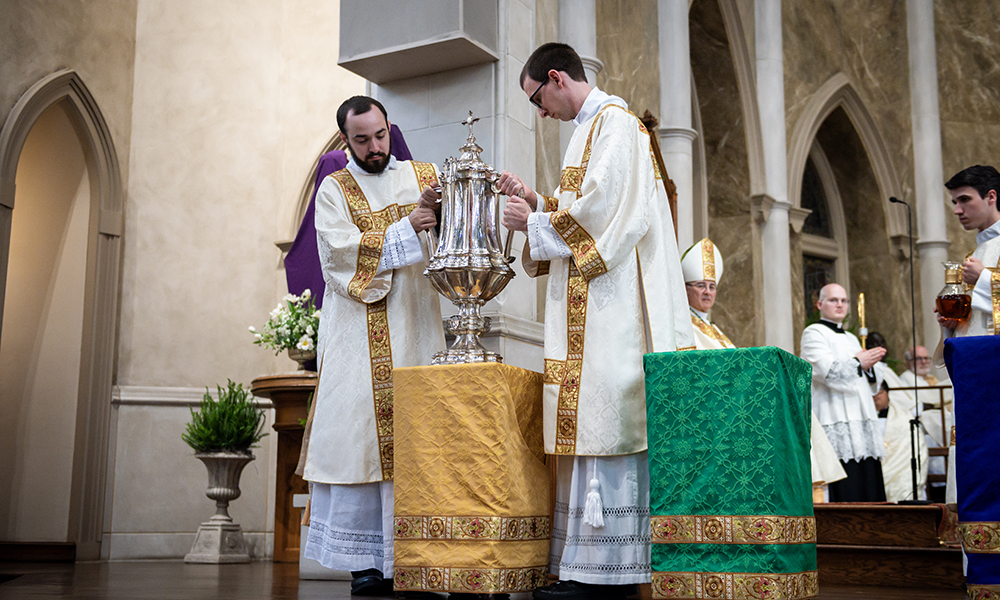
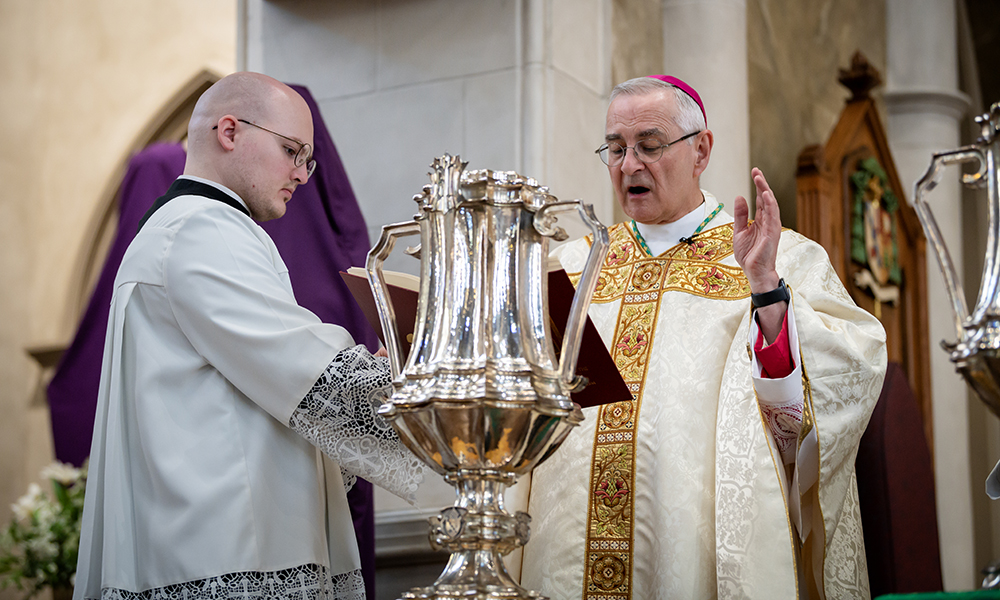
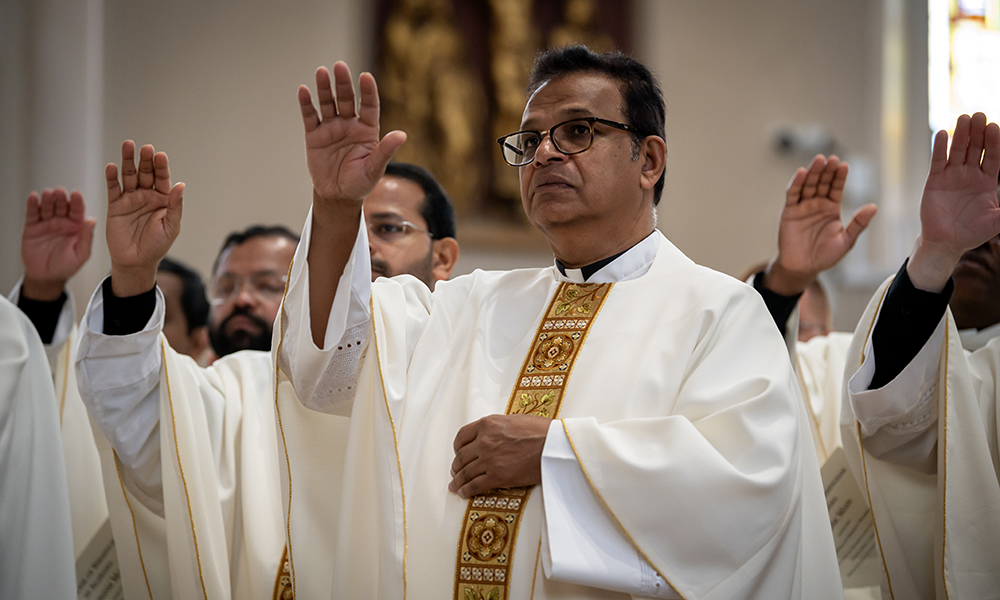
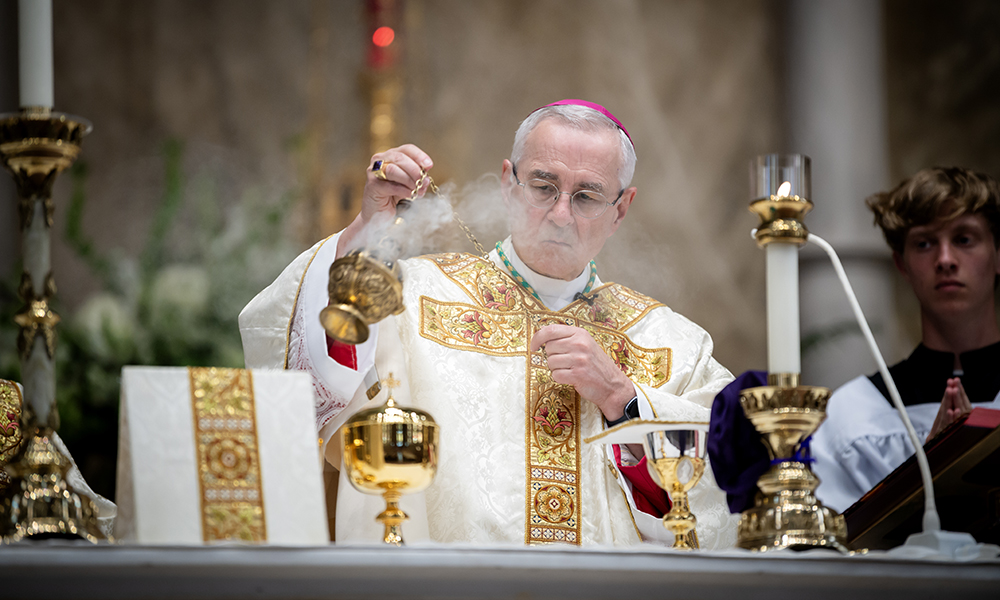
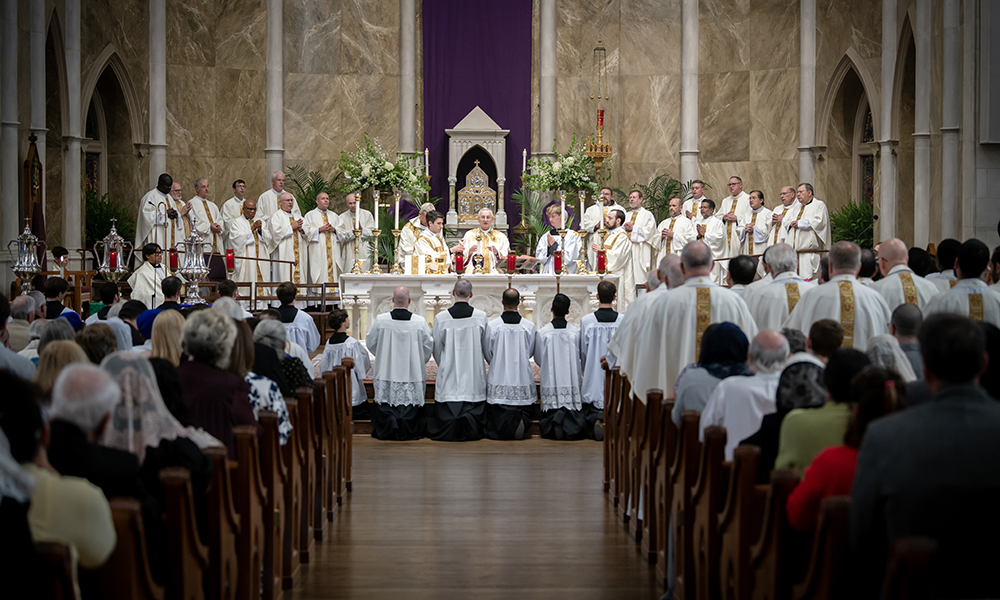
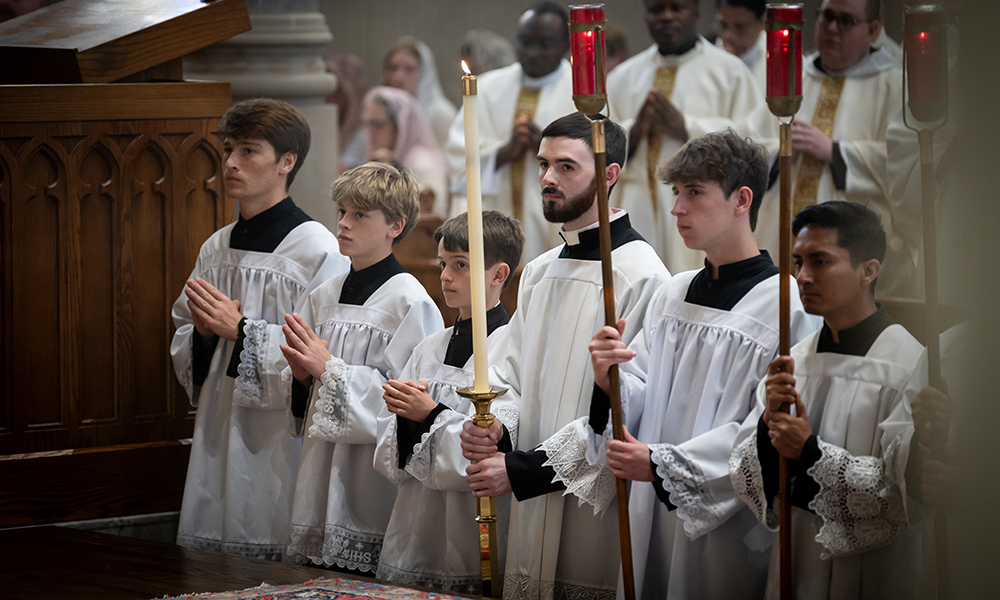
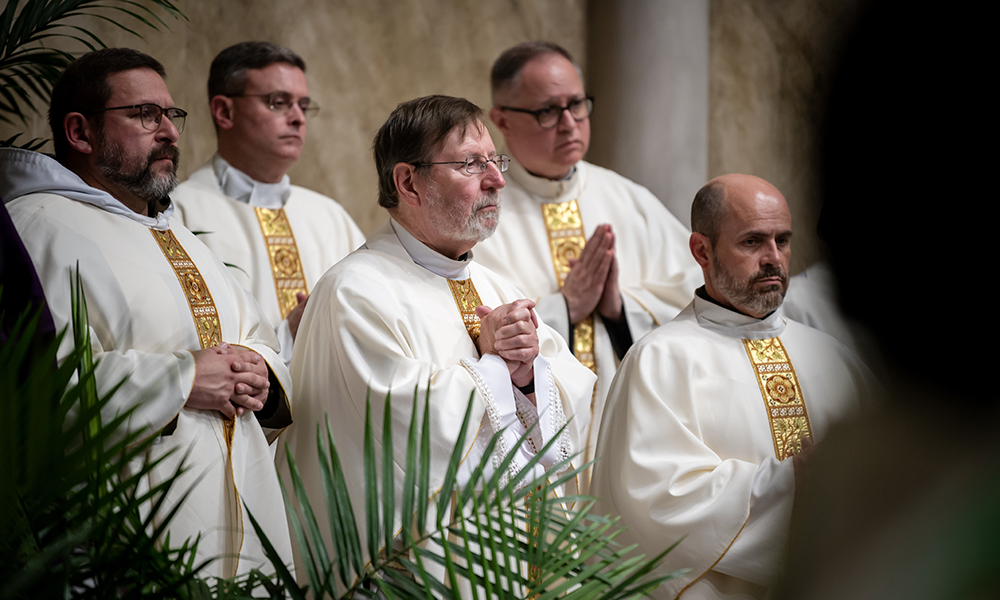
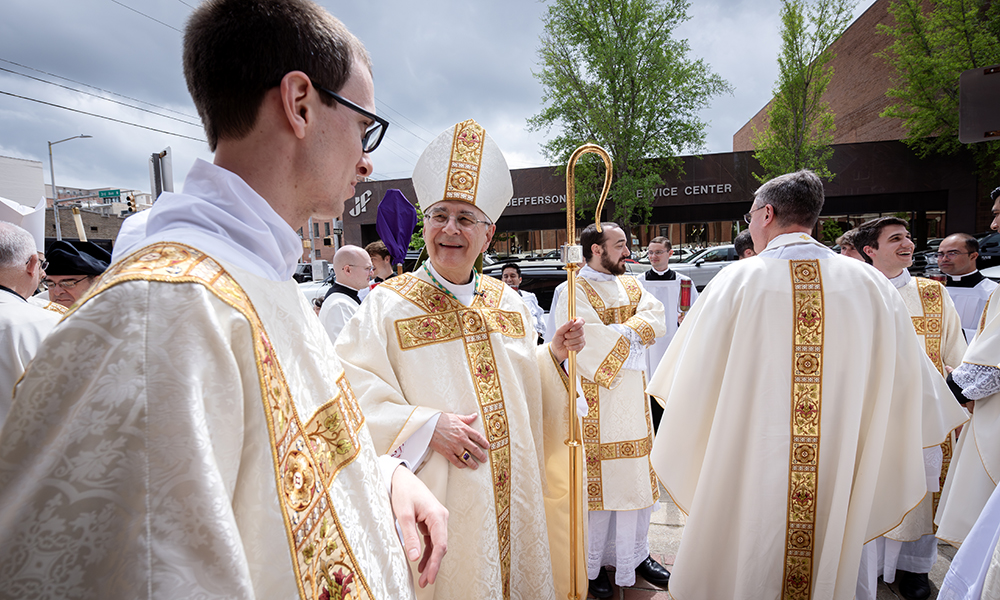
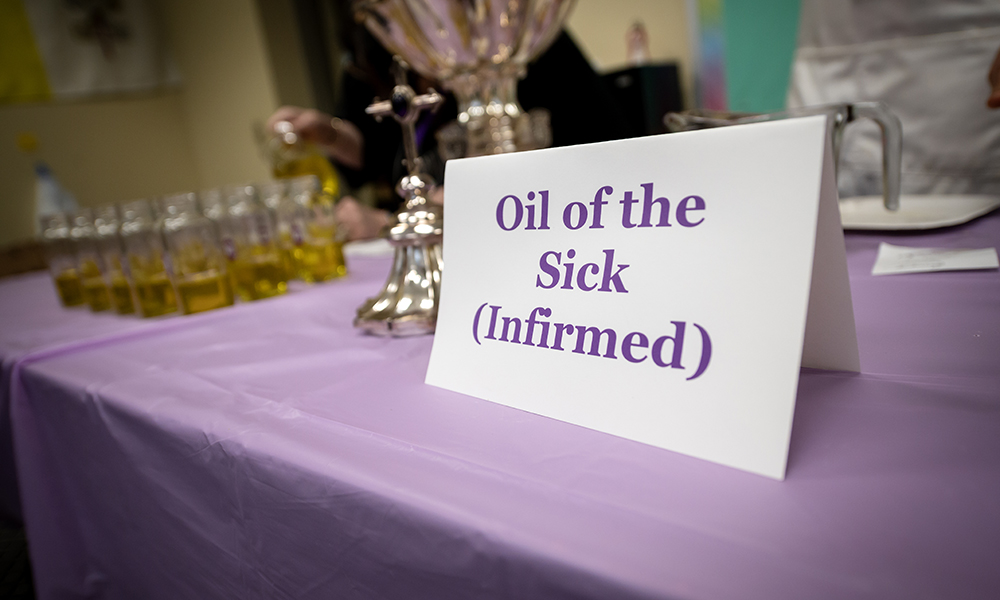
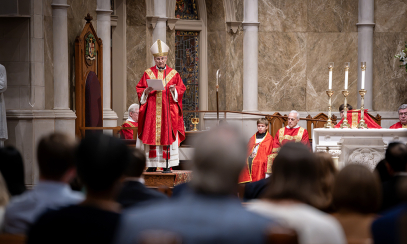
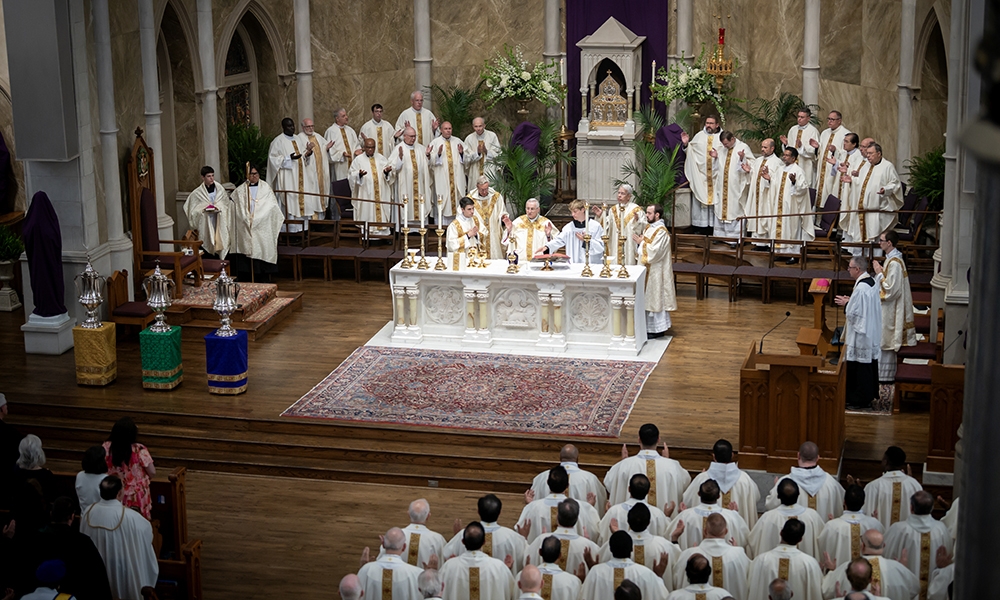
On March 31, Bishop Raica celebrated the annual Chrism Mass at the Cathedral of St. Paul. During the Mass, the Oil of the Catechumens and the Oil of the Sick were blessed, and the Sacred Chrism was consecrated. Also, during the Mass, the priests serving in the diocese renewed their priestly promises. The complete text of the bishop’s homily follows herein.
On March 31, Bishop Raica celebrated the annual Chrism Mass at the Cathedral of St. Paul. During the Mass, the Oil of the Catechumens and the Oil of the Sick were blessed, and the Sacred Chrism was consecrated. Also, during the Mass, the priests serving in the diocese renewed their priestly promises. The complete text of the bishop’s homily follows herein.
Brothers and sisters in Christ, on this magnificent morning, the entire diocesan Church of Birmingham assembled at the Cathedral of St. Paul with its bishop, stands around the altar like the disciples gathered and huddled in the Upper Room with our Lord. We crowd around in anxious anticipation of what will occur. We join together to be the diocesan Church at prayer, worship, and praise. We come with oil, with promise, with memory, and with hope. We assemble as witnesses of hope because the Lord has not left His people alone. He still anoints. He still heals. He still sends. He still makes saints. And in the midst of this sacred assembly, our priests renew their promises, not as a burden laid anew upon weary shoulders, but as a joyful grace given once more to hearts that have been called, consecrated, and claimed by Christ.
The prophet Isaiah gives us the familiar words from Sacred Scripture we hear proclaimed today: “The Spirit of the Lord is upon me, because the Lord has anointed me.” (Is 61:1) These are not merely the words of a prophet long ago. They are also the words of Christ Himself. In the synagogue of Nazareth, He takes this scroll into His hands and, after readings out loud this passage from Isaiah, notes, “Today this scripture has been fulfilled in your hearing.” (Lk 4:21) Today. Not once upon a time, but today. Not in memory or nostalgia only, but in living power. The Church hears this Word again and again every year at the Chrism Mass because the anointing of Christ is not a relic of antiquity; it is the living source, energizing the Church’s life and mission once again.
The Patristics loved this mystery. They saw that Christ is the Anointed One not for His own sake only, but for ours. He is anointed so that He may make us His own. He is anointed so that His fragrance might spread through the whole Church. He is anointed so that the poor may hear good news, the brokenhearted may be bound up, captives may be freed, and those in darkness may see a great light. In Him, anointing is never mere ceremony or ritual. It is mission. It is mercy. It is the nearness of God to a world that is wounded and weary, fractured, and fearful.
And what a world it is. We know the challenges we face from disasters, wars, violence, food shortages, migration and immigration, some of which impacts us in our own diocese. In the city, the cry rises from our streets and jammed expressways; from families under pressure because of higher costs for housing, food, and transport; from young people trying to sort out life; from the lonely in apartment buildings; from the addicted with no place to live; from the displaced, the migrant hoping to find acceptance, the forgotten looking for a smile. In our inner cities, there are houses carrying more grief than resources, more memory than comfort, and more struggle than anyone sees from the outside. In our suburbs, there are families stretched thin, fathers and mothers running hard to keep up, children pulled in many directions, souls quietly thirsty for something / someone in the midst of abundance. In the rural places of our Deep South, there is steadfastness and resilience, but also hardship; there is neighborliness, but also distance; there are people who know how to endure but still need the consolations of grace and encouragement. In every place, the same human heart is present. In every place, the Lord desires to draw near.
That is why the Church blesses oil. Oil heals. Oil strengthens. Oil soothes. Oil protects. Oil was used in the ancient world as salve for the injured, to soothe the weary, the honor the beloved, and to bless the consecrated. The early Church Fathers saw in oil a sign of the sweet fragrance of God and the medicine of mercy. It enters the skin, as grace enters the soul. It is not loud. It does not clatter. It works quietly, deeply, tenderly. It is a fitting sign for the way God deals with us.
The Oil of the Sick, which immediately puts us under the cross of Good Friday, speaks to every hospital room, every hospice bed, every kitchen table where a family waits for bad news, every parishioner who wonders if they have one more step left in them. The Lord does not despise weakness. He enters it. He sanctifies it. He bears it with us. James tells us: “Is anyone among you sick? Let them call for the presbyters of the church, and let them pray over them, anointing them with oil in the name of the Lord.” (Jas 5:14) Notice that this is not merely prayer from a distance, but prayer with nearness; not pity, but presence; not theory, but touch. That is the Gospel incarnated among us.
The Oil of Catechumens, used for Baptism and places us at the Easter Vigil, invigorating us for Baptism, speaks of strength for those who are still on the road. It says that the Church does not wait until a person is already perfect before she welcomes them. She accompanies them while they are still learning, still stumbling, still seeking, still asking. How like the Lord this is, Who called fishermen from boats, tax collectors from tables, and sinners from the shadows. The Oil of Catechumens says the journey is hard, but the grace of God is stronger. It prepares souls for battle, for conversion, for the glorious burden of being made new and born from above.
And Sacred Chrism, which puts us at a Pentecostal moment of mission, speaks of belonging and mission. It is the fragrant sign of Baptism, Confirmation, and Holy Orders. It marks the Christian as one who belongs to Christ and is empowered for mission. It is, as the Church teaches, a sign that through Baptism we are incorporated into the Paschal Mystery and made sharers in Christ’s priestly life. Here is a truth worth savoring: every Baptized person bears the mark of the Anointed One. Every Christian is called to carry the fragrance of Christ into the world - in the home, at work, in the classroom, on the farm, in the hospital, in the pew, in the neighborhood, in the prison, in the parish hall. The Baptized are sent as living signs of the Lord who saves.
And so, brothers, when you renew your priestly promises in a few moments, you do not do so apart from the people. You do so for them and with them. You are not owners of grace. You are servants of it. You are not masters of the oil. You are ministers of the mercy and closeness it signifies. You are not above the flock, but among them. And if the Church Fathers teach us anything, they teach us that a true shepherd belongs near his sheep. He knows their smell, as Pope Francis would say, because he lives among them. He knows their tears because he has listened to them. He knows their burdens because he has carried them to the altar. He knows their joys because he has celebrated them.
This is where Pius Parsch of the liturgical reform movements in the 1950s speaks so helpfully to us. He loved to remind the Church that the liturgy is not something we watch from a distance; it is the action of Christ in His Body, the whole Church. The liturgy forms a people. It teaches us that the sacred mysteries are not locked in the sanctuary but are meant to overflow outward into life. Today’s Chrism Mass is exactly that kind of liturgy. It is the heartbeat of a vibrant diocese. The oils are blessed so that Christ’s life may flow out into the world all year long. The renewal of priestly promises is not an inward pious exercise; it is the Church saying again, “Lord, make us ready for Your people.” The altar sends us outward to the peripheries of life.
And what does it mean, practically, for priests in this part of the Lord’s vineyard in central and northern Alabama? It means being ready to preach in season and out of season. (2 Tm 4:2) It means visiting the sick when the day is already long. It means Baptizing babies in small country churches and in overcrowded city parishes with the same joy. It means sitting with parents whose children are in trouble. It means hearing Confessions when the soul has been wounded by years of silence and struggle. It means celebrating the Eucharist with reverence, whether the church is overflowing or nearly empty. It means burying the dead with respect and hope. It means teaching the faith patiently. It means loving the poor not as a project to be fulfilled but as brothers and sisters, part of one human family. It means knowing that Christ is already there before us in the places we are sent so we can discover Him anew.
The faithful, too, have their part in this renewal. They, in a manner of speaking, “anoint” their priests by their faith, their prayers, their endurance, their patience, and even their correction when it is given with love. A priest is strengthened when he sees a grandmother still praying the Rosary, a father bringing his children to Mass, a young adult returning after years away, a shut-in joining the sacrifice through suffering, a farmer thanking God for rain, a mother sneaking into church to light a candle praying for her son, a community refusing to give up on grace. The people’s faith is not an ornament to priestly ministry. It is part of the priest’s own consolation and strength. As a people we need to say how much we appreciate our priests. As priests, we need to say how much we appreciate the people assigned to our pastoral care.
And so, today, when the promises are renewed, let them be renewed with simplicity. Let them be renewed with humility. Let them be renewed in the presence of Christ, Who is gentle and lowly of heart. Let them be renewed not because the road has been easy, but because the Lord has been faithful. Let them be renewed because the Church still needs shepherds, and because the world still needs mercy, and because Christ still loves His people enough to send His priests among them.
Brothers, as your bishop, I implore you: Be close to Christ. Be close to the altar. Be close to your people. Be close to the sick and the lonely. Be close to the poor and forgotten. Be close to the faithful and to those who have grown cold from the faith. Be close to the Baptized, the catechumens, and the dying. Be close enough that the fragrance of Christ is not only spoken but sensed.
For at this Chrism Mass, we remember what the Church has always known: Christ is the “oil of gladness” for a waiting world. And the priest is sent to carry that gladness into our cities and villages, into the inner city, into the suburbs, into the rural roads and back porches and family tables of the Deep South, and into every place where God’s people live, suffer, hope, and pray.
May the Lord, Who anointed Christ with the Holy Spirit, anoint us anew. May He strengthen His priests. May He bless His people. And may all of us, marked by holy oil, become a living fragrance of Christ to the world. Amen.